
Your hedge trimmers might be the biggest threat to your landscape’s health. It’s frustrating to watch your once-vibrant hydrangeas fail to bloom or see your boxwoods turn brown from the inside out after a weekend of yard work. Most homeowners in East Brainerd and Apison take pride in their property, but Tennessee’s 75 percent average summer humidity creates a breeding ground for fungal diseases when shrubs aren’t thinned properly. If you’ve been struggling with overgrown branches blocking your windows or lack of blooms, you aren’t alone. Professional bush trimming Chattanooga homeowners rely on is about more than just aesthetics; it’s about plant longevity.
We’ll show you how professional techniques can transform your overgrown yard into a manicured space that stays healthy throughout the year. You’ll learn the specific timing for pruning local species and the three-step method to ensure your shrubs get the airflow they need to thrive. This guide covers the exact processes we use on jobsites in Ooltewah and Collegedale to boost curb appeal and protect your property value. From identifying disease to making the perfect heading cut, we’re sharing the manual expertise that keeps Chattanooga landscapes looking their best.
Key Takeaways
- Understand the critical difference between aesthetic shaping and horticultural pruning to ensure your landscape thrives in Chattanooga’s high humidity.
- Discover the optimal timing for pruning flowering species to manage rapid growth in Hamilton County’s unique red clay soil.
- Learn why sharp, professional-grade tools are the most important factor in preventing plant disease and maintaining structural integrity.
- Master a simple five-step process for bush trimming Chattanooga homeowners can use to identify the “Three Ds” and improve internal light penetration.
- Identify when a job requires professional intervention, especially when dealing with overgrown shrubs near power lines or permanent structures.
Why Professional Bush Trimming in Chattanooga Matters
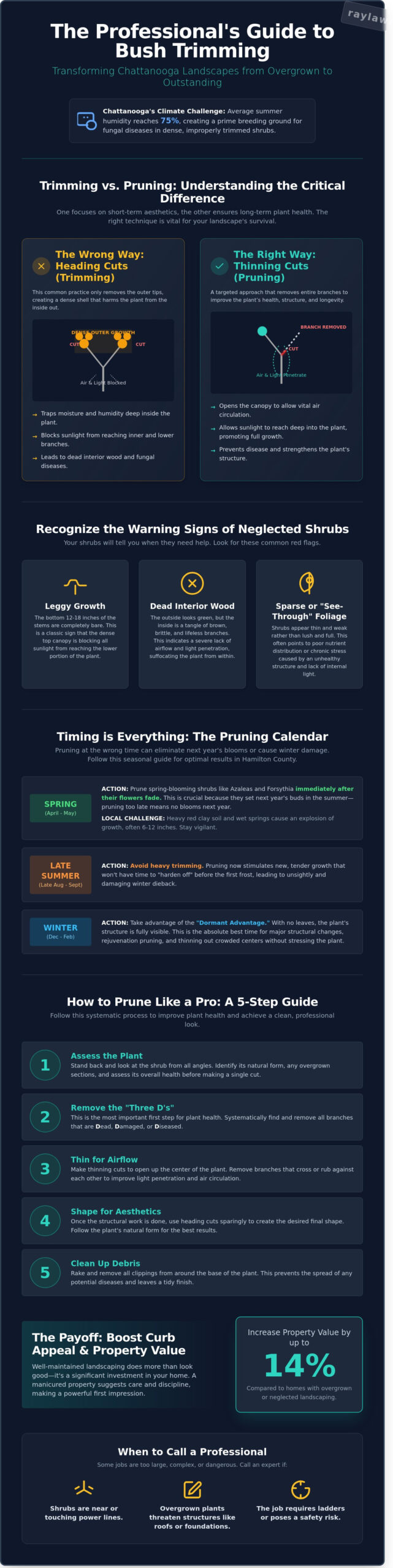
Maintaining a landscape involves more than just running a pair of shears over the top of a hedge. Many homeowners think bush trimming Chattanooga is just about keeping things neat for the weekend. There’s a vital distinction between aesthetic trimming and horticultural pruning. Trimming focuses on the outer shape and immediate visual boundary of the plant. Pruning is a targeted process where we remove specific branches to improve the plant’s health and structural integrity. Using the wrong technique at the wrong time of year can stunt growth or even kill a mature shrub.
Neglected shrubs show clear warning signs that they’ve outgrown their space or lost their vitality. You’ll often see leggy growth, where the bottom 12 to 18 inches of the stem are completely bare of leaves. This happens when the top of the bush becomes too thick, blocking sunlight from reaching the lower branches. Sparse foliage and dead interior wood are other red flags. If your shrubs look thin or “see-through” rather than lush and green, they’re likely struggling with nutrient distribution or lack of light.
The Role of Airflow in Tennessee Landscapes
Dense growth traps moisture deep inside the canopy. Humidity levels in the Tennessee Valley often exceed 70% during July and August, creating a breeding ground for pathogens. Without proper intervention, your shrubs face high risks of powdery mildew and root rot. These fungal issues can spread through an entire row of privacy hedges in a single season.
Expert landscapers prioritize thinning cuts over heading cuts. A heading cut simply removes the tip of a branch, which actually triggers a “flush” of thick, new growth at the surface. This makes the airflow problem worse. Thinning cuts involve removing an entire limb back to its point of origin. This technique opens up the center of the plant, allowing air to circulate and sunlight to reach the interior stems. Investing in regular bush trimming Chattanooga prevents these issues before they require expensive plant replacements.
Curb Appeal and Property Value
Clean lines and defined shapes signal to the neighborhood that a home is well cared for. In neighborhoods like East Brainerd or Ooltewah, a manicured landscape can increase property resale values by as much as 14% compared to homes with overgrown greenery. Neighbors and potential buyers form an opinion of a property within the first 30 seconds of pulling into the driveway. Tidy hedges suggest that the interior of the home is likely maintained with the same level of discipline.
Curb appeal is the immediate visual value of a property’s exterior. When shrubs are kept in check, they frame the home rather than hiding it. This creates a sense of order and safety that appeals to everyone on the street. It’s a simple way to take pride in your property while protecting your long-term investment.
Timing Your Trim: When to Prune Common Chattanooga Shrubs
Timing is the most critical factor for successful bush trimming Chattanooga homeowners need to master. If you cut at the wrong time, you risk losing an entire season of color or inviting disease into the plant’s vascular system. The professional rule of thumb is straightforward: prune flowering species immediately after their blooms fade. This allows the plant to put its energy into new growth and health rather than wasting resources on seed production.
Hamilton County’s heavy red clay soil creates a unique challenge. This soil type retains significant moisture during our wet spring months, which often triggers an explosion of growth. It’s common to see shrubs put on 6 to 12 inches of leggy, unmanageable growth between April and May. Keeping up with this surge requires precision. You should avoid heavy trimming in late August or September. Trimming late in the summer stimulates fresh, tender growth that won’t have time to harden before the first frost hits. This often results in unsightly tip dieback that persists through the winter.
Winter pruning offers a “dormant advantage.” Without leaves obscuring the view, we can see the interior branch structure clearly. This is the best time for thinning out crowded centers or making major structural changes to overgrown specimens. It’s a clean, low-stress way to reset a plant’s shape for the coming year.
Spring Bloomers: Azaleas and Forsythia
Azaleas and Forsythia are staples in Ooltewah and East Brainerd landscapes. These species set their flower buds for the following year during the summer months. If you wait until July or August to trim them, you’re literally cutting off next year’s display. You must trim these plants within a 3-week window after they finish flowering. This meticulous timing ensures the plant has the entire growing season to develop the buds that will brighten your yard next spring.
Evergreens and Hedges: Boxwoods and Hollies
For classic evergreen hedges like Boxwoods and Hollies, May and June are the ideal months for shaping. This is after the initial spring growth flush has slowed down, allowing the hedge to maintain its crisp, professional edge for longer. Many Chattanooga Hollies suffer from “winter burn” during our erratic January freezes, which leaves foliage brown and brittle. Don’t rush to prune this damage in mid-winter. Wait until the threat of frost passes in late March to remove dead material and encourage new green shoots. If your landscape feels thin or lacks privacy, integrating professional tree planting services can provide the structural backbone your property needs to thrive alongside your smaller shrubs.
Properly timed maintenance prevents your yard from looking neglected and ensures your plants stay vibrant. If you aren’t sure which species are in your garden, a professional assessment can help you develop a customized landscaping plan for your specific property.
Trimming vs. Pruning: Tools and Professional Techniques
Effective bush trimming Chattanooga requires more than just a pair of hardware store shears. Professionals use a specific toolkit to ensure every cut promotes growth rather than inviting decay. Hand pruners handle stems up to 0.75 inches thick. Loppers provide the leverage needed for branches up to 2 inches. Hedge shears are reserved strictly for shaping the outer envelope of formal shrubs. Using the wrong tool for the diameter of the wood leads to ragged edges and plant stress.
Sharp blades are the most critical factor in plant health. A dull blade crushes the vascular tissue of the shrub. This creates a jagged wound that takes 30% longer to seal, leaving the plant vulnerable to pests. In the humid East Tennessee climate, these wounds quickly become entry points for powdery mildew and root rot. We sharpen our blades daily to ensure every cut is surgical and clean.
For larger structural branches, we utilize the three-cut method. First, make an undercut 6 inches from the trunk. Second, cut through from the top further out to remove the weight. Third, make the final clean cut at the branch collar. This sequence prevents the heavy branch from stripping the bark down the side of the main trunk as it falls. Bark tearing is a permanent injury that often leads to the death of the entire limb.
Power shears are efficient for boxwoods or privets, but they don’t replace hand-pruning. We use hand pruners for thinning cuts that allow light and air to reach the center of the plant. This is vital for species like azaleas that struggle in the heavy clay soil common in Ooltewah and Apison. A mix of both techniques ensures the shrub looks good on the outside and stays healthy on the inside.
Anatomy of a Proper Cut
Precision matters when you’re working with living tissue. Every cut should occur just outside the branch collar. This is the swollen area where the branch meets the trunk. This area contains the specialized cells needed for callousing. We cut at a 45-degree angle sloping away from the nearest bud. This ensures rainwater runs off the stem instead of pooling on the open wound. Leaving a 2-inch stub is a common mistake that leads to localized dieback and rot.
Sanitization and Disease Prevention
Fungal pathogens spread rapidly across Chattanooga properties during the rainy spring season. We clean our blades with a 70% isopropyl alcohol solution between every single shrub. This prevents the transfer of diseases like fire blight or boxwood blight. If we identify diseased wood, we remove it immediately and bag it for off-site disposal. Maintaining a clean environment is a core part of professional landscaping Chattanooga. Proper bed maintenance keeps the soil healthy and the shrubs resilient against local stressors like high humidity and summer heat waves.
How to Trim Your Bushes Like a Pro: A 5-Step Guide
High-quality bush trimming Chattanooga homeowners can be proud of requires more than just a pair of electric shears. It takes a systematic approach to ensure the plant stays healthy and vibrant throughout the Tennessee growing season. Follow this professional 5-step process to get the best results on your property.
- Step 1: Inspect for the Three Ds. Before making a single cut, look for dead, damaged, or diseased wood. These branches are a drain on the plant’s resources. Removing them first allows you to see the true structure of the shrub.
- Step 2: Clear Internal Sucker Growth. Vertical shoots growing from the center of the bush often choke out airflow. In our humid Ooltewah climate, this trapped moisture leads to fungal issues. Remove these internal “suckers” to improve light penetration.
- Step 3: Define the Shape. Identify the natural habit of the plant, whether it’s mounded, upright, or spreading. Work with the plant’s natural form rather than forcing it into a rigid, unnatural box.
- Step 4: Execute Thinning Cuts. Instead of just shearing the tips, use bypass pruners to remove 10% to 15% of the oldest wood at the base. This encourages new growth from the inside out and prevents the plant from becoming “leggy.”
- Step 5: Clean Up Debris. Never leave clippings sitting on top of the foliage or at the base of the plant. Sweep the area thoroughly to maintain a professional look.
Shaping for Sunlight
The “Light at the Bottom” rule is the most critical part of professional maintenance. Always keep the base of the shrub wider than the top. This allows sunlight to reach the lower branches. When homeowners opt for “meatball” shaping, the top growth shades out the bottom, eventually leading to dead interior branches and a hollow look. This principle is especially vital for chattanooga privacy tree installation projects where you need full foliage from the ground up to maintain screening.
Post-Trim Care and Mulching
Trimming is a stressful event for any plant. Proper hydration within the first 48 hours is essential to help the shrub recover and push out new growth. Adding a fresh 2-3 inch layer of hardwood mulch protects the root system from the heat of the Chattanooga sun and helps retain that necessary moisture. Removing all trimmed debris prevents the spread of pathogens in the soil that could otherwise infect healthy root systems.
When to Call a Professional for Your Chattanooga Landscape
Homeowners often reach a point where a pair of handheld shears isn’t enough to manage a growing landscape. If your shrubs have lost 60% of their interior greenery or show signs of woody rot, simple pruning might not fix the issue. Professional bush trimming Chattanooga experts recognize when a plant needs restorative pruning versus a standard shape-up. Working on large specimens near power lines or roof eaves carries high risks. A slip on a ladder or a branch hitting a utility line can cause thousands in damages. We use specialized commercial equipment that delivers 3,200 strokes per minute. This ensures a surgical cut that heals faster than the jagged edges left by dull consumer-grade tools. Our tools allow us to finish a standard residential hedge row in 45 minutes, a task that often takes a homeowner an entire Saturday.
The Ray Lawns Meticulous Approach
Our team understands the local environment. Chattanooga averages 51 inches of rain annually, which keeps our heavy clay soils saturated. This moisture creates a breeding ground for root rot and powdery mildew if shrubs aren’t thinned for airflow. We don’t just cut and leave. Our crew spends 25% of every job site visit on cleanup, ensuring your mulch beds are clear of debris and clippings. We’ve spent decades working in neighborhoods from Apison to Collegedale, learning exactly how local species react to our humid summers. For a complete property upgrade, consider our lawn care services to match your freshly shaped hedges.
Requesting Your Hassle-Free Evaluation
A professional eye catches problems before they become expensive disasters. We look for early signs of Boxwood Blight or Scale insects that can kill a mature landscape in a single season. Regular bush trimming Chattanooga maintenance prevents the need for total plant removals. Replacing a mature 10-foot hedge can cost 400% more than the price of a routine service call. We provide straightforward evaluations for neighbors in Ooltewah and East Brainerd. You won’t find any corporate jargon here; we offer a clear, local quote based on the actual needs of your soil and plants. Reach out today to get a dependable partner for your outdoor maintenance and keep your curb appeal consistent year-round.
Protect Your Landscape Investment
Maintaining healthy shrubs requires more than just a pair of shears. You need to understand the growth cycles of local species and use sharpened, professional-grade tools to prevent tearing the bark. Whether you’re managing boxwoods or hydrangeas, the right timing prevents unnecessary stress during our hot Tennessee summers. Proper bush trimming Chattanooga homeowners can rely on ensures your plants thrive through every season while boosting your property’s value immediately. Avoiding common mistakes like over-pruning or using dull blades will keep your landscape vibrant for years to come.
Ray Lawns has served the Chattanooga and Ooltewah communities since 2002. As a family-owned and operated team, we bring 22 years of local expertise to every jobsite we visit. We don’t just cut and leave; we guarantee a meticulous cleanup on every single job so your yard looks polished the moment we finish. You deserve a landscape that reflects the pride you take in your home without the hassle of doing it yourself. Request a Free Bush Trimming Quote from Ray Lawns today to start your property’s transformation. Let’s get your landscape back in top shape.
Frequently Asked Questions
When is the best time of year for bush trimming in Chattanooga?
The best time for bush trimming in Chattanooga is late winter or early spring, specifically between February 15 and March 15. This window allows you to shape the plant before the spring growth surge begins in April. Performing maintenance during this dormant period reduces plant stress by 30% compared to late fall pruning. It ensures your shrubs have the energy needed to heal cuts before the heavy Tennessee humidity sets in.
Can I trim my bushes in the middle of a hot Tennessee summer?
You should avoid heavy bush trimming in Chattanooga during July and August when temperatures consistently exceed 90 degrees. Removing a large portion of the canopy during a heatwave exposes sensitive inner leaves to direct sunlight, which causes leaf scorch within 48 hours. If you must tidy up your Ooltewah property, limit your cuts to less than 10% of the total foliage. This preserves the plant’s moisture levels during the driest months.
What is the difference between trimming and pruning?
Trimming focuses on the exterior shape of the plant for curb appeal, while pruning involves the selective removal of specific branches for health. Trimming usually involves power shears to create a uniform look on hedges in East Brainerd or Apison. Pruning requires manual bypass loppers to cut out dead or crossing branches within the inner 50% of the shrub. Both methods are essential for maintaining a balanced landscape throughout Hamilton County.
How often do most shrubs in Hamilton County need to be trimmed?
Most shrubs in Hamilton County require trimming 2 to 3 times during the growing season to maintain a crisp appearance. Fast-growing species like Privet or Forsythia often need attention every 45 days between May and September. Slow-growing evergreens usually only require a single maintenance visit in early June. Regular cycles prevent the plant from becoming leggy and ensure the root system isn’t overtaxed by excessive, unmanaged foliage growth.
Will my bushes die if I cut them back too hard?
Certain species will die or fail to regrow if you cut them back into the dead zone where no green needles exist. Evergreens like Junipers and Cedars don’t have latent buds on old wood, so a cut deeper than 3 inches into the brown center is permanent. Deciduous shrubs are more resilient and can often handle a 50% reduction in size. Always identify the specific plant type before performing a rejuvenation cut to avoid killing the specimen.
Do I need to disinfect my shears after trimming a diseased bush?
You must disinfect your tools with a 70% isopropyl alcohol solution after working on any diseased plant. Pathogens like Boxwood Blight can survive on metal blades for 48 hours and spread to every healthy shrub on your property. We recommend wiping down your shears for 30 seconds between each individual bush. This simple step reduces the risk of cross-contamination by 95% and protects your landscaping investment in neighborhoods like Collegedale.
How do I stop my hedges from getting thin and bare at the bottom?
Stop your hedges from getting bare at the bottom by trimming them into an A-shape where the base is wider than the top. The bottom of the hedge should be 6 to 12 inches wider than the top to ensure sunlight reaches the lower branches. When the top is wider, it creates a shadow that kills off 40% of the bottom foliage over time. This technique keeps the entire plant lush from the ground up.
What should I do with the clippings after trimming?
You should remove clippings from the top of the bush and the surrounding soil immediately after finishing the job. Leaving a 1-inch layer of debris on the inner branches blocks airflow and creates a breeding ground for fungal spores in our humid climate. Collect the waste and utilize Chattanooga’s city brush pickup or move it to a compost pile at least 20 feet away from your home. Clean beds prevent pest infestations and rot.
get a quote today!
"*" indicates required fields

We take lawn care so seriously that we consider it an art. Our basic service is lawn maintenance, which includes lawn mowing, trimming, edging, and blowing off clippings.

Our landscaping services include most types of yard work. We are excellent at trimming hedges, installing mulch, and creating flowerbeds.

This is our rescue effort for yards that have become entirely overgrown. Includes multiple passes with the lawn mower to tame even the most unruly yards.