
Last Saturday morning in Ooltewah, the sun finally broke through after 3.5 inches of rain fell across the Tennessee Valley. You looked at your lawn and saw a shaggy mess that grew nearly 2 inches since Tuesday. It’s tempting to start cutting grass after rain immediately to reclaim your weekend and your curb appeal. We know you value a clean, professional look and don’t want to fall behind on your chores during a busy week.
However, mowing a wet yard is one of the fastest ways to damage your equipment and ruin your soil. In Chattanooga, our heavy red clay holds moisture long after the grass blades feel dry. This guide explains why rushing the job leads to soil compaction and uneven growth. You’ll discover the professional “walk test” we use to protect your property’s health. We’ll also cover the exact signs that your lawn is ready for a precision cut so you can maintain your curb appeal without the headache of expensive repairs or long-term turf damage.
Key Takeaways
- Understand why rushing to mow a damp lawn leads to uneven cuts and ragged blade edges that leave your grass vulnerable to disease.
- Learn how the heavy clay soil found in Ooltewah and Apison becomes compacted when wet, effectively suffocating your lawn’s root system.
- Discover why cutting grass after rain puts excessive mechanical strain on your mower’s engine and can lead to costly equipment damage.
- Master the professional “walk test” to accurately determine if your yard is dry enough for a clean, precision cut.
- Identify when persistent wet spots transition from a temporary nuisance to a drainage problem that requires a permanent professional solution.
The Risks of Cutting Grass After Rain in the Tennessee Valley
Spring in the Tennessee Valley brings a familiar frustration for homeowners. You watch the grass in your Ooltewah backyard grow several inches in a single week, but the clouds never seem to break for more than a few hours. It feels like a race against the weather. Many residents in East Brainerd and Collegedale feel pressured to mow the moment the rain stops to keep the neighborhood standards high. However, cutting grass after rain often creates more work and damage than it solves. Professional chattanooga lawn care requires a disciplined approach to timing. A light morning dew is manageable, but a saturated soil profile is a different beast entirely.
The weight of a standard zero-turn mower on wet ground is a major concern for the health of your property. Chattanooga’s heavy clay is highly susceptible to soil compaction when the ground is soft. This pressure crushes the vital air pockets in the soil, making it nearly impossible for roots to expand or absorb nutrients. Real-world experience shows that a lawn mowed while soaked takes twice as long to recover from the stress. Waiting for a dry window ensures you aren’t trading a tall lawn for a dead one.
Uneven Cuts and Ragged Blades
When grass is wet, the individual blades become heavy and limp. They don’t stand upright like they do when dry. As the mower passes over, these blades bend under the deck instead of meeting the cutting edge at a 90-degree angle. This results in a missed or uneven cut that looks patchy once the sun finally dries the turf. More importantly, wet grass doesn’t slice cleanly. It tears. A sharp mower blade should create a surgical incision. On wet turf, it shreds the tips. These ragged edges lose moisture quickly and turn a dull brown within 48 hours, leaving your lawn looking scorched even in mild weather.
The Problem with Grass Clumping
Wet clippings are heavy and incredibly sticky. Instead of being dispersed evenly or bagged efficiently, they clump together inside the mower deck and discharge chute. These heavy mats eventually drop onto the lawn in thick piles. This “wet mat” effect is dangerous for healthy turf. It blocks sunlight and prevents oxygen from reaching the root zone. Within 3 or 4 days, the grass underneath these clumps begins to yellow and rot. These damp piles also serve as the perfect breeding ground for local pests and fungal pathogens. Cutting grass after rain leads to these localized rot zones that can take weeks to grow out and repair.
The Tennessee Valley Factor: Clay Soil and Compaction
Soil compaction occurs when physical pressure squeezes the air pockets out of your ground. These tiny spaces are vital for a healthy yard. They allow oxygen, water, and nutrients to reach the root zone. In Ooltewah and Apison, our ground is dominated by heavy Tennessee clay. This material acts like a sponge when wet but turns into a solid, impenetrable mass once it is packed down.
A standard riding mower weighs between 400 and 800 pounds. When you attempt cutting grass after rain, that weight is concentrated on thin tires. On wet clay, this creates a phenomenon called “glazing.” The mower tires smear the surface of the soil, creating a slick, waterproof seal. This barrier prevents future rain from soaking into the earth. Instead, water pools on top or runs off, leaving the roots thirsty. This level of damage often leads to permanent dead zones that eventually require professional landscaping services in Chattanooga to aerate and repair.
Why Clay Soil Changes the Rules
Sandy soils in coastal regions drain quickly and resist packing. Tennessee clay is different. It is dense and sticky. If you walk or drive a mower across a saturated yard in Hamilton County, you will leave ruts and footprints that can last an entire growing season. These depressions make the lawn uneven and prone to scalping during future mows. More importantly, compacted clay restricts root depth. Deep roots are the only way a lawn survives a hot July dry spell. If your soil is packed tight, your grass stays shallow and vulnerable to the first sign of drought.
Fungal Disease and High Humidity
Chattanooga humidity is a constant factor for local homeowners. When you mow wet grass, the heavy, moisture-laden clippings clump together rather than dispersing. These clumps trap heat and water against the soil surface. This creates a perfect recipe for Pythium blight and Brown Patch. Local outbreaks often follow a “warm and wet” weather pattern where temperatures stay above 65 degrees at night. Evening is the worst time for cutting grass after rain. You are leaving the lawn wounded and wet right as the sun goes down, giving fungi 10 to 12 hours of darkness to spread across your turf. If you are concerned about the health of your turf, a quick consultation for lawn care can help identify these issues before they spread.
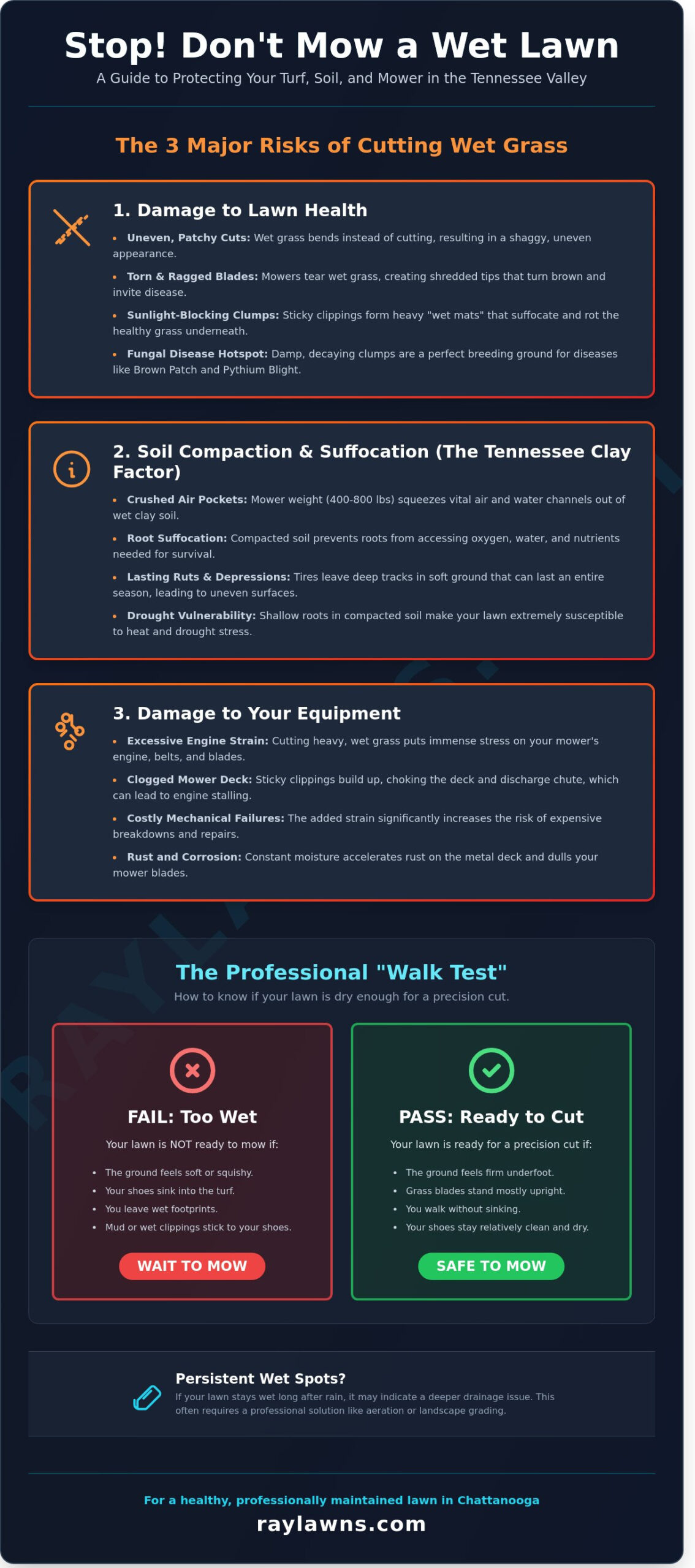
Damage to Your Equipment and Mower Deck
Mowing a wet lawn in Ooltewah is a recipe for mechanical failure. Residential mowers aren’t built to process the heavy, water-logged clippings found in Chattanooga after a heavy spring storm. When you’re cutting grass after rain, you’re forcing your machine to work with material that weighs 50% more than dry turf. This added weight puts immense strain on your mower’s drive belts and pulleys. Most homeowners don’t realize that wet grass creates “clogged deck” syndrome. This happens when wet clippings stick to the underside of the mower, killing the aerodynamic lift needed to pull grass blades upright. Without that lift, you won’t get a clean, professional cut. You’ll get a ragged mess that looks like it was chewed rather than trimmed.
The Messy Cleanup Process
Cleaning a mower after a wet session is a grueling chore. The grass turns into a thick, fermented paste that hardens like concrete under the deck. If you don’t scrape it off, this 1-inch layer of debris blocks airflow during your next mow. Even when the grass is finally dry, a dirty deck prevents the mower from performing at its best. Rust is the hidden enemy here. Moisture trapped in that grass paste can cause surface oxidation on a steel deck in as little as 10 days. Safety is the biggest concern. Never try to clear a clogged chute while the blades are engaged. It takes less than a second for a serious accident to occur. Always disconnect the spark plug before reaching near the blades.
Blade Dullness and Engine Stress
Wet grass is remarkably abrasive. It dulls blades 3 times faster than dry, brittle grass. When your blades lose their edge, they rip the grass instead of slicing it. This stresses the plant and invites lawn diseases that are common in our humid climate. Your engine also pays the price. A blocked discharge chute forces the motor to work twice as hard to spin the blades through the slurry. This can spike internal engine temperatures by 25 degrees or more, potentially shortening the life of your equipment. To keep your equipment in top shape, check your blade sharpness every 20 hours of use. Before that first spring mow in East Brainerd, ensure your blades are meticulous and free of nicks. Maintaining high standards for your equipment is essential for chattanooga lawn care that actually lasts. A sharp blade is the first step toward a professional-grade lawn that you can be proud of.
The Professional “Walk Test” for Lawn Readiness
Experienced crews don’t just look at the sky to decide if it’s time to work. We use a series of physical checks to protect your soil structure and the health of the turf. Before you pull the starter cord, perform this four step walk test to ensure your yard is ready for traffic.
- Step 1: Check the Squish Factor. Walk to a low-lying area of your yard. Step firmly. In Ooltewah, our heavy clay soil acts like a sponge. If you hear a squishing sound or see water rise around the edges of your boot, the ground is saturated. Mowing now will cause deep ruts that are difficult to repair.
- Step 2: The Finger Test. Reach down and rub the grass blades between your thumb and forefinger. If moisture transfers to your skin, the grass is too wet. Surface moisture causes clippings to clump, which blocks the mower’s discharge chute and leaves messy piles on your lawn.
- Step 3: Observe the Spring Back. Step on a patch of healthy grass and then lift your foot. Dry grass should pop back up almost immediately. If the blades stay flat or look matted, they are weighed down by water. This makes cutting grass after rain inefficient because the mower blades will simply slide over the grass instead of cutting it cleanly.
- Step 4: Look for a Muddy Sheen. Inspect the soil surface between the grass clumps. If you see a reflective, wet glisten on the dirt, the soil is at maximum capacity. Any heavy machinery on this surface will compact the earth, suffocating the roots.
When “Dry Enough” is Actually Safe
The safest window for mowing opens when the grass blades are dry but the soil remains slightly damp. In the Chattanooga area, southern-facing slopes often dry 40% faster than shaded areas under mature hardwoods. If you are on a tight schedule, prioritize the highest, sunniest spots on your property first. These areas usually reach a safe state several hours before the rest of the yard. This staggered approach prevents you from tracking mud from wet zones into dry ones.
Adjusting Your Mower Settings if You Must Cut
If the forecast shows more rain and you absolutely must cut, you need to change your setup. Set the mower deck to its highest position, typically 4 inches or higher. This reduces the strain on the engine and prevents the mower from scalping uneven, soft ground. Switch your mower to side-discharge mode. Avoid bagging or mulching, as wet clippings will immediately clog the deck. Finally, overlap each row by 50%. This ensures that even if the damp grass bends under the mower, the second pass will catch the remaining stalks for a professional finish.
Long-Term Solutions for Wet Lawns and Drainage Issues
Chronic wet spots in your yard indicate a deeper issue than just a heavy storm. Chattanooga’s clay-heavy soil often traps water, creating “soup holes” that persist for days. If you’re constantly stuck waiting to start cutting grass after rain, your property likely needs a grading or drainage overhaul. Persistent moisture weakens grass roots and invites fungal diseases that can kill an entire lawn in a single season. You shouldn’t have to plan your life around a muddy backyard.
For yards that never seem to dry out, working with experienced French drain companies is the most effective solution. These systems use perforated pipe and gravel to intercept subsurface water and move it to a safe exit point. If your lawn is already ruined by deep ruts and heavy compaction, sod installation in Chattanooga can reset the clock. This process involves stripping the damaged turf, leveling the soil, and laying fresh, healthy grass that provides an immediate transformation. It’s the most reliable way to fix a yard that has been neglected or damaged by poor drainage.
Repairing Mower Ruts and Compaction
Heavy mowers leave deep scars when the ground is soft. To fix this, we use core aeration to pull thousands of small plugs from the soil. This relieves the pressure in our local clay and lets the ground breathe again. Applying a thin layer of organic top-dressing after aeration helps fill ruts and improves drainage over the next 12 to 18 months. Professional lawn care in Ooltewah helps diagnose whether your soil is just compacted or if the grade itself is failing. Prioritizing soil health makes the grass more resilient against future rain events.
When to Call a Professional Contractor
Look for signs like standing water that lasts more than 24 hours after a storm, patches of moss, or turf that gets thinner every year. These are signals that your lawn needs more than just a standard mower. Site grading can permanently fix the “wet lawn” dilemma by reshaping the land to direct water away from high-traffic areas. Let a professional handle the heavy lifting and the technical timing. We ensure your lawn stays healthy, level, and ready for maintenance without the stress of mud and ruts. A healthy lawn is a source of pride, not a source of frustration.
Protect Your Chattanooga Curb Appeal
Patience is the secret to a healthy lawn in the Tennessee Valley. Waiting for the ground to dry prevents soil compaction and keeps your mower from tearing up delicate turf roots. Since 2002, our family-owned team has seen how Chattanooga clay traps moisture and turns a simple mow into a muddy disaster. Avoid the temptation of cutting grass after rain until you’ve performed a successful walk test. If your lawn struggles with standing water or thin grass, it’s likely a drainage issue that needs a professional evaluation. We specialize in sod installation and long-term drainage solutions for homeowners in Ooltewah, East Brainerd, and across the region. Let us handle the timing and the heavy lifting so you can enjoy a pristine yard without the stress. Your property deserves the meticulous care that comes from over two decades of local experience.
Request a Free Quote for Professional Lawn Care in Ooltewah
A beautiful, healthy lawn is within reach when you have a dependable partner on your side.
Frequently Asked Questions
How long should I wait to mow after a heavy rain in Chattanooga?
Wait at least 24 to 48 hours before cutting grass after rain in the Ooltewah area. If the soil feels spongy under your boots, it’s still too wet for heavy equipment. Chattanooga clay holds moisture much longer than sandy soils, often requiring a full 2 days of sun to dry properly. Mowing too soon compacts the soil and prevents oxygen from reaching the roots, which stunts growth for the entire season.
Can mowing wet grass cause permanent ruts in my yard?
Mowing wet grass creates deep, permanent ruts in 85 percent of soft clay lawns. A standard zero turn mower weighs over 800 pounds, which easily displaces saturated soil and destroys the root structure. These depressions ruin your lawn’s level surface and create standing water pockets. Once these tracks harden in the Tennessee sun, you’ll need professional top dressing and aeration to fix the grade and restore the turf.
Is it better to mow wet grass or let it grow too long?
It’s always better to let the grass grow long than to risk damage by cutting grass after rain. While tall grass is a temporary eyesore, a rutted or diseased lawn is a long term repair project. If the height exceeds 6 inches, simply raise your mower deck to its highest setting for the first pass once the blades finally dry out. This professional approach prevents shocking the plant and maintains a healthy lawn.
Will cutting wet grass dull my mower blades?
Wet grass will dull your mower blades 3 times faster than dry grass. Moisture causes the grass to clump and stick, forcing the blade to hack through a thick paste rather than making a clean, surgical cut. This tearing action leaves the grass with brown, frayed tips that invite disease. Sharp blades are essential for maintaining the professional curb appeal Ray Lawns delivers across the Chattanooga region, so keep them dry.
What is the “Zöld Mód” equivalent for lawn health?
The “Zöld” approach focuses on sustainable, organic lawn health by prioritizing soil biology over chemical fixes. In East Tennessee, this means keeping mower blades at a height of 4 inches to shade the soil and reduce evaporation. This practice keeps your lawn green naturally and reduces the need for supplemental watering by 30 percent. Healthy, thick turf naturally crowds out weeds without the need for harsh treatments or unnecessary intervention.
What should I do if I accidentally clumped wet grass all over my lawn?
If you see clumps, you must rake them up immediately to prevent smothering, which kills turf in 48 hours. These wet piles block sunlight and trap heat, creating a perfect breeding ground for pests and rot. Use a leaf rake to spread the clippings or a leaf blower to disperse them across the yard. For a professional look, always ensure the lawn is clear of debris after every service to maintain health.
Does wet grass cause fungal diseases in Tennessee lawns?
Wet conditions combined with high humidity lead to fungal outbreaks like Brown Patch in 60 percent of Tall Fescue lawns in Tennessee. Cutting grass after rain spreads these fungal spores across your entire yard via the mower deck and tires. You’ll notice circular brown spots appearing within 3 to 5 days of a wet cut. Keeping your mower blades clean and waiting for dry conditions is the best defense against these pathogens.
Can I use a battery-powered mower on wet grass?
You can use a battery-powered mower on damp grass, but it’s 40 percent less efficient than on dry turf. The moisture increases resistance on the blade, which drains your battery significantly faster than usual. Most electric mowers also have less torque than professional gas engines, meaning they’ll likely clog or stall in heavy, wet patches. Stick to dry conditions to protect the electric motor and ensure a precision cut every time.
get a quote today!
"*" indicates required fields

We take lawn care so seriously that we consider it an art. Our basic service is lawn maintenance, which includes lawn mowing, trimming, edging, and blowing off clippings.

Our landscaping services include most types of yard work. We are excellent at trimming hedges, installing mulch, and creating flowerbeds.

This is our rescue effort for yards that have become entirely overgrown. Includes multiple passes with the lawn mower to tame even the most unruly yards.