
Last Friday, a sudden 2-inch downpour turned Ooltewah lawns into mini-swamps within 90 minutes. By Monday morning, that healthy fescue has jumped to 7 inches tall, leaving you wondering if you should risk a mow or wait for the sun. You’re likely asking, can you cut grass after rain, or will you just end up with a muddy mess and a broken machine? We understand the frustration of watching your curb appeal disappear behind a wall of overgrown turf during a rainy Chattanooga week.
It’s tempting to get out there the moment the clouds part, but rushing the process can cause lasting damage. University turf studies suggest that mowing saturated grass can increase the spread of pathogens like brown patch by 40 percent. This guide shows you why mowing wet blades leads to jagged tears and how to protect your equipment from expensive clogs. You’ll learn the professional indicators of when the ground is firm enough for heavy machinery and the specific steps to take if your schedule won’t allow for a dry day.
Key Takeaways
- Understand how wet grass blades tear rather than cut, causing lasting damage to your lawn and putting unnecessary strain on your mower’s engine.
- Learn why the heavy red clay soil common in Ooltewah and Apison is highly susceptible to compaction when mower weight is applied to saturated ground.
- Master the “Squelch Test” and “Walk Test” to accurately determine if your yard is firm enough for a clean, professional cut.
- Discover the answer to can you cut grass after rain by exploring the critical equipment adjustments required to minimize turf damage during wet conditions.
- Get professional advice on why patience and timing are the best tools for maintaining a healthy, high-quality lawn in the Chattanooga area.
The Real Risks of Cutting Wet Grass in the Tennessee Valley
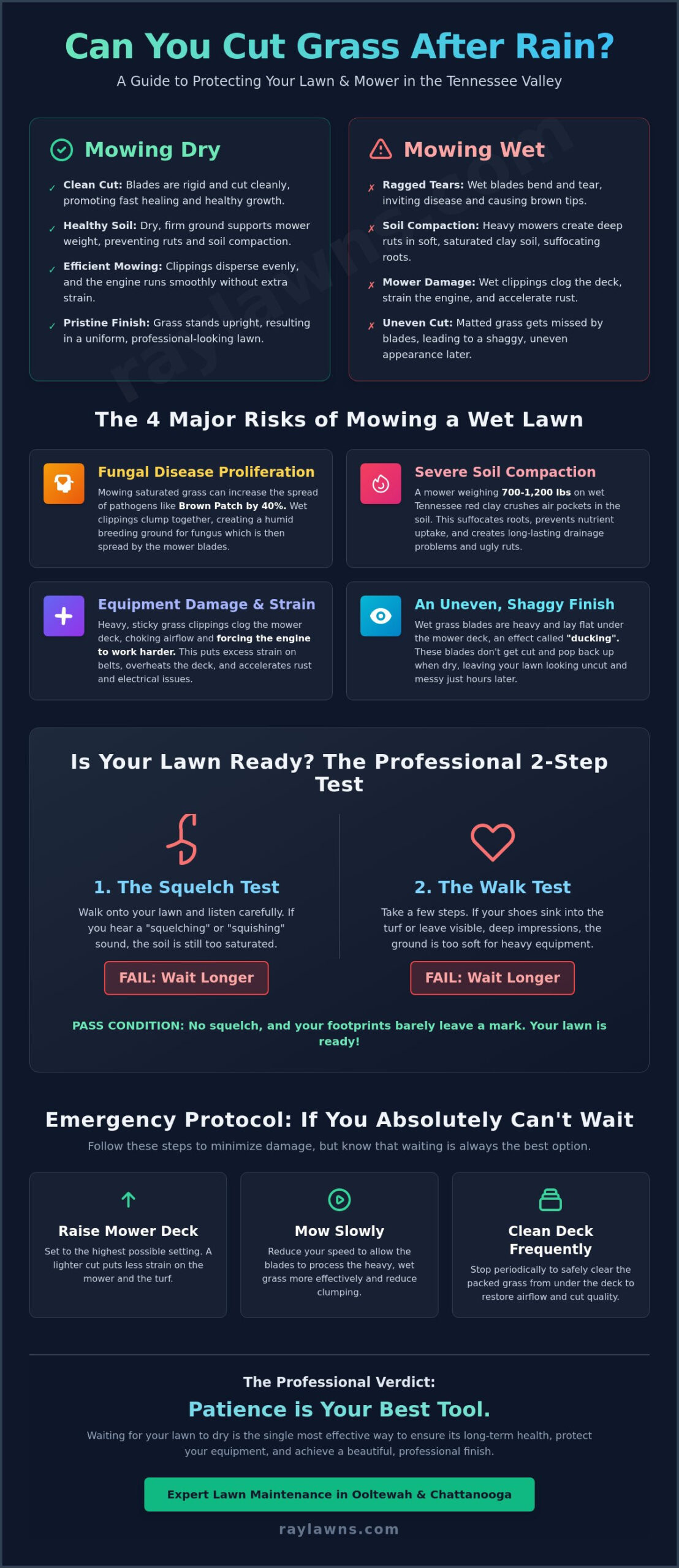
Homeowners in Ooltewah often face a difficult choice after a heavy downpour: can you cut grass after rain or should you wait for the sun to emerge? While a fast-growing lawn looks messy, mowing while the turf is saturated is a gamble that rarely pays off. When grass blades are soaked, they lose their natural rigidity. Instead of a clean, surgical snip, your mower blades shred the grass. This ragged, torn edge turns brown within 24 hours, leaving the entire lawn looking scorched despite the abundance of water.
The weight of the equipment is another major concern. Heavy residential mowers can easily create deep ruts in our local red clay. This pressure leads to soil compaction, which suffocates root systems by eliminating the air pockets necessary for oxygen and nutrient uptake. In areas like East Brainerd and Apison, where clay content is high, one ill-timed mow can cause drainage issues that persist for the rest of the growing season. This risk is particularly high for recent sod installations in Chattanooga. Walking or driving a mower over new, water-logged sod can shift the rolls and ruin the level grade of your yard.
Aesthetics also suffer due to the “ducking” effect. Wet grass blades often lay flat under the weight of the mower’s wheels or the air pressure from the deck. The blades don’t get cut at all. Once the sun dries the lawn, these missed blades stand back up, leaving the grass looking shaggy and uneven just hours after you finished the job.
Fungal Diseases and Humidity
Wet clippings act like a warm, damp blanket on your turf. With Ooltewah’s average summer humidity often exceeding 70 percent, these clippings don’t dry out quickly. They begin to rot. This environment is a primary catalyst for Brown Patch and Pythium Blight, two diseases that can devastate a lawn in days. As you move across the yard, the mower blades act as a delivery system, picking up fungal spores from one infected patch and depositing them across the entire property. It’s a common mistake that turns a small problem into a total lawn renovation project.
Equipment Damage and Clogging
Wet grass is incredibly heavy and sticky. It accumulates on the underside of the mower deck in thick layers, which chokes the airflow needed for a quality cut. This forces the engine to work significantly harder, putting unnecessary strain on drive belts and pulleys. Clumping is the primary cause of mower deck overheating. Beyond the engine stress, moisture accelerates rust on the deck and can short out sensitive electrical components on modern residential mowers. If you’re wondering if can you cut grass after rain without damaging your gear, the answer for most homeowners is a firm no.
Soil Compaction and the Problem with Tennessee Red Clay
In Ooltewah, Apison, and East Brainerd, the ground beneath your feet is dominated by heavy Tennessee red clay. This soil type is notorious for its density and poor drainage. When you wonder if can you cut grass after rain, you must consider the weight of your equipment against this specific soil. Saturated clay loses its structural integrity, becoming a soft, malleable surface. A standard residential zero-turn mower often weighs between 700 and 1,200 pounds. When that weight rolls over wet clay, it crushes the pore spaces that hold essential oxygen and moisture.
Compacted soil acts like a brick. It prevents nutrients from reaching the root zone, leading to thinning turf and increased weed pressure. Healthy grass requires at least 25 percent air space within the soil, a metric that is impossible to maintain if you’re frequently mowing on wet clay. If your yard has already suffered from heavy foot traffic or ill-timed mowing, you may need professional soil health recovery and lawn care to restore the proper balance of aeration and nutrients.
Ruts and Turf Damage
Wet clay soil doesn’t just compact; it shifts. Mower wheels easily slice through the turf layer, creating deep, unsightly ruts. These aren’t just cosmetic issues. Once Tennessee clay dries, these ruts harden into permanent tracks that are difficult to level without a full renovation. Additionally, when wheels sink even two inches into a soft spot, the mower deck drops with them. This causes “scalping,” where the blades cut into the grass crown and expose the soil. Following Purdue University tips for mowing wet turf can help you avoid these pitfalls by adjusting your deck height and checking soil firmness before you start. Deciding if can you cut grass after rain depends entirely on how much water the clay has already absorbed.
Drainage Issues and Standing Water
Soil compaction is the primary driver of long-term drainage problems in Chattanooga yards. Instead of the ground acting like a sponge, compacted clay acts like a paved driveway. Rainwater becomes runoff, pooling in low spots or flowing toward your home’s foundation. This cycle of saturation and compaction creates a “hardpan” layer that grass roots cannot penetrate. For yards with chronic standing water, installing French drains is often the only way to manage the volume of water we see during a typical Tennessee spring. If you’re tired of a soggy backyard, you can request a professional evaluation to see if your soil structure is the culprit.
The Squelch Test: How to Tell if Your Lawn is Ready
Professional lawn care requires more than just a sharp blade. It demands an accurate assessment of the turf before the mower ever leaves the trailer. In Ooltewah, the heavy red clay soil retains moisture longer than sandy coastal soils, making the timing of your maintenance critical. To determine can you cut grass after rain without damaging your property, follow this four step professional assessment.
- Step 1: The Walk Test. Traverse the lowest points of your yard first. Look for standing water or spots where the ground feels soft. If your footprint leaves a visible depression deeper than 0.5 inches, the soil is too saturated for heavy machinery.
- Step 2: The Squelch Test. Listen closely as you walk. If you hear a distinct “squelch” or splashing sound, water is displacing under your weight. This indicates the root zone is flooded, and a mower will likely cause immediate soil compaction.
- Step 3: The Blade Check. Examine the grass blades. Healthy, ready-to-mow grass stands upright at a 90-degree angle. If the blades are matted flat against the soil, the mower’s suction won’t be able to lift them for a clean, even cut.
- Step 4: The Clump Test. Grab a small handful of clippings or loose grass. Squeeze them in your palm. If they form a tight, dripping ball that doesn’t fall apart when you open your hand, the moisture content is too high for efficient mulching or bagging.
Timing Your Mow After Rain
The standard rule of thumb is to wait for the morning dew to lift completely. In the Tennessee Valley, this usually happens around 10:00 AM or 11:00 AM. However, local humidity levels often exceed 70 percent, which slows evaporation significantly. If the sun is out and a light breeze is moving through the valley, you might be ready 4 hours after a light shower. On overcast days with high humidity, you may need to wait a full 24 hours for the turf to stabilize. Always check the Ooltewah forecast for upcoming humidity spikes before you begin.
When You Absolutely Must Wait
Visible puddles or mud on your shoes are immediate “No-Go” signs. Mowing during an active drizzle is the worst choice you can make for your chattanooga lawn care routine. Wet grass is slippery, making it dangerous on the slopes common in our region. It also makes it nearly impossible to follow the One-Third Rule, which states you should never remove more than 33 percent of the grass height at once. Wet blades tear rather than cut, leaving your lawn vulnerable to fungal diseases like brown patch that thrive in our warm, damp climate.
Professional Tips for Mowing if You Can’t Wait
While the best answer to can you cut grass after rain is usually to wait for dry conditions, Ooltewah weather doesn’t always cooperate. If the forecast shows a week of storms and your lawn is already 6 inches tall, you have to act. Follow these professional steps to minimize damage to your turf and your equipment.
- Sharpen your blades: A razor-sharp edge is non-negotiable. Wet grass blades are flexible and slippery. A dull blade won’t cut them; it will shred them. This leaves the plant vulnerable to fungal infections that thrive in the 85 percent humidity common in Tennessee summers.
- Raise the deck: Set your mower to its highest setting, ideally 3.5 to 4 inches. Cutting high reduces the physical load on your mower’s engine and prevents the blade from scalping the soft, saturated soil.
- Side-discharge only: Never attempt to bag or mulch wet clippings. Wet grass is heavy and sticky. It will clog your discharge chute in 30 seconds and clump under the deck. Use the side-discharge setting to blow the clippings away from the uncut grass.
- Clean the deck immediately: Once you finish, hose out the underside of the mower. Wet clippings mixed with Ooltewah clay form a substance similar to concrete. If it dries, it restricts airflow and causes the deck to rust prematurely.
Mowing Patterns for Wet Lawns
Your strategy on the turf determines if you’ll have a lawn or a mud pit. Avoid tight zero-radius turns. These maneuvers tear the grass roots right out of the soft soil. Use wide, sweeping turns instead. You should also overlap your rows by 50 percent. This ensures the blades catch every wet stalk that might have been pushed down by the mower wheels. Always change your direction from the previous week. This prevents deep ruts from forming in the soft ground, which is a common issue in East Brainerd and Apison yards.
Post-Mow Maintenance
The work isn’t done when the engine stops. You must rake up any large clumps of grass immediately. These hay piles block sunlight and trap moisture, which will smother and kill the turf beneath them in 48 hours. After raking, clean your equipment. Use a plastic putty knife for deck scraping. Deck scraping is the vital step of removing caked-on debris from the mower housing to ensure proper blade rotation and equipment longevity. Always disconnect the spark plug wire before reaching under the deck to ensure safety.
Expert Lawn Maintenance in Ooltewah and Chattanooga
Patience is the most valuable tool in any Tennessee homeowner’s shed. While the urge to tidy up after a storm is strong, jumping the gun leads to compacted clay and torn turf. In areas like Ooltewah and Apison, our heavy soil often retains moisture for 48 to 72 hours after a typical one-inch rainfall. If you ask can you cut grass after rain, the answer is usually to wait until the blades feel dry to the touch and the soil doesn’t give under your boot. Rushing the process creates a cycle of lawn stress that takes months to correct.
Ray Lawns provides the consistent, professional care needed to manage these local challenges. We understand the Chattanooga climate and how it impacts different grass types. Our team doesn’t just mow; we manage the health of your outdoor space. By sticking to a disciplined schedule, we prevent your yard from turning into a jungle during the wet spring months when growth rates often exceed 3 inches per week. Reliable service means your lawn stays manicured without the stress of tracking weather patterns yourself.
The Ray Lawns Professional Approach
Every visit starts with a site evaluation. Our crews walk the property to check for standing water or soft spots that could be damaged by heavy equipment. We use commercial-grade mowers designed for precision, but even a 1,200-pound machine can cause deep ruts if the ground is saturated. If your yard has already suffered from poor timing or drainage issues, we offer sod installation services to restore your curb appeal. We replace thin or damaged sections with fresh turf that integrates perfectly with your existing lawn.
Request a Professional Evaluation
Maintaining a pristine lawn in East Brainerd or Collegedale requires more than just a mower; it requires a strategy. We provide recurring maintenance that takes the guesswork out of your weekends. You won’t have to wonder can you cut grass after rain when you have a dedicated team monitoring the soil conditions for you. Beyond standard mowing, we invite you to explore our full range of landscaping services to enhance your property’s value and functionality.
We take pride in our manual work and the visible results we deliver for our neighbors. Stop fighting the weather and let the experts handle the heavy lifting. Contact Ray Lawns for a free lawn maintenance quote today!
Protect Your Ooltewah Curb Appeal
Maintaining a pristine yard in the Tennessee Valley requires more than just a mower; it demands an understanding of our local environment. You’ve learned that the answer to whether can you cut grass after rain depends entirely on your soil’s saturation levels. Tennessee red clay holds moisture longer than sandy soils. This makes it easy to cause permanent compaction or unsightly ruts if you rush the job. Since 2002, our team has managed these specific local conditions for homeowners throughout Ooltewah and Chattanooga. We know that waiting for the squelch test to pass is the difference between a healthy lawn and a mud pit. Our family-owned operation prioritizes the long-term health of your turf over a quick, messy cut. If the rain won’t let up and your grass is getting out of control, let an expert handle the timing and the technique. We’ll ensure your property stays meticulous without the risk of soil damage. Get started today and Get a Free Lawn Maintenance Quote from Ray Lawns. Your lawn deserves the steady hand of a local professional who understands the ground we walk on.
Frequently Asked Questions
Is it okay to mow the lawn if the grass is just damp?
You can mow when the grass is slightly damp, but it won’t result in the cleanest cut. When asking can you cut grass after rain, the answer depends on the saturation level. Wait until the morning dew evaporates, usually around 10:00 AM in Ooltewah. Damp blades bend under the mower’s weight, leading to an uneven finish. If you must mow, raise your deck height by 0.5 inches to reduce stress.
Will mowing wet grass dull my mower blades faster?
Mowing wet grass dulls your blades significantly faster than cutting dry turf. Water increases the friction between the blade and the grass, while wet clippings stick to the steel and trap abrasive grit. Sharp blades are essential for a clean cut. A dull blade tears the grass, leaving 100 percent of your lawn vulnerable to pests and heat stress during the peak of Tennessee summers.
How long should I wait to mow after a heavy Tennessee rainstorm?
Wait at least 12 to 24 hours after a heavy downpour before you start your mower. In the heavy clay soils of East Brainerd, drainage is slow, and the ground remains soft long after the rain stops. Test the area by walking on it. If your footprints leave a 0.25 inch indentation or if water pools around your shoe, the ground is still too saturated for heavy equipment.
Can I mulch wet grass clippings if I have a powerful mower?
You shouldn’t mulch wet grass, even with a high-horsepower commercial mower. Wet clippings are heavy and sticky, so they won’t circulate properly inside the deck to be finely shredded. Instead of disappearing into the turf, they form thick mats that block oxygen. If you’re wondering can you cut grass after rain, remember that bagging is the only professional way to handle clippings when the yard is wet.
What happens if I leave clumps of wet grass on my lawn?
Leaving wet clumps on your lawn will kill the grass underneath within 48 hours. These heavy mats block sunlight and trap moisture, creating a perfect environment for fungal growth. If you see clumps after mowing, use a rake or a leaf blower to spread them out immediately. Neglecting these spots results in dead brown patches that require expensive reseeding in the fall to restore your curb appeal.
Does cutting wet grass cause Brown Patch disease in Chattanooga?
Cutting wet grass significantly increases the risk of spreading Brown Patch across your yard. This fungus thrives in the 70 percent humidity common in Chattanooga during July and August. The mower blades pick up fungal spores from one area and deposit them throughout the rest of the lawn. Wet conditions provide the moisture the fungus needs to infect healthy grass blades within 12 hours of the initial cut.
Can I mow my lawn while it is actively raining?
Don’t mow while it’s actively raining because it’s unsafe for both the operator and the equipment. Traction is reduced on the slopes common in Ooltewah, which increases the risk of the mower sliding or tipping. Rain also forces the grass flat against the ground, making it impossible to get an even cut. You’ll likely end up with a ragged, unsightly lawn and a clogged mower deck that requires extensive cleaning.
How do I clean my mower deck after cutting wet grass?
Clean your mower deck immediately after use by scraping away the built-up layer of wet clippings. Use a plastic putty knife to remove the 1-inch thick layer of debris that hardens like concrete if left to dry. If your mower has a washout port, hook up a garden hose to flush out the remaining residue. Keeping the deck clear maintains the airflow necessary for a professional, meticulous cut every time.
get a quote today!
"*" indicates required fields

We take lawn care so seriously that we consider it an art. Our basic service is lawn maintenance, which includes lawn mowing, trimming, edging, and blowing off clippings.

Our landscaping services include most types of yard work. We are excellent at trimming hedges, installing mulch, and creating flowerbeds.

This is our rescue effort for yards that have become entirely overgrown. Includes multiple passes with the lawn mower to tame even the most unruly yards.