
What if your Saturday morning rush to beat the next rainstorm is actually doing more harm to your Chattanooga yard than letting the grass grow an extra three inches? We’ve all been there. When the rain doesn’t stop for five days in Ooltewah, you feel the pressure to get out there before the fescue looks like a hay field. You start to wonder, can you mow the lawn when it’s wet without causing permanent damage? It’s a common dilemma for homeowners in East Brainerd and Collegedale who take pride in their curb appeal.
Discover why mowing a wet lawn in Tennessee can damage your grass, compact our heavy clay soil, and strain your expensive equipment. This guide provides the professional way to handle a rain-soaked yard without leaving ugly clumps or ruts behind. We will look at the specific risks of fungal disease and the exact signs that tell you when it is finally safe to restart the mower for a clean, manicured finish.
Key Takeaways
- Learn why the question of “can you mow the lawn when it’s wet” is about more than just convenience—it’s about protecting your grass from tearing and fungal diseases.
- Discover how Chattanooga’s heavy clay soil becomes vulnerable to deep compaction when heavy machinery rolls over a saturated yard.
- Identify the hidden mechanical risks wet grass poses to your mower, from engine strain to deck corrosion caused by clumping clippings.
- Master the professional techniques for managing damp turf, including height adjustments and blade maintenance that ensure your lawn stays healthy during rainy seasons.
Can You Mow the Lawn When It’s Wet?
Technically, the answer is yes. Your mower will start and the blades will spin. However, from a professional perspective, we strongly discourage it. Mowing in the rain or immediately after a heavy downpour creates a list of problems that can take weeks to correct. While you might want to keep your property looking sharp, can you mow the lawn when it’s wet without causing damage? Usually, the answer is no. Professional chattanooga lawn care requires patience and timing to ensure the grass remains healthy and the soil stays level.
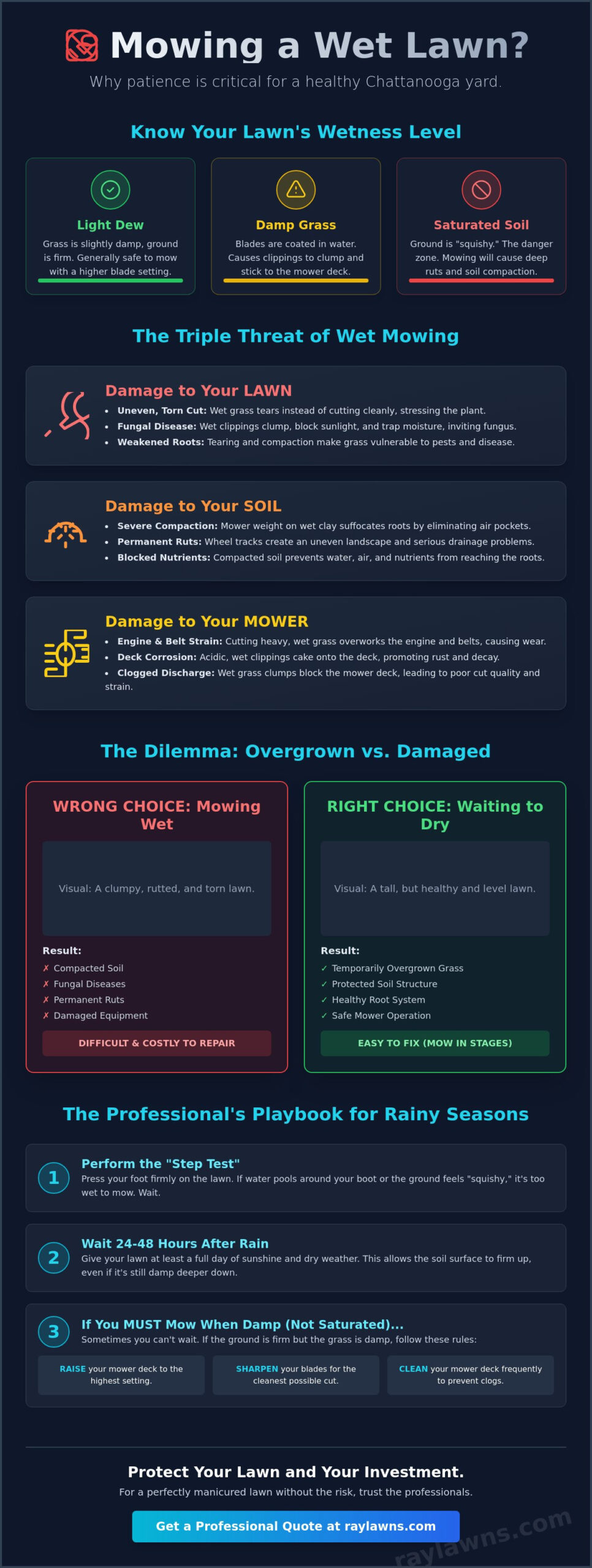
Homeowners in Ooltewah and East Brainerd often feel immense pressure during the Tennessee spring. Our region frequently sees 3 to 5 inches of rainfall in a single week. This moisture, combined with rising temperatures, triggers a rapid “rain-growth” cycle. You might see your grass grow 3 inches in just 4 days. It is tempting to get out there the moment the rain stops, but you must understand the wetness scale first. understanding your lawn means knowing the difference between a little morning dew and a saturated root system.
- Light Dew: This is manageable. If the grass is just slightly damp to the touch but the ground is firm, you can usually proceed with a higher blade setting.
- Damp Grass: The blades are coated in water. This causes clippings to clump and stick to the underside of your mower deck.
- Saturated Soil: This is the danger zone. The ground is soft, and the root system is vulnerable to being crushed or torn out entirely.
The Difference Between Damp and Saturated
Before you pull the starter cord, perform the step test on your Ooltewah lawn. Walk to a low-lying area and step down firmly. If water pools around the edge of your boot or the ground feels “squishy,” the soil is saturated. In our local clay-heavy soil, weight from a mower causes immediate compaction. This suffocates the roots and leaves permanent ruts. Morning dew usually evaporates by 10:00 AM, but post-storm saturation can require 24 to 48 hours of sunshine before it is safe to mow.
The “Tall vs. Wet” Dilemma
Many homeowners worry that if they don’t mow today, the grass will be a foot tall by next weekend. It is a valid concern, but a slightly overgrown lawn is much easier to fix than a rutted one. Tall grass can be brought back to height in two stages once it dries. Conversely, if you scalp a wet lawn or compact the soil, you may need professional aeration or top-dressing to repair the damage. We always prioritize soil integrity over grass height. If the ground is soft, park the mower and wait for a dry spell to protect your curb appeal.
The Danger of Soil Compaction in Chattanooga’s Clay
Homeowners in Ooltewah and Apison deal with some of the heaviest clay soil in Tennessee. When this clay is dry, it’s hard as a rock. When it’s saturated, it becomes highly malleable. Water acts as a lubricant between soil particles. This makes it incredibly easy for the weight of a mower to press those particles together. A standard residential zero-turn mower can weigh over 800 pounds. When you combine that weight with wet ground, you have the perfect recipe for deep compaction. Experts at Michigan State University highlight that wet conditions significantly increase the potential to compact the soil, which destroys the structure your grass needs to thrive.
Compacted soil is the primary reason lawns in our area struggle to stay green during the summer heat. If you’re asking can you mow the lawn when it’s wet, you have to consider the long-term health of your dirt. Once the soil is packed tight, it stays that way. This density prevents nutrients and water from reaching the root zone. It turns a healthy yard into a hard, impenetrable surface where grass simply cannot grow. While the short answer to can you mow the lawn when it’s wet is technically yes, the resulting soil damage often says no.
How Mower Ruts Destroy Your Curb Appeal
Wheel ruts are a common sight in East Brainerd after a heavy rain. When a heavy machine rolls over soft clay, it displaces the soil and creates deep grooves. These aren’t just cosmetic issues. They are structural changes to your landscape. Without professional grading, these ruts often become permanent fixtures. They trap water, creating small pools that serve as breeding grounds for mosquitoes. Over time, these ruts alter your property’s natural drainage, sending water toward your foundation instead of away from it.
Oxygen, Roots, and Drainage
Your grass roots need air just as much as they need water. Healthy soil has tiny air pockets. Compaction seals these pockets off, essentially suffocating the root system. If you notice thinning grass or water puddling in areas that used to be dry, your soil is likely already compacted. This lack of drainage often leads homeowners to believe they need expensive French drains to fix the mess. Preventing compaction is much easier than repairing it. If you’re concerned about your lawn’s health, a professional lawn evaluation can help identify these issues before they require major renovations.
Why Wet Grass Clippings Are a Recipe for Lawn Disease
When you ask can you mow the lawn when it’s wet, the answer often lies in what you cannot see with the naked eye. Mowing wet turf does more than just create a mess; it creates a biological crisis for your grass. Wet blades are heavy and flexible. Instead of a sharp, clean slice, your mower blade hits the grass with a blunt force that tears the tissue. These ragged, open wounds act as entry points for pathogens to invade the plant.
Clumping is the second half of this problem. Wet clippings lose their ability to move through the mower deck and discharge evenly. They bunch up into heavy, sodden mats. These clumps create a physical seal over your healthy grass, blocking sunlight and trapping heat against the soil. In the humid 90 degree summers we experience in Ooltewah, a single clump can kill the grass beneath it in less than 48 hours. Professional crews often wait for the morning dew to burn off to minimize the potential for soil compaction and ensure clippings distribute properly.
Fungal Threats in the Tennessee Valley
Our local climate in Hamilton County is a breeding ground for fungi like Brown Patch and Dollar Spot. These diseases thrive in persistent moisture. When you mow a wet lawn, the mower deck becomes a delivery system for disease. Spores from a small infected patch stick to the wet underside of the mower and get deposited across your entire yard. Tall Fescue, a staple of Chattanooga lawn care, is particularly prone to these outbreaks when the foliage stays wet for extended periods. Once these spores take hold, they can turn a lush green space into a sea of brown circles in a matter of days.
The Impact on Grass Blade Integrity
Under a microscope, a blade of grass cut while dry shows a straight, clean line. A blade cut while wet looks like a piece of frayed rope. These ragged edges turn brown quickly, giving your lawn a dull, tan cast even if the root system is healthy. This damage also forces the plant to divert its energy toward healing wounds rather than growing deep roots. In the middle of a Tennessee heatwave, that extra stress leads to total plant failure. Understanding can you mow the lawn when it’s wet helps you avoid these self-inflicted wounds that make recovery nearly impossible during the peak heat of July and August.
How Wet Mowing Damages Your Equipment and Cut Quality
Mowing wet grass forces your equipment to work twice as hard. Heavy, moisture-laden clippings create significant mechanical resistance. This strain causes drive belts to slip or snap and forces the engine to burn more fuel to maintain blade speed. When you ask can you mow the lawn when it’s wet, you have to consider the long-term repair costs. Wet grass clippings are approximately 30 percent heavier than dry ones, turning a routine chore into a grueling task for your mower’s internal components.
The moisture also creates a corrosive environment. Wet grass contains organic acids that eat away at the steel underside of your mower deck. Over time, this leads to rust holes and structural failure. Additionally, wet blades don’t cut; they tear. This dulls the edge 50 percent faster, requiring you to sharpen blades every 10 hours of use rather than the standard 25 hour interval. If you must perform an emergency cut, clean the mower immediately after the job. Use a plastic putty knife to scrape the underside of the deck once the engine is off and the spark plug is disconnected. Never leave wet clumps to dry, as they harden like concrete and become nearly impossible to remove later.
Deck Clogging and Airflow
A mower deck relies on high-velocity airflow to create lift, pulling the grass blades upright for a clean, precision cut. Wet grass sticks to the interior walls, disrupting this vacuum effect. This leads to ragged edges and an uneven finish. Clogged decks also restrict the discharge chute, causing the mower to drop heavy clumps that smother your turf. This lack of efficiency can increase your mowing time by 40 percent while significantly raising fuel consumption.
The Risk of Slipping and Safety
Chattanooga’s topography features many rolling hills and steep embankments. In neighborhoods like Ooltewah or East Brainerd, mowing on wet slopes is a major safety hazard. Traction disappears on wet fescue. Riding mowers are prone to sliding sideways or tipping on inclines greater than 15 degrees when the ground is slick. If you can’t avoid a slope, mow up and down rather than across, and always wear boots with aggressive tread. In many cases, it’s safer to wait 24 hours for the soil to firm up.
Professional Tips for Managing a Wet Lawn in Tennessee
Sometimes the Tennessee rain doesn’t let up, and you’re forced to act. If you must ask, “can you mow the lawn when it’s wet,” the answer is yes, but only with specific adjustments. Start by raising your mower deck. Follow the “One-Third Rule” strictly. Never remove more than 33% of the grass blade height in a single pass. If your grass has reached five inches due to a week of rain, set your blades to at least 3.5 inches. This reduces the load on your engine and prevents the mower from sinking into soft Ooltewah soil.
Sharpening your blades is twice as important during the rainy season. Wet grass is slick and tough to cut. A dull blade tears the grass instead of slicing it, leaving jagged edges that invite fungal diseases like Brown Patch. We recommend sharpening blades every 20 to 25 hours of operation to maintain precision. A clean cut allows the plant to heal faster, even in high-moisture conditions.
Avoid mulching or bagging. Wet clippings turn into a thick, heavy paste that clogs the mower deck and suffocates the turf. Switch your mower to side-discharge mode. This spreads the clippings across the surface so they can dry out without forming a solid mat. If the job feels too risky for your equipment or your schedule is packed, it’s time to hire a professional chattanooga lawn care team to handle the heavy lifting and keep your property looking sharp.
The Best Time of Day to Mow
Late afternoon is the sweet spot for Tennessee lawns. By 3:00 PM, the sun has usually evaporated the heavy morning dew common in the Tennessee Valley. Monitor local humidity levels; if humidity stays above 75%, the grass will remain saturated much longer. For small, stubborn damp patches near your porch or under trees, use a leaf blower. This simple trick can shave 40 minutes off your wait time by physically removing water droplets from the blades before you start the engine.
Recovery Steps After a Wet Mow
Your work isn’t finished once the mower is back in the garage. Clumps of wet grass are “lawn killers” that trap heat and moisture, rotting the healthy grass underneath. Walk the yard and break up these clumps manually with a rake or a leaf blower to ensure the turf can breathe. This prevents yellow spots from forming within 48 hours of your cut.
Wet mowing often leads to soil compaction, especially in the heavy clay found in East Brainerd and Collegedale. Schedule core aeration in the fall or spring to loosen the ground and improve drainage. If your mower left deep ruts or the grass is beyond saving due to mud and traffic, consider professional sod installation to restore your curb appeal quickly. Taking these steps ensures your lawn stays resilient regardless of the weather.
Protect Your Tennessee Turf for the Long Term
While sticking to a schedule is important, mowing while the grass is soaked does more harm than good. Tennessee clay soil is notoriously dense and unforgiving. When you add the weight of a mower to wet ground, you’re crushing the soil structure and creating drainage problems that take years to fix. Beyond soil compaction, wet clippings clump together and suffocate your turf. These clumps invite fungal diseases that thrive in our humid Chattanooga climate.
If you’re still asking can you mow the lawn when it’s wet, the professional answer is to wait for dry conditions. Precision cuts and equipment longevity depend on it. Ray Lawns has been family-owned and operated since 2002. We’ve spent over 20 years mastering the unique challenges of Ooltewah, Apison, and the greater Chattanooga area. We’re specialists in Tennessee clay soil and drainage solutions who take pride in meticulous results. Request a Free Professional Lawn Evaluation from Ray Lawns today. Let’s turn your property into a source of pride with a dependable, expert approach.
Frequently Asked Questions
Is it worse to mow tall grass or wet grass?
Mowing wet grass is worse because it causes long-term damage to both the turf and your equipment. You can manage tall grass by following the one-third rule and taking the height down in stages. Wet grass tears the plant tissue instead of cutting it, which leaves the lawn vulnerable to pests and diseases that thrive in Chattanooga’s humid climate.
How long should I wait after it rains to mow my lawn in Chattanooga?
You should wait 12 to 24 hours after a rainstorm before you start your mower. Our regional humidity and heavy clay soil often keep grass blades saturated long after the clouds have cleared. If you’re wondering can you mow the lawn when it’s wet, the answer is usually no. Wait until the blades are dry to the touch to ensure a clean, professional cut.
Can I mow my lawn when the ground is damp but the grass is dry?
You shouldn’t mow if the ground is soft enough to show footprints or tire tracks. Even if the grass looks dry, damp soil in Ooltewah and East Brainerd is prone to severe compaction. A standard zero-turn mower weighs over 700 pounds. That weight crushes the air pockets in the soil, which starves your lawn’s root system of essential oxygen.
What happens if I leave wet grass clumps on my lawn?
Wet grass clumps will smother your turf and invite fungal pathogens like Brown Patch within 48 hours. These heavy mats block sunlight and prevent necessary evaporation. If you leave them on the yard, they’ll create yellow dead spots and kill the grass underneath. You must rake these clumps up or blow them out to maintain a healthy lawn.
Does mowing wet grass dull the mower blades faster?
Mowing wet grass dulls your blades significantly faster than cutting dry turf. Water increases the friction between the blade and the grass, forcing the mower to work harder. In just one session, you can lose the sharp edge needed for a precision cut. Dull blades tear the grass, leaving your lawn with a brown, frayed appearance after a few days.
Are electric mowers safe to use on wet grass?
Using an electric mower on wet grass is generally discouraged for safety and performance reasons. While many 40V or 80V models have sealed components, moisture can still corrode electrical contacts over time. Wet clippings are also heavier. This puts a 25 percent higher load on the motor, which drains your battery much faster than a standard dry cut.
How do I clean my mower deck after cutting wet grass?
Use a plastic scraper or putty knife to remove the buildup from the mower deck immediately after you finish. Wet grass contains acidic sap that eats through paint and causes rust on the metal housing. If you wait more than 4 hours, the debris hardens like concrete. This blocks the airflow needed for the mower to mulch or discharge clippings properly.
get a quote today!
"*" indicates required fields

We take lawn care so seriously that we consider it an art. Our basic service is lawn maintenance, which includes lawn mowing, trimming, edging, and blowing off clippings.

Our landscaping services include most types of yard work. We are excellent at trimming hedges, installing mulch, and creating flowerbeds.

This is our rescue effort for yards that have become entirely overgrown. Includes multiple passes with the lawn mower to tame even the most unruly yards.