
A heavy Tennessee downpour can turn a beautiful landscape bed into a muddy mess on your driveway in minutes. If you live on one of the many sloped lots in Hamilton County, you already know the struggle of keeping traditional mulch from washing away. It’s frustrating to spend your weekend working outside only to see your investment end up on the sidewalk after a single storm. We understand you want a yard that stays put and looks sharp without the constant headache of cleanup.
This guide shows you why professional pine straw installation Apison is the most effective strategy for our local hills and clay soil. You’ll discover how the right application prevents erosion and stops weeds from taking over your garden beds. We will break down the technical benefits of Longleaf and Slash pine straw while explaining the professional methods that keep your groundcover exactly where it belongs. You can transform a high-maintenance slope into a clean, stable part of your home’s curb appeal.
Key Takeaways
- Understand why pine straw is the most effective tool for managing erosion on the steep, clay-heavy slopes common in Hamilton County.
- Discover how professional pine straw installation Apison uses mechanical bed edging to create a physical barrier that keeps needles off your porch and driveway.
- Learn the technical differences between Longleaf and Slash needles to ensure you select a grade that offers the best durability and weed suppression.
- Identify the specific installation depth needed to insulate plant roots and maintain the soil acidity required for healthy local dogwoods and azaleas.
- Gain insights into why “fluffing” straw is a common mistake and how proper tucking techniques ensure your groundcover stays put even in high winds.
Why Pine Straw is the Preferred Ground Cover for Apison Landscapes
Apison homeowners deal with unique environmental challenges that make groundcover choice a technical decision rather than just a cosmetic one. Heavy seasonal rainfall and the rolling terrain of Hamilton County mean your landscape beds are constantly under threat from erosion. While many residents default to shredded hardwood mulch, pine straw is often the superior choice for our local conditions. It isn’t just about the rustic, natural look. It’s about how the material performs when the sky opens up over the Tennessee Valley.
Professional pine straw installation Apison focuses on creating a stable, healthy environment for your high-value plants. Pine needles are naturally acidic. This provides a significant advantage for the azaleas, hydrangeas, and dogwoods that define the curb appeal in our local neighborhoods. As the straw slowly decomposes, it naturally lowers the soil pH to the levels these ornamental plants need to thrive. If you are investing in landscaping Chattanooga properties, matching your groundcover to your plant palette is a critical first step.
Managing Apison’s Red Clay Soil
Hamilton County is famous for its dense red clay. This soil type is notorious for holding water while lacking the oxygen roots need to grow. Thick layers of shredded hardwood can sometimes “suffocate” clay by creating a dense, soggy barrier that prevents gas exchange. Pine straw is different. It is highly breathable. The loose structure allows air and water to reach the soil surface while still insulating roots from the 90-degree heat of a Tennessee July. Over several seasons, the decomposing needles add organic matter to the clay, gradually improving its texture and drainage naturally.
Erosion Control on Sloped Tennessee Yards
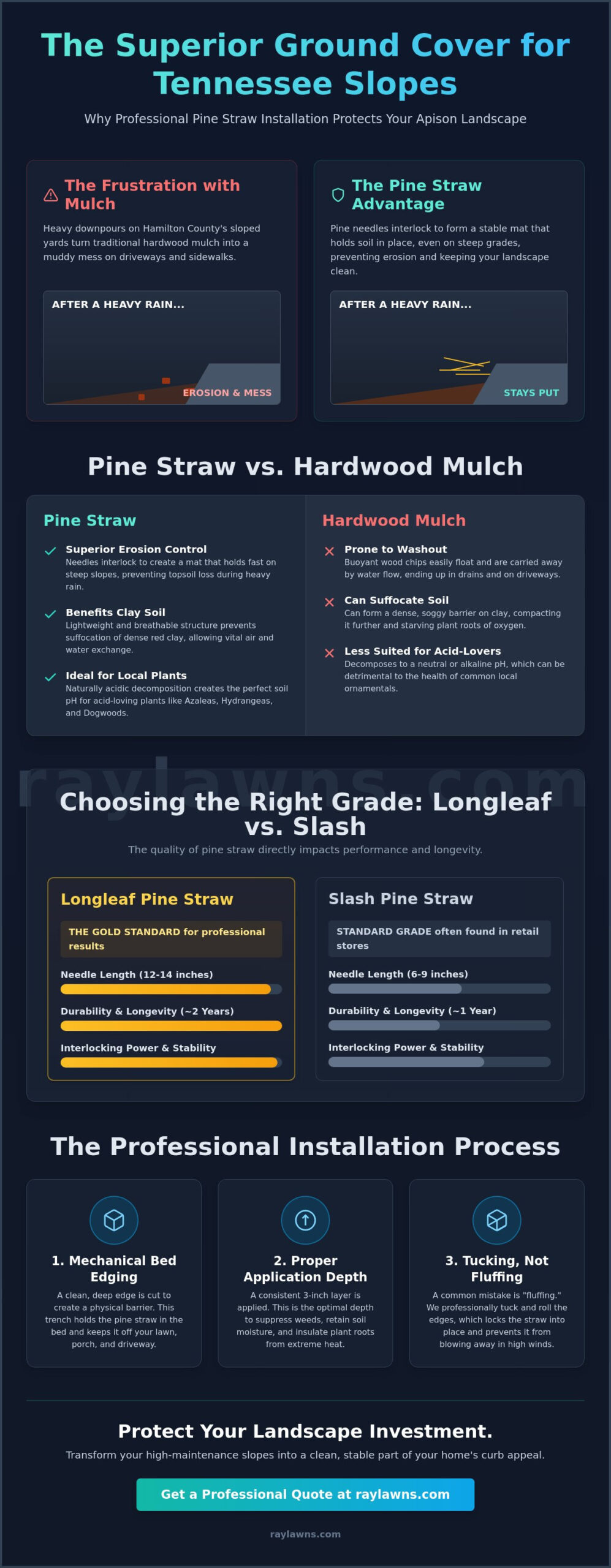
If your yard has any degree of slope, you’ve likely seen your mulch wash away after a summer thunderstorm. Hardwood chips are buoyant; they float and travel with the water flow. Pine straw, particularly needles from the Longleaf pine, has a unique physical property. The needles interlock and “knit” together. This creates a protective mat that stays put even on steep grades. This mat slows down rainwater runoff, allowing it to soak into the ground rather than stripping away your topsoil. In the steeper areas of Apison, this interlocking mesh is the best defense against a muddy driveway after a storm.
- Moisture Retention: Keeps soil cool and damp during humid drought cycles.
- Weed Suppression: A three-inch layer blocks the sunlight weed seeds need to germinate.
- Soil Health: Adds vital nutrients back into the ground without the need for synthetic additives.
- Stability: Interlocking needles resist wind and water movement better than bark or wood chips.
Selecting the Right Grade: Longleaf vs. Slash Pine Straw
Not all pine straw is the same. When you walk into a big-box store, you might see generic bales that look fine in the plastic wrap, but the quality varies wildly once you spread it. For a high-quality pine straw installation Apison homeowners typically choose between two main varieties: Longleaf and Slash. Choosing the right one determines how often you’ll need a refresh and how well the beds hold up against the wind. While some people worry about the material affecting their plants, university research into common myths about pine straw confirms it’s a safe, sustainable choice for almost any landscape.
The grade you select impacts the visual “pop” of your property in neighborhoods like East Brainerd and Apison. A premium straw stays bright and clean, while lower grades can look tired and gray within just a few months. If you’re investing in a larger landscaping Chattanooga project, the groundcover is the finishing touch that ties everything together. Don’t let a cheap bale ruin the look of new stone work or fresh plantings.
The Longleaf Advantage
Longleaf pine straw is the gold standard for professional work. These needles are impressive, often measuring between 12 and 14 inches in length. This extra length is exactly why they interlock so effectively on the sloped yards common in Hamilton County. Because Longleaf needles have a higher natural resin content, they break down much slower than other varieties. You can expect a Longleaf bed to maintain its integrity for up to two years, whereas cheaper options might fail in six months. It also holds a deep, vibrant bronze-gold color that looks professional and well-maintained year-round.
When to Use Slash Straw
Slash pine straw is a secondary option often used for high-traffic areas or temporary site stabilization. The needles are significantly shorter, usually around 7 to 9 inches, and they lack the heavy resin of Longleaf. This means they decompose faster and tend to lose their color quickly, turning a dull gray after one season of Tennessee sun. We generally recommend Slash straw for budget-conscious clean-ups or areas where the straw will be disturbed frequently and needs regular replacement anyway. If you aren’t sure which grade fits your property, you can always request a professional evaluation to see what will perform best in your specific yard.
It’s a simple cost-benefit calculation. While Longleaf bales cost more upfront, the labor savings are significant. You’ll spend less time and money on reapplications over a three-year period. Investing in the right grade from the start ensures your landscape beds remain a source of pride rather than a recurring chore.
The Professional Installation Process: Beyond Just Spreading
Many homeowners assume that installing pine straw is as simple as breaking open a bale and shaking it loose. This approach is why so many yards in our area end up with needles scattered across the driveway after the first gust of wind. A professional pine straw installation Apison job is a systematic process that begins long before the first needle hits the soil. We focus on the structural preparation of your landscape beds to ensure the groundcover stays where we put it. This meticulous approach separates a DIY weekend project from a high-quality landscape transformation.
The first step in our application process is establishing a consistent 3-inch depth across the entire bed. This specific thickness is the industry standard for effective weed suppression and moisture retention. If the layer is too thin, sunlight reaches the soil and triggers weed growth. If it’s too thick, it can actually shed water away from plant roots or provide a nesting ground for unwanted pests. We spread the material with precision, ensuring every square foot of your garden bed is protected and insulated against the elements.
Mechanical Bed Edging
Before spreading any material, we create a clear boundary between your turf and your garden beds. We use specialized mechanical tools to cut a clean, 90-degree edge into the soil. This creates a deep “lip” that acts as a physical barrier. This edge is vital for keeping the straw contained and preventing it from migrating into your grass. If your property needs more than just fresh straw, we often perform this step as part of our comprehensive landscaping services in Chattanooga to redefine the shape and flow of your outdoor spaces. A crisp edge is the foundation of a professional look.
The Art of the Rolled Edge
One of the most common complaints we hear from homeowners is that pine straw blows away. This happens because the edges are left loose and “fluffy,” allowing the wind to get underneath the needles and lift them. Professionals use a technique called “tucking” or “rolling” to prevent this. We use pitchforks to fold the top layer of straw under itself, wedging it firmly into the mechanical edge we cut earlier. This creates a dense, rounded border that looks sharp and stays put. It effectively seals the bed against the wind and heavy rainfall, solving a major landscaping headache for sloped properties.
The final stage of the process is a thorough cleanup. We use blowers to remove every stray needle from your porches, sidewalks, and driveways. A professional installation should look like a finished piece of art, where the lines are crisp and the hard surfaces are spotless. We take pride in leaving your property better than we found it, ensuring your new groundcover is a source of pride rather than a mess to clean up.
Solving Common Pine Straw Problems: Wind, Pests, and Longevity
Professional pine straw installation Apison avoids the common pitfalls that lead to messy driveways and frustrated homeowners. One of the biggest mistakes amateur installers make is “fluffing” the straw. They shake the needles vigorously to create volume, which makes a few bales look like a lot of coverage. This is a shortcut that backfires. Fluffed straw is light and airy, making it the perfect target for a gust of wind to lift it right out of the bed. Instead, the material should be laid in dense, overlapping layers that settle into a cohesive mat that resists displacement.
Wind Resistance Strategies
The first 48 hours after installation are the most critical for the longevity of your landscape beds. During this settling period, the needles haven’t yet knit together. We recommend a light watering immediately after the job is done. This extra weight helps the straw compress and “set” into place. If you have recently completed a sod installation, the established grass line acts as a natural speed bump for any needles that try to migrate. This physical barrier keeps your landscape beds looking sharp and contained, even during typical East Tennessee thunderstorms.
Myth-Busting: Pests and Decay
We often hear concerns about pests, particularly the “snake myth.” While no groundcover is completely snake-proof, pine straw is actually less inviting than many alternatives. Damp, rotting wood mulch provides a dark, moist environment that attracts the insects and slugs that snakes eat. Pine straw stays drier and allows for better airflow, which helps keep your foundation clear of the excess moisture that attracts termites and other pests. Proper installation depth is the real key to managing the ecosystem around your home’s perimeter without creating a habitat for unwanted visitors.
To maintain that vibrant look without the cost of a full replacement, we suggest a “top-dress” refresh every 6 to 12 months. This involves adding a thin, one-inch layer of fresh straw over the existing base to restore the bronze-gold color. We follow a specific safety checklist during every application to protect your home:
- Foundation Clearance: We maintain a 12 to 18 inch gap from the house siding.
- HVAC Protection: We keep needles away from outdoor units to prevent airflow blockages.
- Depth Control: We ensure the total depth never exceeds 4 inches to prevent mold growth.
Keeping combustible materials away from structures is a standard professional practice that protects your property from fire risks. If you’re ready to solve your landscaping headaches for good, contact our team for a free estimate today.
Professional Landscaping and Pine Straw in Apison with Ray Lawns
Ray Lawns has served the Tennessee Valley since 2002. We aren’t just laborers; we are local experts who understand the specific challenges of Hamilton County. Our team has spent over two decades working with the heavy red clay and steep terrain that define yards in Apison and Ooltewah. We know that a successful pine straw installation Apison homeowners can rely on requires more than just a truck and a pitchfork. It requires a deep understanding of how local rainfall patterns impact your topsoil and how to structure a landscape bed to survive a summer storm.
We take a full-service approach to every property. We don’t just throw straw over existing problems. If your yard has drainage issues or uneven ground, we address those foundational elements first. Our family-owned business is built on the idea that quality workmanship speaks for itself. We show up on time, work hard, and treat your property with the respect it deserves. Our goal is to take the stress out of home maintenance by providing results that are immediately visible and long-lasting.
Comprehensive Outdoor Solutions
Often, a fresh layer of pine straw is the final step in a larger property transformation. We frequently integrate our groundcover services with privacy tree installation to create a finished, cohesive look for your perimeter. Before we lay a single needle, we evaluate the land. Proper site grading is essential to ensure water moves away from your foundation and doesn’t wash your new straw into the street. By handling the grading and the groundcover together, we create a stable environment that looks professional and functions perfectly.
Your Next Step for a Beautiful Yard
Getting started is straightforward. You can schedule a site evaluation in Apison or East Brainerd to have a professional look at your specific landscape needs. When we visit your property, we don’t just give you a number. We look at the slope of your beds, the health of your existing plants, and the quality of your soil. We identify any areas where straw might be prone to washing and plan our mechanical edging accordingly. We want you to understand the “why” behind our process so you can feel confident in the investment you’re making in your home.
Once you approve the plan, our crew handles everything from the initial bed prep to the final cleanup. You won’t have to worry about stray needles on your driveway or thin spots where weeds can break through. For homeowners looking for consistent, high-quality results year-round, our Chattanooga lawn care services provide the ongoing maintenance needed to keep your curb appeal at its peak. We invite you to request a free, no-obligation quote and see the difference that 20 years of local experience makes for your home. Let us turn your outdoor space into a source of pride.
Protect and Enhance Your Hamilton County Landscape
Transform your property into a source of pride by choosing a groundcover that actually works for our local environment. You now understand that high-quality Longleaf needles and a professional tucking technique are the best defenses against wind and heavy Tennessee rains. By focusing on deep mechanical edging and the right installation depth, you can stop the cycle of messy washouts and constant weeding on your property.
Ray Lawns has been family-owned since 2002. We bring decades of expert local knowledge regarding Hamilton County clay and sloped terrain to every jobsite. We don’t just spread material; we use specialized methods to ensure your yard stays sharp and stable through every season. Our commitment to quality workmanship means your landscape beds will look better and last longer.
Take the first step toward a hassle-free yard today. Request a Free Pine Straw Installation Quote from Ray Lawns. Let our team handle the manual labor while you enjoy a professional pine straw installation Apison result that truly lasts. We look forward to helping you reclaim your weekend and your curb appeal.
Frequently Asked Questions
How many bales of pine straw do I need for my landscape beds?
One standard bale typically covers about 35 to 50 square feet at the recommended 3-inch depth. To calculate your needs, measure the length and width of your beds to find the total square footage. If you are doing a light refresh rather than a full install, one bale can often cover up to 100 square feet. This is because you are only adding a thin layer for color.
Is pine straw better for the environment than wood mulch?
Pine straw is a highly sustainable choice because it is a byproduct harvested from the forest floor without cutting down trees. Unlike some wood mulches that may contain dyed pallets or shredded construction debris, pine straw is a 100% natural material. It decomposes into organic matter that improves the texture of our local red clay soil over time. It is a green option for Hamilton County landscapes.
How often should I replace the pine straw in my Apison yard?
You should plan for a full pine straw installation Apison every 12 to 24 months, depending on the grade used. Longleaf needles have a high resin content and can last up to two years before they break down significantly. Most homeowners choose to add a light top-dress layer once a year. This maintains the vibrant bronze-gold color and ensures the depth remains sufficient for weed control.
Can I put new pine straw over the old, graying layer?
Yes, you can spread fresh straw directly over the old layer to restore its appearance. Leaving the old needles is actually beneficial because they continue to decompose and feed the soil. Just ensure the total depth doesn’t exceed 4 or 5 inches. If the layer becomes too thick, it can prevent water from reaching the roots of your plants or provide a habitat for unwanted pests.
Does pine straw make the soil too acidic for my grass?
Pine needles are slightly acidic when they fall, but they do not significantly change the pH of the soil enough to harm your lawn. While they are great for acid-loving plants like azaleas, the effect is localized to the garden bed. As long as you keep the straw contained within the bed edges, your turf will remain unaffected. Proper mechanical edging helps keep these materials where they belong.
What is the best time of year for pine straw installation in Tennessee?
Spring and fall are the ideal times for installation in the Tennessee Valley. Applying fresh straw in early spring prepares your beds for the summer heat by locking in moisture and blocking early weeds. A fall application provides a clean, professional look for the winter months and protects plant roots from freezing temperatures. We perform pine straw installation Apison year-round as long as the ground isn’t frozen.
Will pine straw wash away during heavy Chattanooga thunderstorms?
Pine straw is actually more resistant to washing away than wood mulch because the needles interlock and knit together. When we use the professional tucking technique at the edges, it creates a heavy border that resists wind and water movement. While no groundcover is 100% immune to extreme flooding, pine straw is the most dependable choice for the sloped lots found throughout Apison and East Brainerd.
Is pine straw safe for pets and children?
Pine straw is a safe, soft, and natural groundcover for families with pets and kids. It doesn’t contain the splinters found in some wood mulches or the chemical dyes used in colored barks. It provides a cushioned surface that is easy to walk on and stays cooler than rubber or stone alternatives during hot July afternoons. It is a practical and non-toxic choice for high-traffic residential areas.
get a quote today!
"*" indicates required fields

We take lawn care so seriously that we consider it an art. Our basic service is lawn maintenance, which includes lawn mowing, trimming, edging, and blowing off clippings.

Our landscaping services include most types of yard work. We are excellent at trimming hedges, installing mulch, and creating flowerbeds.

This is our rescue effort for yards that have become entirely overgrown. Includes multiple passes with the lawn mower to tame even the most unruly yards.