In Ooltewah, you aren’t actually paying for the grass. You’re paying for the dirt work that keeps that grass alive. It’s a hard truth many homeowners learn only after their first attempt withers under the July sun. You want a yard that remains a source of pride, not a constant drain on your wallet. We know the feeling of looking at a patchy, brown lawn and wondering where the investment went wrong. You’ve likely researched the cost to resod lawn Ooltewah properties and felt confused by the gap between retail sod prices and professional estimates.
This guide breaks down the professional variables that determine your real investment. We’ll show you how to avoid common Tennessee Valley mistakes, like laying Zoysia or Bermuda over compacted red clay without proper grading. You’ll learn why soil preparation and drainage are the most critical parts of the process. We are going to look at how to handle East Brainerd slopes and the specific labor required to ensure your new lawn survives the heat so you don’t have to pay for the same job twice.
Key Takeaways
- Resodding isn’t just a surface fix; it involves professional demolition of old turf and debris to ensure a clean start.
- Understanding the cost to resod lawn Ooltewah projects requires looking beyond the price per pallet to account for essential site grading and soil amendments.
- Choosing the right grass type for East Tennessee’s transition zone prevents expensive failures during our humid summers and freezing winters.
- Professional installation avoids the common “DIY trap” of equipment rental fees and the physical strain of moving tons of material by hand.
- Protecting your new lawn requires a disciplined irrigation schedule during the first 30 days to establish deep roots in our local red clay.
The Variables of Resodding: Why It’s More Than Just New Grass
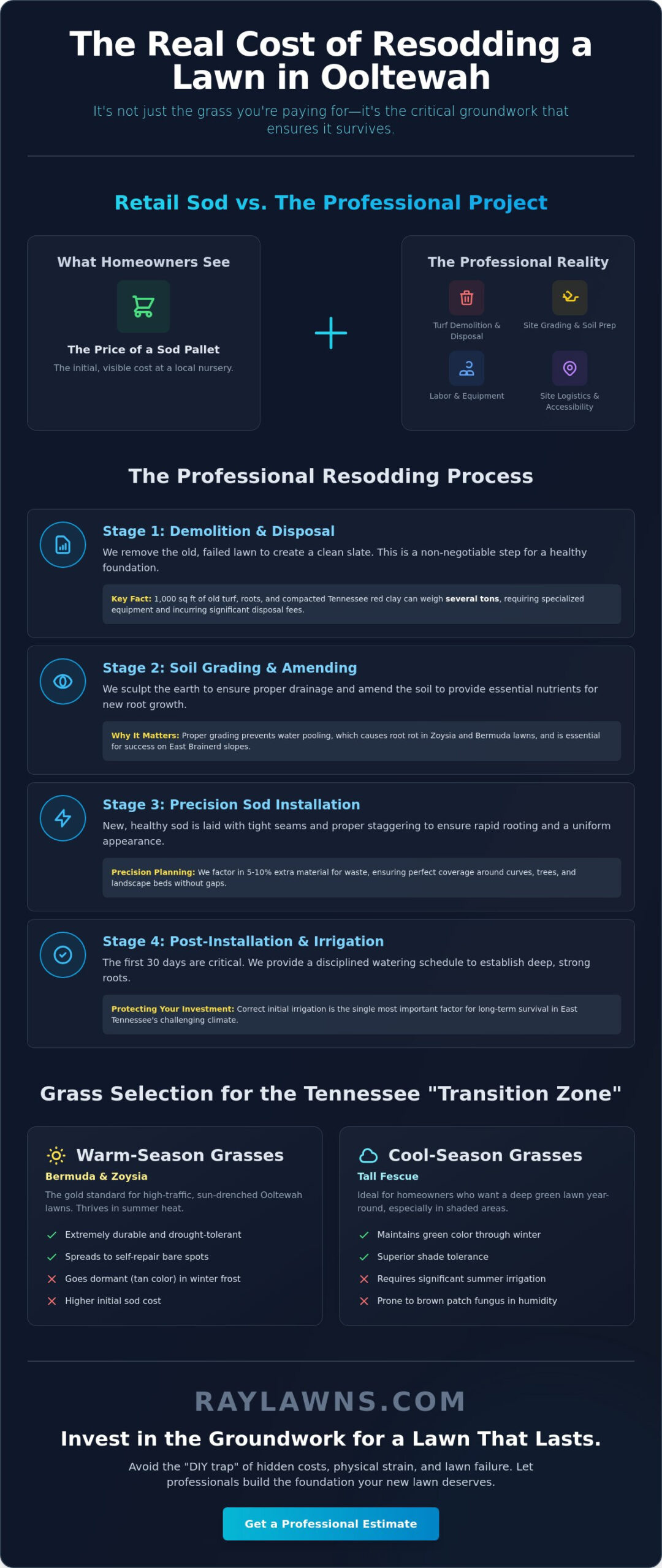
Many homeowners look at the price of a pallet at a local nursery and assume that’s the bulk of the expense. In reality, the actual grass is often the smallest part of the total bill. When calculating the cost to resod lawn Ooltewah residents often overlook the demolition phase. Resodding is a multi-stage restoration. It involves stripping away the failure of the past to make room for the success of the future. Unlike new construction, where we start with bare dirt, a resodding project requires removing layers of old vegetation, weeds, and compacted soil. For homeowners looking for professional sod installation in Chattanooga, we focus on these logistics from day one.
If you are building a new home in Collegedale, the builder likely left you with a blank canvas of dirt. Resodding an established yard in Ooltewah is different. We have to physically haul away the old yard. This process is labor-intensive and requires specialized equipment to ensure we don’t damage your existing landscape. Understanding what is sod and how it interacts with the soil helps explain why this prep work is non-negotiable for a healthy lawn. You are paying for a clean slate, not just a green surface.
Turf Removal and Disposal Logistics
Old turf is incredibly heavy. It isn’t just grass; it’s a dense mat of roots and Tennessee red clay. One thousand square feet of old turf can weigh several tons. We use skid steers and specialized sod cutters to strip this layer away. Manual removal with a shovel is a common DIY mistake. It’s backbreaking and usually results in an uneven surface that prevents the new roots from making contact with the earth. Once removed, this organic waste must be hauled to local Tennessee Valley disposal facilities. These sites charge fees based on weight, making the disposal of old organic matter a significant hidden cost factor in any professional estimate.
Measuring for Accuracy in Ooltewah Landscapes
Calculating the cost to resod lawn Ooltewah yards also depends on the complexity of your property’s footprint. Yards in Apison often feature irregular shapes, steep banks, and tight corners around landscaping beds. We calculate square footage with precision but always include a 5-10% waste factor. This ensures we have enough material to cut around trees and curves without leaving gaps. Site accessibility is another major factor. If we have to move heavy pallets through a narrow backyard gate in East Brainerd, the labor hours increase compared to a wide-open front yard. Every obstacle requires more time and careful handling to protect your property.
Grass Type Selection: Performance vs. Initial Investment
Ooltewah sits right in the middle of the “Transition Zone.” This means our climate is too hot for most northern grasses and too cold for some southern varieties. When calculating the cost to resod lawn Ooltewah homeowners must decide between an upfront investment or long-term maintenance expenses. Choosing a grass that isn’t suited for your specific lot, whether it’s a sun-drenched hill in Apison or a shaded backyard in East Brainerd, often leads to total lawn failure. According to the University of Tennessee Extension, selecting the right species is the most critical step in successful turf management. You’re choosing a living organism that has to survive our erratic weather patterns.
Warm-Season Grasses: Bermuda and Zoysia
Warm-season grasses like Bermuda and Zoysia are the gold standard for high-traffic Ooltewah lawns. These varieties thrive when the Tennessee sun is at its peak. They are incredibly durable and can handle the foot traffic of kids and pets without thinning out. However, they go dormant and turn a tan color during the winter. This is a natural protection mechanism against the frost. Because these grasses spread via runners, they require precision grading. If water pools on a Zoysia lawn, the roots will rot quickly. While the initial cost of these premium sods is higher, their drought tolerance often saves money on utility bills over time.
Cool-Season Options: Tall Fescue
Tall Fescue is the most popular choice for homeowners who want a deep green lawn even in January. It handles the shade much better than Bermuda, making it ideal for the wooded lots common in East Brainerd. The trade-off is the summer stress. Fescue doesn’t “spread” to fill in bare spots; it grows in clumps. In the humid Chattanooga valley, Fescue is prone to brown patch fungus and requires significant irrigation to survive August. If you don’t have a dedicated watering plan, you might find yourself resodding or over-seeding every single fall. It’s often the “cheaper” sod upfront that becomes the most expensive over a five-year window.
Choosing between these options requires a realistic look at your lifestyle and your property’s layout. A sun-scorched slope needs a different solution than a flat, shaded patio area. If you are unsure which variety fits your specific soil conditions, it helps to consult with a local professional who understands the unique demands of Hamilton County landscapes. This ensures your investment lasts for years rather than just one season. We focus on matching the grass to the environment so you don’t have to repeat the process next year.
The Impact of Soil Preparation and Site Grading
Many homeowners think of sod like a new rug. They expect to roll it out and enjoy the results immediately. In reality, the success of your lawn is determined by the six inches of dirt beneath the surface. At Ray Lawns, our approach prioritizes the sub-grade. We treat the ground like a foundation for a house. If the soil isn’t prepared correctly, even the most expensive Zoysia will struggle to take root. When calculating the cost to resod lawn Ooltewah properties, the labor involved in tilling, amending, and leveling the earth is often the most significant variable. This preparation is what separates a professional installation from a weekend project that fails by next summer.
Soil health is the primary driver for successful sod installation in Chattanooga. Our local red clay is notoriously difficult. It stays soggy during our spring rains and turns into a brick during July. Without proper prep, the new sod’s roots will simply sit on top of the hard clay rather than growing into it. This leads to a lawn that is entirely dependent on constant watering and lacks the resilience to survive a Tennessee dry spell. We focus on breaking up that compaction to give your investment a fighting chance. It’s a hardworking process that requires the right tools and local experience.
Taming Tennessee Red Clay
Our local soil requires more than a light raking. We often use core aeration or deep tilling to loosen the ground before any grass is laid. Hamilton County dirt frequently has pH imbalances that need correction with lime or organic amendments. Skipping these steps leads to what we call ‘shelf-life’ sod. It looks great for the first year or two because it’s living off the nutrients it brought from the farm. Once those are gone, the grass dies because it can’t penetrate the hard clay below. Investing in soil prep now prevents the need for another resodding project in twenty-four months.
Correcting Drainage and Slope Issues
Grading is the silent hero of a healthy lawn. Proper grading in Chattanooga protects the new root system by moving water away from high-traffic areas. Standing water is the leading cause of sod rot in Ooltewah. During our assessment, we identify ‘wet spots’ that might need a French drain before the first piece of sod is placed. Using heavy equipment like Bobcats or specialized graders allows us to create a smooth, functional slope that manual raking simply can’t achieve. This machine labor adds to the initial cost but ensures the lawn remains level and well-drained for decades.
Professional Installation vs. The DIY Cost Trap
Thinking about tackling a resodding project yourself? On paper, the savings look great. In reality, the cost to resod lawn Ooltewah properties through a DIY approach often hides several expensive traps. You have to account for equipment rentals like sod cutters and heavy-duty trailers. Then there are delivery fees and pallet deposits that nurseries charge. Beyond the money, consider the physical toll. A single pallet of sod weighs about 2,000 lbs. If your project requires ten pallets, you are moving 20,000 lbs of material by hand in the 90-degree Ooltewah humidity. It’s grueling work that must be finished quickly to ensure the grass survives.
Sod is a living, perishable product. Our “Time-to-Ground” rule is strict: grass must be laid within 24 hours of being cut at the farm. If it sits on a pallet too long in the Tennessee heat, the center of the stack begins to cook. Professional crews work in shifts to ensure the grass is installed and watered immediately. A solo homeowner often runs out of daylight, leaving thousands of dollars of grass to die on the driveway overnight. This is why many local residents find that hiring a team for sod installation in Chattanooga is actually the more cost-effective choice in the long run.
The Risks of Improper Installation
Poor installation leads to root desiccation. If there are air pockets under the sod, the roots will dry out and die before they ever hit the soil. This is a death sentence for new grass. We also see the “Sod Gap” issue constantly. If seams aren’t tight, the grass will dry out at the edges, leaving brown lines that become invitations for weed encroachment. Professional installers use techniques to “tuck” the edges together, creating a seamless carpet that protects itself from the sun. DIYers often overlook the critical first-hour watering requirements, which are necessary to cool the soil and the grass blades simultaneously.
The Value of Specialized Equipment
We use heavy sod rollers to ensure every square inch of the new grass makes firm contact with the prepared soil. This step is non-negotiable for removing air pockets and encouraging rapid root growth. A crew can also move much faster than a solo homeowner, preserving the freshness of the sod while it’s at its peak health. Additionally, working with a professional gives you access to commercial-grade sod farms that don’t sell to the general public. These farms produce denser, more resilient turf than what you’ll find at big-box retailers. If you want to avoid the physical strain and ensure a successful result, you should schedule a professional sod evaluation to see how we can help.
Long-Term Value: Protecting Your Ooltewah Investment
Think of the cost to resod lawn Ooltewah projects as an investment in your home’s equity rather than just a maintenance chore. When done correctly, this is a one-time expense that transforms a neglected space into a high-performing asset. However, the work doesn’t end when the last pallet is laid. The first 30 days are the most critical window in the life of your new grass. You’ve paid for professional prep and high-quality sod; now you must protect that investment with discipline. This means a strict “stay off the grass” rule for everyone, including pets, until the root system establishes itself.
The most expensive lawn you’ll ever buy is the one you have to install twice. Choosing the cheapest quote often means skipping the vital soil prep we discussed earlier or using lower-grade sod that won’t survive a single Chattanooga summer. By prioritizing quality from the start and following up with consistent lawn care in Ooltewah TN, you ensure your yard remains a source of pride for years to come. We believe in doing the job right the first time so you can spend your weekends enjoying your lawn instead of worrying about its survival.
Immediate Post-Care Requirements
Watering is the lifeblood of new sod in the Tennessee Valley. During the first two weeks, you should water deeply twice a day. Early morning and late evening are the best times to minimize evaporation and heat stress. You want to see the water soak through the sod and into the sub-grade. Check for “sod lift” by gently trying to pull up a corner of a piece. If it resists, the roots are knitting into the clay. Your first mow should only happen once the grass has reached about four inches and the roots are firmly anchored. Never take off more than a third of the grass blade during this initial cut.
The ROI of a Professionally Installed Lawn
A lush, green lawn significantly boosts curb appeal, which is a major factor in Ooltewah property valuations. Beyond aesthetics, professional sod installation provides immediate soil stabilization. This is vital for the sloped lots common in East Brainerd and Apison where runoff can cause erosion and drainage issues. By establishing a dense root system, you create a natural filter for rainwater and a durable surface for your family to enjoy. It turns a muddy, weed-choked eyesore into a functional outdoor living room that adds tangible value to your property.
Secure Your Landscape’s Future
A successful lawn in Ooltewah isn’t just about the grass you see today. It’s about the preparation of the red clay and the selection of a species that can handle our humid summers and freezing winters. We’ve covered why the true cost to resod lawn Ooltewah projects includes the removal of old debris and the correction of drainage issues. Taking these professional steps now prevents the frustration of a failed yard later. You’re building a foundation for your property’s curb appeal and long-term value.
Ray Lawns has been serving Ooltewah since 2002. As a family-owned local contractor, we have decades of experience in Hamilton County soil remediation. We understand the specific grading and drainage challenges of our local terrain. Don’t leave your investment to chance with a shortcut that won’t hold up. Request a Professional Sod Evaluation from Ray Lawns today. We look forward to helping you turn your yard into a space you’re proud to own.
Frequently Asked Questions
Is it cheaper to seed or sod a lawn in Ooltewah?
Seeding has a lower upfront price, but sod is the most reliable way to establish a lawn in our local climate. Our heavy rainfall often washes seed off sloped yards before it can take root in the red clay. Sod provides an instant root barrier that prevents erosion and blocks weeds immediately. It eliminates the months of mud and dust that come with trying to grow a lawn from seed.
How long does it take to professionally resod a typical yard?
Most residential projects in Ooltewah take between two and three days to complete. The first day focuses on the demolition and removal of the old turf to a local organic waste facility. Subsequent days are dedicated to soil remediation, grading, and the final installation of the new pallets. Larger properties in Apison or sites with restricted access for our equipment may require additional time for precision grading.
Can you lay new sod over existing grass to save on labor costs?
You should never lay new sod directly over existing grass or weeds. This shortcut prevents the new roots from making direct contact with the soil, which is essential for survival. The old vegetation will eventually decompose, creating pockets of air and heat that can rot the new sod from the bottom up. Proper removal of the old yard is a non-negotiable step for a healthy, long-lasting lawn.
What is the best month to resod a lawn in the Chattanooga area?
The ideal timing depends on whether you choose a warm-season or cool-season grass variety. For Bermuda and Zoysia, late spring and early summer are best because these grasses thrive when the soil is warm. If you prefer Tall Fescue, the cooler temperatures of September and October are superior. This timing allows the cool-season roots to develop before the ground freezes, ensuring a green lawn throughout the Ooltewah winter.
How much water will my new sod need during a Tennessee summer?
New sod requires deep watering twice a day for the first two weeks of establishment. You should aim to keep the soil beneath the sod consistently moist but not flooded. In the peak of a Tennessee summer, evaporation happens quickly, so early morning and late evening sessions are the most effective. This frequency can be reduced once the roots have knitted into the clay, which usually occurs by the third week.
Will new sod fix my yard’s drainage problems?
Sod alone will not fix underlying drainage issues; it simply follows the existing contour of the ground. While fresh turf helps with minor surface runoff, significant standing water requires professional grading or a French drain before the grass goes down. When calculating the cost to resod lawn Ooltewah projects, addressing the sub-grade is a priority. We ensure water moves away from your home’s foundation to prevent root rot.
How is the long-term survival of the new grass ensured?
Establishing a healthy lawn is a partnership between professional installation and disciplined homeowner care. When calculating the cost to resod lawn Ooltewah homeowners should prioritize the first 30 days of irrigation. The long-term health of the grass is determined by how well the roots connect to the amended soil. We provide a detailed maintenance plan to ensure your new environment thrives through the changing Tennessee seasons.
What happens if it rains immediately after my sod is installed?
Light rain is beneficial, but a heavy downpour immediately after installation can be risky on sloped properties. If the roots haven’t had time to anchor, significant runoff can shift the pallets or cause erosion under the seams. We monitor the local forecast to avoid installing during major storm events. If it does rain, we check the site to ensure the grading remains intact and the seams are still tight.
get a quote today!
"*" indicates required fields

We take lawn care so seriously that we consider it an art. Our basic service is lawn maintenance, which includes lawn mowing, trimming, edging, and blowing off clippings.

Our landscaping services include most types of yard work. We are excellent at trimming hedges, installing mulch, and creating flowerbeds.

This is our rescue effort for yards that have become entirely overgrown. Includes multiple passes with the lawn mower to tame even the most unruly yards.