
Last October, a homeowner in Ooltewah watched a $500 Maple wither away just six months after planting. They searched for “tree installation near me” to find a solution, but the damage was already done. The heavy Tennessee Valley clay had turned the planting hole into an underground bathtub, drowning the roots in stagnant water. It’s a frustrating reality for homeowners across Chattanooga and Apison. You want immediate privacy and a thriving landscape, but the local ground often feels like a solid brick wall that resists healthy growth.
You’re right to feel concerned about the survival of your new plants in this notoriously difficult soil. It’s a struggle to balance the need for a beautiful yard with the reality of poor drainage and heavy earth. This guide shares the professional secrets to successful planting in the Tennessee Valley, ensuring your trees grow strong and provide the seclusion you need. We’ll walk through the exact steps for proper site preparation, drainage management, and professional excavation techniques to transform your property into a source of pride.
Key Takeaways
- Learn why standard planting methods fail in heavy Tennessee clay and how professional site preparation ensures long-term survival.
- Discover the best native species for the Chattanooga area that balance fast growth with the structural integrity needed for our climate.
- Understand the precise technical steps for professional tree installation near me, including why the root flare is the most critical factor for longevity.
- Master the “roughing up” technique for planting holes to improve drainage and help roots penetrate Ooltewah’s tough soil.
- Get the specific “First Two Years” watering schedule designed to help new trees thrive through Chattanooga’s unpredictable seasonal rainfall.
Why Proper Tree Installation in Ooltewah Matters
Many homeowners searching for tree installation near me expect a simple afternoon project. In reality, professional tree installation is a meticulous, multi-step process that starts long before the first shovel hits the dirt. It involves site preparation, drainage analysis, and precise planting techniques tailored to the unique environment of Hamilton County. If you follow the common “dig a hole, drop a tree” method, you’re likely setting your investment up for failure. In the Tennessee Valley, a poorly planted tree often dies within its first two to three years. This leaves you with a dead specimen and a hole in your wallet.
Professional installation ensures the tree thrives for decades rather than just surviving a single season. We focus on the long-term health of the specimen and the safety of your property. Improper planting creates financial risks through replacement costs and aesthetic risks when a struggling tree becomes an eyesore. Local soil conditions in Ooltewah and Apison demand a specialized approach. Choosing the right team for tree installation near me means hiring experts who understand how our local climate and geology affect root development.
The Challenge of Tennessee Clay
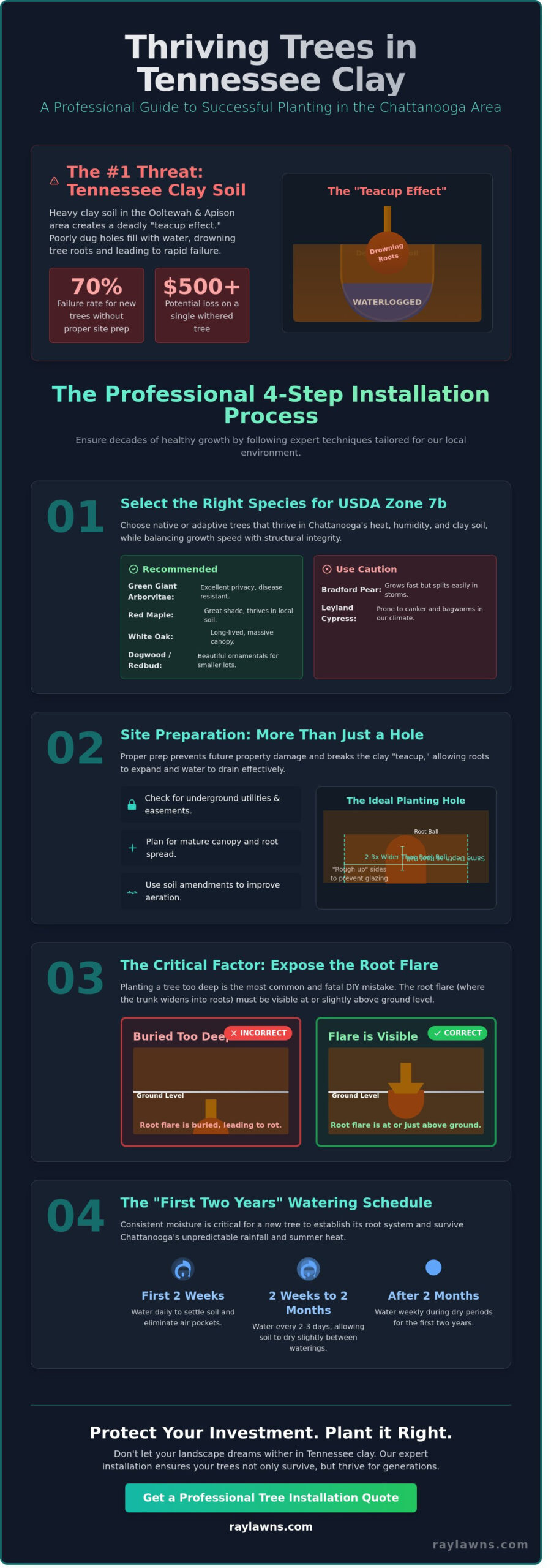
Heavy clay soil is the primary obstacle for new trees in the Chattanooga area. When you dig a hole in dense clay, you essentially create a “teacup effect.” Rainwater fills the hole and sits there because the surrounding clay is too packed to let it drain. This literally drowns the roots. The importance of proper tree planting includes understanding these drainage dynamics to avoid root rot. In the rocky terrain near Collegedale, we use professional soil amendments to break up the “teacup” and provide the aeration roots need to expand. Without these amendments, 70% of new trees in clay environments fail to establish properly.
The Value of Professional Placement
Where you plant a tree is just as vital as how you plant it. A small sapling today can become a massive liability if it’s too close to your home’s foundation or overhead power lines. We always check for local easements and underground utilities before starting work. Proper placement is a core component of professional landscaping in Chattanooga. It ensures your new trees add curb appeal without causing structural damage or interference with city infrastructure ten years down the road. We look at the mature spread of the canopy and the root system to ensure your home stays safe and your yard stays beautiful.
Selecting the Right Species for the Tennessee Valley
Chattanooga and Ooltewah sit in USDA Hardiness Zone 7b. This environment demands trees that can survive 95 degree August afternoons and heavy January ice. Selecting the wrong species leads to dead wood and wasted money. We focus on native and adaptive varieties that handle our heavy clay soil without suffocating. Your soil type is the first thing we check before recommending a specific variety.
Homeowners searching for tree installation near me often prioritize speed. They want immediate privacy or shade. However, fast growing trees like the Bradford Pear are notorious for splitting during Tennessee windstorms. We guide clients toward species with high structural integrity. This ensures your investment stands for decades, not just a few seasons. On sloped Ooltewah lots, we select trees with aggressive root systems to help stabilize the soil and manage runoff.
Top Privacy Trees for Chattanooga Yards
Green Giant Arborvitae is the gold standard for our area. It resists the bagworms that often destroy Leyland Cypress. While Leylands grow fast, they are prone to Seiridium canker in our humid summers. Professional privacy tree installation requires precise spacing. Crowding trees leads to poor airflow and fungal outbreaks. We typically space Green Giants at least 8 to 12 feet apart to ensure long term health. This creates a dense wall that dampens road noise from busy corridors like Lee Highway or Apison Pike.
Shade and Ornamental Favorites
For long term canopy health, you can’t beat a Red Maple or a White Oak. These species thrive in local soil and provide massive cooling benefits during the summer. For smaller lots in East Brainerd or Collegedale, Dogwoods and Redbuds offer incredible spring color without taking over the yard. Following the University of Florida’s guide to planting trees helps ensure these young specimens survive the first critical year of establishment.
Always remember the “Right Tree, Right Place” rule. Planting a White Oak directly under a power line is a recipe for disaster. It forces you into expensive pruning cycles 15 years down the road. We look at the mature height and spread of every species before the first hole is dug. If you’re ready to transform your property, our team provides dependable tree planting services in Chattanooga to ensure your new landscape thrives.
Site Preparation: More Than Just a Hole
Digging a hole seems simple, but it is where most DIY projects fail. In Chattanooga, our heavy red clay makes site prep difficult. If you search for tree installation near me, you want a team that understands local geology. We start every project by calling 811 to mark underground utilities. It’s a non-negotiable step that prevents costly damage to gas or water lines. Once clear, we focus on the structure of the hole itself. We never leave the sides smooth. This “glazing” happens when a shovel or auger packs the clay tight, creating a barrier roots can’t break. We meticulously scarify, or “rough up,” the sides to ensure roots can penetrate the surrounding earth. We also grade the area to ensure water moves away from the trunk. Standing water is a silent killer for new saplings.
Addressing Drainage Before Planting
Proper drainage is the difference between a thriving oak and a dead stump. Many properties in East Brainerd or Apison suffer from “wet feet,” where water sits in the root zone. If your yard has standing water for more than 24 hours after a storm, you might need to install a French drain before the tree goes in. We also mitigate drainage issues by planting the tree slightly high. Setting the root flare 2 to 3 inches above the soil line prevents the root ball from drowning in heavy rain. This method follows professional standards found in Purdue Extension’s tree installation guide, which highlights how poor drainage leads to root rot. We look for low spots and adjust the grade before the first shovel hits the ground.
Soil Amendment and Root Preparation
We don’t just dump potting soil into the hole. We use a mix of 70% native soil and 30% organic compost. This encourages the tree to adapt to the local Chattanooga ground rather than staying confined to a pocket of rich soil. Before the tree enters the ground, we inspect for girdling roots. These are roots that circle the trunk and eventually choke the tree. We cut these away to ensure outward growth. We also avoid heavy fertilization during the first year. The goal is root establishment, not rapid top growth. Pushing a tree with nitrogen too early can stress a root system that isn’t ready to support a massive canopy yet. We focus on getting the biology right from day one to ensure long term success in Ooltewah landscapes.
The Professional Installation Process Step-by-Step
Successful tree installation near me starts with the hole. Dig it at least twice as wide as the root ball. Keep the depth exactly the same as the root ball height. Chattanooga’s heavy clay soil is dense. If you dig too deep, the tree will settle and the roots will suffocate in the compacted earth. A wide hole ensures the new roots can penetrate the surrounding soil without hitting a hard wall of clay.
Finding the root flare is the most critical step for tree longevity. The flare is the spot where the trunk widens at the base before it enters the ground. This area must stay visible above the soil line. If you bury the flare, moisture stays trapped against the bark. This leads to fungal growth and can kill a mature tree in less than 5 years. Always pull back the excess soil from the top of the root ball to locate this flare before you set the tree in the hole.
Remove all synthetic materials before backfilling. Cut away the top third of the wire cage and peel back the burlap. Roots need direct contact with the soil to establish quickly. Fill the hole with the native soil you removed. Tamp it down with your hands or feet to eliminate air pockets. Don’t over-compact the ground, as this prevents oxygen from reaching the root system. Give the tree a slow, 10-gallon deep soak immediately after planting to settle the soil and reduce transplant shock.
Staking and Stabilization
Staking isn’t always necessary, but it helps on Ooltewah’s windier ridges where gusts can reach 40 miles per hour. Use wide, flexible straps rather than bare wire. Wire cuts into the bark and restricts nutrient flow. Use two stakes for balance and leave enough slack so the tree can sway slightly. This movement encourages the trunk to grow thicker and stronger. Remove these supports after 12 months. Keeping them on longer makes the tree dependent and structurally weak.
Mulching for Success
Apply a 3-inch layer of shredded hardwood mulch around the base. Hardwood mulch is superior for Chattanooga properties because it retains moisture during 90-degree summer days. Use the “donut” method. This means keeping the mulch 4 inches away from the trunk. Never build a “mulch volcano” that touches the bark. Piling mulch against the tree causes rot and invites pests that can destroy the vascular system of the sapling.
If you want the job done right the first time, check out our professional tree planting services in Chattanooga.
Post-Installation Care and Long-Term Success
Successful tree installation near me requires a commitment to the “First Two Years” rule. In Ooltewah and Chattanooga, the initial 24 months determine the survival of your new landscape. Roots need this window to bridge the gap between the nursery root ball and our local soil. If you ignore this phase, you risk losing the tree during its first heavy heat wave. Monitoring is your most important task during this period.
Chattanooga receives approximately 52 inches of rainfall per year, but it rarely falls when your new trees need it most. During the intense July and August stretches, the Tennessee Valley often goes 10 to 14 days without a drop. You must supplement what nature provides. Watch for yellowing leaves or a thinning canopy, as these are red flags for transplant shock. If you spot these signs, check the soil moisture immediately. Once established, you can transition your focus toward recurring lawn care to keep the surrounding turf as healthy as your new trees.
Watering Schedules for the First Season
Deep soaking is the professional standard for new growth. Frequent, light watering only reaches the top inch of soil, which evaporates quickly in the Tennessee sun. You want water to reach the deep root zone. In our heavy clay, this means slow, steady irrigation. Use a finger or a wooden dowel to check the soil 6 inches below the surface. If it’s dry at that depth, it’s time to water. During 90-degree summer days, a new tree may require 10 to 15 gallons of water three times per week. This meticulous approach prevents the roots from drying out in the hard-packed ground.
Partnering with a Local Expert
A local, family-owned company understands the specific topography of East Tennessee better than a national franchise. We know how to handle the steep slopes in Apison and the unique drainage issues found in Collegedale. We provide integrated results by combining professional tree installation with necessary services like grading or sod installation. This ensures your entire landscape works together as a single, functional system. Don’t leave your property’s value to chance. Get a professional evaluation for your tree planting needs to ensure your investment thrives for decades to come.
Invest in the Future of Your Chattanooga Landscape
Planting a tree is a multi-decade commitment to your home’s curb appeal and environmental health. In Ooltewah and Chattanooga, success depends on more than just digging a hole. You must account for the heavy East Tennessee clay soil and ensure the root flare sits at the precise elevation to prevent trunk rot. Selecting native species ensures your investment thrives in our local climate. Since 2002, our family-owned team has helped homeowners navigate these specific regional challenges. We don’t just drop a root ball in the ground. We evaluate the entire site, including grading and drainage needs, to guarantee long-term success. When you search for reliable tree installation near me, it’s vital to partner with experts who understand the unique conditions of the Tennessee Valley. Professional installation today means you’ll enjoy a healthy, thriving canopy for the next 30 years. Your property deserves the high standards of a local specialist who treats every yard like their own.
Request a Free Tree Installation Quote from Ray Lawns
Frequently Asked Questions
When is the best time of year to plant trees in Chattanooga, TN?
The best time to plant trees in the Chattanooga area is between November and March. Planting during these 5 months allows the root system to establish itself while the tree is dormant. This timing avoids the intense 90 degree heat of a Tennessee summer, which often causes fatal stress to new saplings. Soil temperatures below 50 degrees are ideal for root growth without the demand for canopy maintenance.
How much water does a newly installed tree need in Tennessee clay?
A newly installed tree requires 10 to 15 gallons of water every week during its first growing season. You should provide this through two deep soakings rather than daily light sprinkling. Since Chattanooga clay is dense and retains moisture, you must check the top 4 inches of soil first. If the soil feels muddy, wait 2 days before watering again to avoid root rot.
Do I need to hire a professional for tree installation, or can I do it myself?
Hiring a professional for tree installation near me ensures the hole is dug 3 times wider than the root ball, which is necessary for our heavy soil. Most homeowners struggle to break through the 6 inches of compacted red clay found in Ooltewah and East Brainerd. Professionals use specialized equipment to ensure the root flare remains visible, preventing the 25 percent failure rate common in DIY plantings.
How far away from my house should I plant a new tree?
You should plant large canopy trees, such as Oaks or Maples, at least 20 feet away from your foundation. For smaller ornamental trees like Dogwoods or Redbuds, a distance of 10 feet is sufficient. Proper spacing prevents roots from pressing against your basement walls or plumbing lines. It also ensures that falling limbs won’t damage your roof during the 50 mile per hour wind gusts common in local spring storms.
Why did my newly planted tree die over the summer?
Most new trees die in July or August because of transplant shock or improper planting depth. If a tree is buried just 3 inches too deep, the roots cannot breathe in our heavy clay. When temperatures exceed 90 degrees for 10 consecutive days, the tree loses moisture faster than its struggling roots can absorb it. Professional tree installation near me includes proper mulching to keep root temperatures 10 degrees cooler during these heat waves.
Can you plant trees on a steep slope in Ooltewah?
You can plant trees on slopes up to 35 degrees by creating a level terrace for the root ball. This flat “shelf” prevents water from running off before it can soak into the roots. We use 4 inches of shredded hardwood mulch to anchor the soil and prevent erosion on the incline. This technique is a standard practice for managing the hilly terrain found throughout Ooltewah and Collegedale.
get a quote today!
"*" indicates required fields

We take lawn care so seriously that we consider it an art. Our basic service is lawn maintenance, which includes lawn mowing, trimming, edging, and blowing off clippings.

Our landscaping services include most types of yard work. We are excellent at trimming hedges, installing mulch, and creating flowerbeds.

This is our rescue effort for yards that have become entirely overgrown. Includes multiple passes with the lawn mower to tame even the most unruly yards.