
A stunning outdoor living space is an engineering project first and a design project second. If you skip the technical details of sub-grade management, that expensive stone surface will eventually shift, sink, or trap water against your foundation. For a successful paver patio installation Chattanooga homeowners must account for the region’s dense, expansive clay soil and heavy seasonal rains. It is the difference between a patio that lasts thirty years and one that becomes a trip hazard after just two seasons.
You likely want a level, beautiful space where you can host neighbors without worrying about puddles or cracking. We understand that frustration because we see the results of low quality installs across Ooltewah and East Brainerd every week. With the average local project cost for a brick paver patio sitting between $4,564 and $4,967, you deserve a result that remains stable for decades. This guide shares the professional standards required to build a patio that withstands Tennessee’s unique environment. You will learn the exact steps for proper excavation, why a geotextile fabric is mandatory for clay, and how to manage drainage to protect your property value.
Key Takeaways
- Understand why flexible paver systems handle Hamilton County’s shifting clay better than rigid concrete.
- Learn how over-excavation reaches the load-bearing soil needed for a stable, long-term foundation.
- Discover why professional paver patio installation Chattanooga relies on crushed stone sub-bases to prevent sinking.
- Identify how permeable pavers and precision grading manage heavy rainfall and protect your property.
- Avoid common installation shortcuts that lead to drainage issues and shifting stones.
Why Paver Patios are the Superior Choice for Chattanooga Landscapes
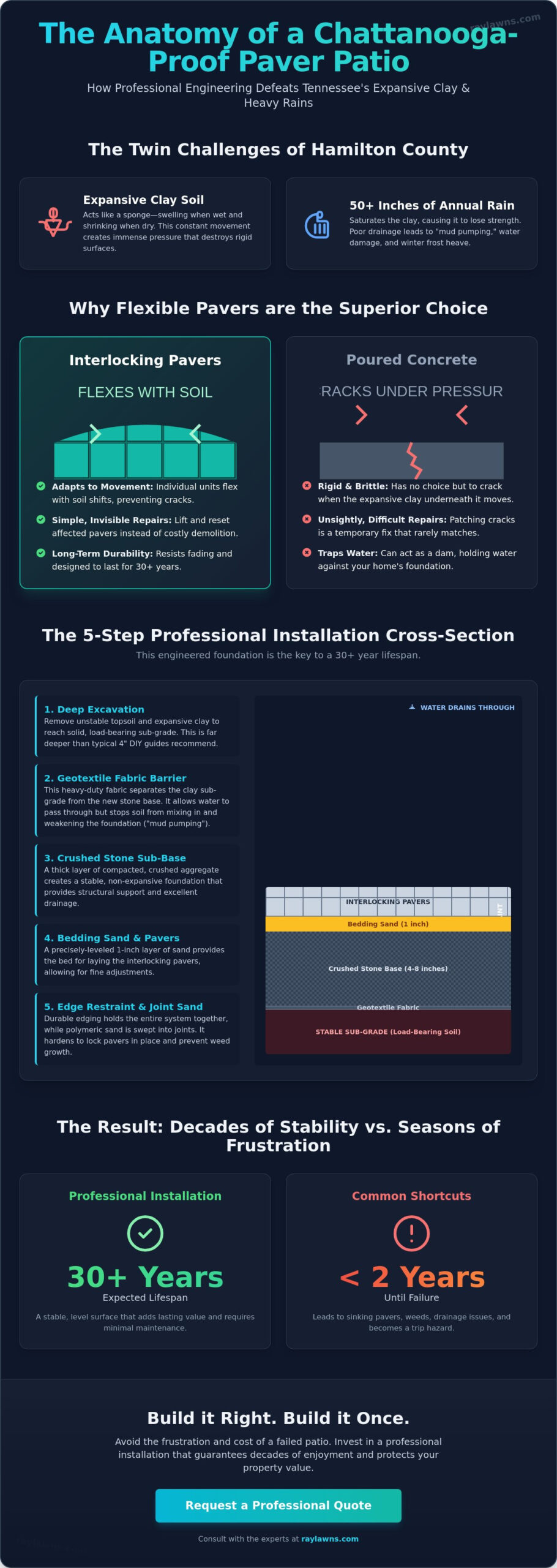
Hamilton County presents unique challenges for outdoor construction. Our region receives over 50 inches of rain annually. This water interacts with high volumes of expansive clay soils, which act like a sponge. They swell when wet and shrink during our hot, dry summers. This constant movement puts immense pressure on any flatwork. While many homeowners initially consider a poured slab, professional paver patio installation Chattanooga projects succeed because they are designed to move. A paver system is a “flexible” pavement that accommodates the natural rhythm of the Tennessee Valley’s environment.
Pavers vs. Stamped Concrete in Tennessee Weather
In neighborhoods like Ooltewah and East Brainerd, the ground is rarely still. Stamped concrete is a rigid material. When the underlying clay shifts, the concrete has no choice but to crack to relieve the pressure. Once a crack forms, water enters, freezes during our winter cycles, and widens the gap. Interlocking pavers work differently. Each stone acts as an individual unit. This allows the entire surface to distribute pressure and settle without structural failure. If a tree root lifts a section or a utility line needs repair, you don’t need a jackhammer. You simply lift the affected pavers, fix the sub-grade, and place them back. It’s a clean, invisible repair that maintains the integrity of your hardscape.
Long-Term Value and Curb Appeal
A high-quality hardscape is a strategic investment in your property’s appraisal value. Unlike wood decks that rot or stained concrete that peels, modern pavers are manufactured to withstand the intense Southern sun. High-quality stones resist UV fading and maintain their deep colors for decades. This durability makes them a low-maintenance choice for busy homeowners in Apison and Collegedale. To complete the transformation, we often coordinate the project with professional sod installation in Chattanooga. This ensures your new paver patio installation Chattanooga is framed by a healthy, level lawn rather than construction-damaged dirt. The result is a clean, finished look that provides immediate pride of ownership and a functional space for hosting neighbors.
The Engineering Behind a Lasting Patio: Managing Tennessee Clay
Over-excavation is the process of removing unstable clay to reach load-bearing soil. This step is non-negotiable in our region. Chattanooga’s red clay is notorious for its high volume of expansion and contraction. When it rains, the clay swells and loses its ability to support weight. When it dries during a July heatwave, it shrinks and cracks. If you only dig a shallow four-inch trench as many generic DIY guides suggest, your patio will shift within the first twelve months. Professional paver patio installation Chattanooga requires digging deep enough to replace that reactive clay with a stable, non-expansive aggregate base.
Poor permeability is the second major hurdle. Clay holds water like a bowl. Without a proper exit strategy, water sits under your pavers, eventually causing “heaving” during the winter freeze-thaw cycles. We engineer every project to move water away from the home and the patio structure itself. This involves more than just surface slope; it requires a permeable foundation that allows the ground to breathe.
Addressing Yard Drainage and Runoff
Homeowners in East Brainerd and Apison often deal with standing water due to flat topography or heavy runoff from nearby ridges. A new patio shouldn’t act as a dam that traps water against your foundation. Instead, we use the patio’s pitch and sub-grade to direct water toward natural exit points. In cases with severe saturation issues, we often recommend consulting a French drain company in Chattanooga before the first stone is laid. This ensures the ground is dry and stable enough to support the weight of the new hardscape.
Soil Stabilization Techniques
One of the most common failures we see in local yards is “mud pumping.” This occurs when the heavy clay soil mixes with your clean gravel base over time. The result is a soft, spongy foundation that leads to sinking pavers. To prevent this, we install a heavy-duty geotextile fabric between the raw clay and the crushed stone. This fabric acts as a permanent barrier. It allows water to pass through while keeping the soil and the stone separate. We also ensure a minimum slope of one inch for every eight feet of distance to shed water effectively. If your yard has complex slopes, you can request a professional site assessment to determine the best grading plan for your property.
The 5-Step Professional Installation Process
Execution is where engineering meets the dirt. A professional paver patio installation Chattanooga project follows a rigid sequence to ensure the final surface doesn’t just look good on day one, but remains level for decades. We move beyond the basic “dig and drop” method to a structured, industrial-grade process. This timeline typically takes 35 to 40 hours for a standard 300-square-foot patio, reflecting the meticulous labor required to handle our local soil conditions.
- Step 1: Precision Excavation: We use laser levels to set a consistent grade. This ensures a 1% to 2% slope away from your home’s foundation, which is vital in high-rainfall areas like Ooltewah.
- Step 2: Sub-Base Installation: We install a thick layer of dense-grade aggregate or crushed stone. We never use sand as a primary base material because it washes out and settles unevenly.
- Step 3: Mechanical Compaction: This is the most critical phase. We apply the stone in two-inch “lifts,” compacting each layer before adding the next to create a rock-solid foundation.
- Step 4: Paver Laying and Edge Restraints: We place the stones in your chosen pattern using the “click-drop” method. We immediately secure the perimeter with heavy-duty edge restraints to prevent the patio from “creeping” outward over time.
- Step 5: Polymeric Sand Application: We sweep specialized sand into the joints and activate it with a fine mist of water. This creates a flexible, weather-resistant bond between every stone.
The Importance of Sub-Base Compaction
Reaching a 95% Proctor density is the professional standard for a stable patio. This measurement refers to the maximum laboratory density of the soil or stone. Achieving this requires a commercial vibratory plate compactor rather than a simple hand tamper. Hand-tamping only affects the top half-inch of soil, leaving air pockets below that eventually collapse. We also monitor moisture content; if the stone is too dry, it won’t lock together. If it’s too wet, it turns into a slurry. We find the “sweet spot” where the aggregate binds into a solid, pavement-like mass.
Edge Restraints and Joint Sand
The edges are the “bookends” of your patio. Without professional-grade plastic or concrete restraints, the outer pavers will eventually migrate into your lawn. This creates gaps where weeds can take root. We pair these restraints with high-quality polymeric sand. Unlike regular play sand, polymeric sand contains binders that harden when wet. This keeps the sand in the joints during heavy Chattanooga storms and prevents ants from tunneling under your stones. It’s a small detail that eliminates the most common maintenance headaches for homeowners in Collegedale and Apison.
Design and Material Selection for the Chattanooga Climate
Aesthetics matter, but material choice in the Tennessee Valley must account for our intense humidity and sudden downpours. When planning a paver patio installation Chattanooga homeowners often choose colors that mimic the local landscape. Earthy tones of slate gray, tan, and deep brown complement the natural limestone and sandstone found across Lookout Mountain and Signal Mountain. Beyond color, the texture of the stone is a safety consideration. For homes with pools or steep transitions, we select pavers with high slip-resistance ratings to ensure the surface remains safe even during a June thunderstorm. Natural stone like flagstone remains a top choice for its timeless look, while modern porcelain pavers are gaining traction for their extreme durability and low-maintenance profile.
The design shouldn’t end at the edge of the stone. We often integrate the project with professional landscaping in Chattanooga to soften the hardscape. Planting native shrubs or installing privacy screens creates a cohesive outdoor room rather than just a stone slab in the middle of a yard. This framing protects the edges of your patio and prevents soil erosion from washing over your new investment.
Permeable vs. Non-Permeable Systems
Standard paver systems shed water across the surface. On sloped properties in East Brainerd, this can lead to erosion at the edges if the water isn’t managed. Permeable pavers are a specialized solution. They feature wider joints filled with small aggregate, allowing water to drain directly through the patio into a deep stone reservoir below. This reduces the load on city storm drains and prevents puddling during the 50-plus inches of rain we receive annually. While non-permeable systems are more common for a standard paver patio installation Chattanooga, May 2026 data shows a 15% increase in local requests for permeable options. Maintenance for permeable systems involves occasional vacuuming of the joints to prevent sediment buildup, whereas non-permeable systems simply require periodic re-sanding.
Integrating Vertical Elements
Many Chattanooga yards aren’t flat. To create a level living space, we often combine patios with retaining walls. These structures hold back the clay soil and provide additional functionality, such as built-in seating or fire pit enclosures for year-round use. Vertical elements require deeper, more robust footings than the patio itself. We engineer these walls to rest on a reinforced gravel base, ensuring they don’t lean or crack as the Tennessee clay expands and contracts. Adding a seating wall provides a permanent furniture solution that never needs to be stored for winter. If you’re dealing with a sloped yard, you can schedule a design consultation to see how vertical elements can maximize your usable space.
Avoiding Common Paver Installation Mistakes
Cutting corners during a paver patio installation Chattanooga project is a recipe for a multi-thousand dollar repair bill. The most frequent failure we see is the “sand-only” base. Some installers use thick layers of sand because it’s easier to level than crushed stone. However, sand is a bedding layer, not a structural foundation. In our reactive clay, sand eventually migrates into the soil or washes away, leaving your patio wavy and unstable. If a contractor doesn’t mention aggregate base or geotextile fabric, they aren’t building for the long term.
Safety and logistics are also frequently overlooked. Ignoring utility locates is a dangerous mistake that can lead to severed gas or water lines. We always coordinate with local utility services before the first bucket of dirt is moved. Additionally, think about the total landscape during the planning phase. It’s much more efficient to handle privacy tree installation while the heavy machinery is already on-site for excavation. Waiting until after the pavers are set means hand-digging through compacted soil or risking damage to the new stones with large equipment.
How to Spot a Professional Contractor
A low bid often indicates that a contractor is skipping invisible but essential steps. When vetting a team for your yard in Ooltewah or Collegedale, ask specific questions about their process. Do they compact the stone in two-inch lifts? Do they have a written plan for where the water will go during a heavy storm? A professional will discuss drainage and sub-grade management before they ever mention the color of the stones. Ask for local references where the patio is at least three years old. This is the best way to see if their engineering holds up against Tennessee’s weather cycles.
Conclusion: Building a Source of Pride
Your outdoor space should be an asset that increases your property value and provides a hassle-free place to relax. Success comes down to a “foundation-first” philosophy. By addressing the challenges of Tennessee clay and prioritizing mechanical compaction, you can transform a muddy, unusable yard into a high-end living area. Don’t settle for a quick fix that will sink in two seasons. If you have a complex site with steep slopes or standing water, seek a professional evaluation to ensure your paver patio installation Chattanooga is built to last a lifetime.
Invest in a Foundation That Lasts
Building a patio in Hamilton County requires more than just picking a stone color. It demands a deep understanding of how our local red clay reacts to over 50 inches of annual rainfall. You now know that professional excavation, geotextile separation, and mechanical compaction are the invisible steps that prevent sinking and shifting. These engineering standards ensure your stone surface remains level through every Tennessee freeze-thaw cycle.
Ray Lawns has been family-owned and serving the Chattanooga area since 2002. We bring decades of hands-on experience to every paver patio installation Chattanooga project, focusing on industrial-grade base standards and meticulous drainage management. We don’t take shortcuts with sand-only bases or skip the critical compaction lifts. Instead, we let the physical results of our labor speak for themselves. Don’t let a low-quality install turn your backyard into a drainage nightmare. Request a Professional Hardscape Evaluation from Ray Lawns to ensure your outdoor living space is engineered for the long haul. We’re ready to help you turn that muddy yard into a permanent source of pride.
Frequently Asked Questions
How long does a typical paver patio installation take in Chattanooga?
A standard 300-square-foot project typically takes between 35 and 40 labor hours to complete. This timeline includes the deep excavation required for local clay soils and the meticulous base preparation mentioned earlier. Larger or more complex designs in areas like Ooltewah may extend the schedule to a full week of work. We prioritize a steady pace to ensure every compaction lift is performed correctly rather than rushing the finish.
Will my paver patio grow weeds between the stones?
Weeds will not grow through the pavers if you use high-quality polymeric sand during the installation. This specialized sand hardens into a weather-resistant bond that blocks seeds from taking root in the joints. Most weeds homeowners see on older patios are actually surface debris that has settled into cracks where the original sand has washed away. Maintaining a clean surface prevents organic matter from accumulating on top of the sand.
Can I install pavers over my existing concrete patio?
You can install pavers over existing concrete only if the slab is structurally sound and has no major cracks. This overlay method requires a thin bedding layer and careful attention to the final height of the patio relative to your door thresholds. However; if your original concrete is already cracking due to shifting Tennessee clay, those cracks will eventually cause the pavers on top to shift. We usually recommend a full excavation for the most reliable paver patio installation Chattanooga homeowners can invest in.
How do I clean and maintain my pavers in the humid Tennessee climate?
Regular maintenance involves sweeping away debris and performing a light pressure wash once or twice a year. Chattanooga’s high humidity can encourage moss growth in shaded areas, so using a paver-safe cleaner is helpful. You should also inspect the joints every 24 months to see if the polymeric sand needs a small touch-up. Keeping the joints full prevents water from reaching the sub-base and preserves the structural integrity of the patio.
Do I need a permit for a paver patio in Hamilton County?
A building permit is generally not required in Chattanooga for a ground-level paver patio that does not have a roof or structural elements. This simplifies the process for most backyard projects in East Brainerd and Apison. However, you will need a permit if you plan to add a roof, a screened-in porch, or any electrical work for lighting and fans. We always verify current zoning codes to ensure your project remains compliant with local regulations.
What happens if a single paver gets stained or cracked?
Individual pavers are easy to replace without disturbing the rest of the patio. Unlike a poured concrete slab that requires a full replacement for a single crack, a damaged paver can be lifted out with simple tools. You just remove the surrounding joint sand, pull the stone, level the bedding layer, and drop in a new paver. This repairability is a major reason why paver patio installation Chattanooga is a superior choice for long-term property value.
get a quote today!
"*" indicates required fields

We take lawn care so seriously that we consider it an art. Our basic service is lawn maintenance, which includes lawn mowing, trimming, edging, and blowing off clippings.

Our landscaping services include most types of yard work. We are excellent at trimming hedges, installing mulch, and creating flowerbeds.

This is our rescue effort for yards that have become entirely overgrown. Includes multiple passes with the lawn mower to tame even the most unruly yards.