
Most homeowners in Ooltewah treat mulch like a cosmetic accessory; however, if you aren’t digging a deep spade edge before the first bag hits the ground, you’re just throwing money into the Tennessee rain. We’ve all seen it happen after a typical Chattanooga downpour. That fresh layer of dark bark ends up scattered across the driveway instead of staying in the flower beds. It’s frustrating to watch your investment wash away while stubborn weeds start poking through just 21 days later. You deserve a landscape that stays put and looks sharp throughout the humid summer months.
This guide reveals the professional secrets to mulch installation Chattanooga residents can use to protect our heavy clay soils, stop erosion on steep backyard slopes, and keep rich colors from fading. We’ll show you how to transform your property into a source of pride. You’ll learn the exact process for prepping beds, selecting the right materials for our local climate, and cutting the meticulous, deep edges that define a high-end property in East Brainerd or Apison.
Key Takeaways
- Protect your landscape from “Chattanooga Clay” by using strategic mulch application to prevent soil crusting and root compaction.
- Master the art of mulch installation Chattanooga homeowners need to keep material on steep Tennessee slopes during heavy summer thunderstorms.
- Choose the right material for your specific plants, from acid-loving azaleas to heavy-duty hardwood that “knits” together for longevity.
- Learn why professional mechanical edging and thorough weed removal are the non-negotiable first steps for a high-end, durable finish.
- Save time and money by understanding the difference between a seasonal top-dress refresh and a full mulch replacement.
Beyond Curb Appeal: Why Mulch Installation is Critical for Chattanooga Landscapes
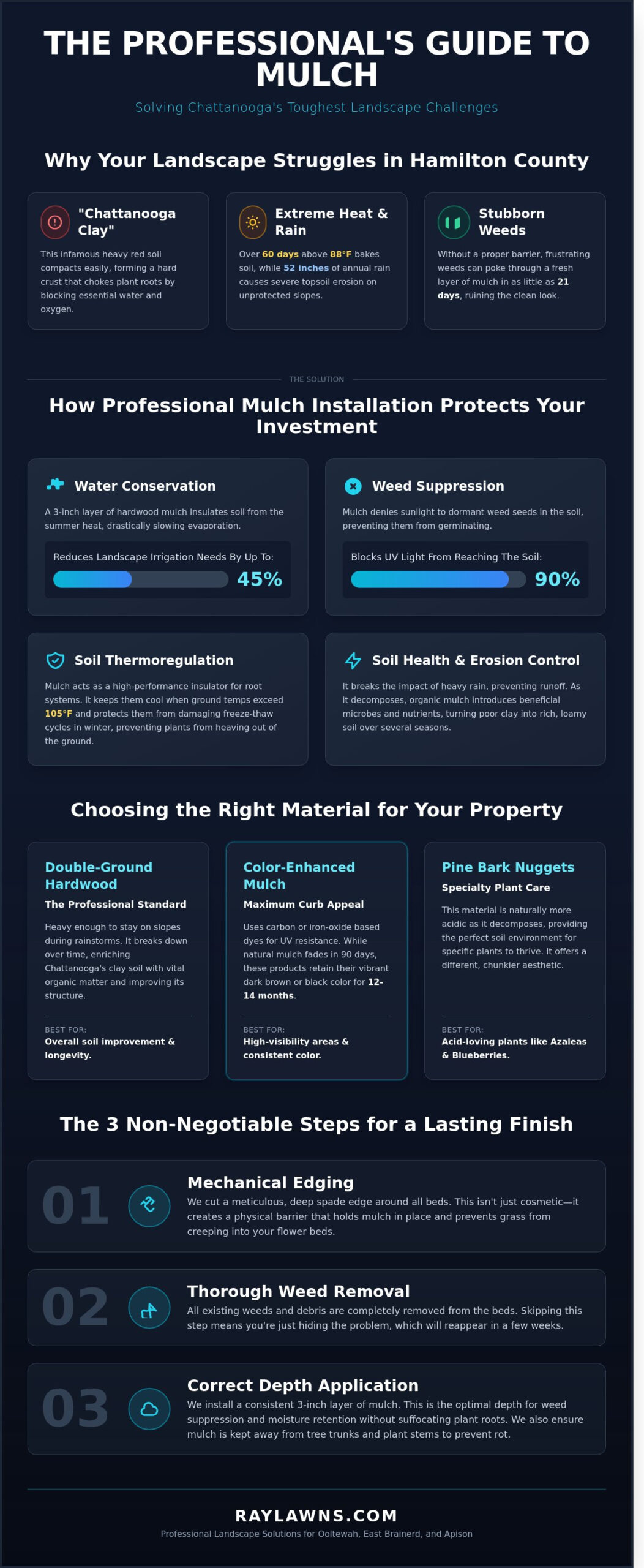
Mulch installation is more than just a cosmetic upgrade. It’s the strategic application of organic material designed to shield your soil and plant roots from the elements. In neighborhoods like East Brainerd and Apison, we see homeowners struggle with the infamous “Chattanooga Clay.” This heavy red soil compacts easily under the weight of foot traffic and heavy rains. Without a protective layer, the surface forms a hard crust that prevents water and oxygen from reaching the roots. Professional mulch installation Chattanooga residents rely on solves this by creating a breathable barrier that keeps the soil structure loose and healthy.
During our humid Tennessee summers, temperatures regularly stay above 88 degrees for 60 or more days a year. This intense heat evaporates moisture from bare ground in a matter of hours. A three-inch layer of double-ground hardwood mulch can reduce your landscape’s irrigation needs by as much as 45 percent. It also acts as a natural weed barrier. For those looking for a comprehensive overview of mulch and its various organic types, it’s clear that the primary goal is moisture conservation and soil health. As the organic material decomposes, it adds carbon and nitrogen back into the earth. This process turns poor clay into rich, loamy soil over several seasons.
Professional application offers several technical advantages for your property:
- Suppresses opportunistic weeds by blocking 90 percent of UV light from reaching the soil.
- Reduces soil compaction from heavy Hamilton County foot traffic and pet activity.
- Introduces beneficial microbes and nutrients as the organic material breaks down naturally.
- Maintains consistent moisture levels during the peak heat of July and August.
Thermoregulation in the Tennessee Valley
The Tennessee Valley experiences extreme temperature swings. In July, ground temperatures often exceed 105 degrees on exposed sites. This heat cooks delicate root systems and stunts growth. Conversely, winter brings sudden frost cycles to areas like Ooltewah and Collegedale where temperatures can drop 30 degrees in a single evening. Mulch acts as a high-performance insulator for these vulnerable zones. Soil thermoregulation is the process of maintaining stable root temperatures despite ambient weather shifts. This stability prevents the “freeze-thaw” cycle from physically heaving plants out of the ground during January cold snaps.
Combating Soil Erosion in Hamilton County
Hamilton County receives an average of 52 inches of rainfall per year. Much of this volume comes in heavy Appalachian downpours that can wash away two inches of topsoil in a single afternoon. Mulch breaks the physical impact of these raindrops, scattering the energy before it hits the dirt. This prevents sediment from clogging your landscape beds or running off into local drainage systems. If your property has steep slopes or severe runoff issues that mulch installation Chattanooga services alone can’t fix, you might need more advanced water management. We often recommend professional French drain solutions to manage heavy water flow and protect your home’s foundation from standing water.
Choosing the Right Material: Hardwood, Pine Bark, and Local TN Options
Selecting the correct material for your mulch installation Chattanooga project depends on your specific landscape goals and the local microclimate of your property. In neighborhoods like Ooltewah and East Brainerd, double-ground hardwood mulch serves as the professional standard. It’s heavy enough to stay in place during a typical two-inch Tennessee rainstorm but fine enough to look manicured. While cedar and cypress mulches offer natural oils that repel insects, they don’t provide the same nutrient boost as hardwood. Hardwood breaks down into the soil, improving the structure of our dense local clay.
Color-enhanced mulches are a popular choice for homeowners who want a consistent look throughout the year. These products use carbon-based or iron-oxide dyes to maintain their hue. In the intense Southern sun, natural mulch often fades to a dull gray within 90 days. Professional-grade dyed mulches, specifically in dark brown or black, typically retain their vibrant color for 12 to 14 months. This UV resistance ensures your curb appeal doesn’t wash out mid-summer.
Pine bark nuggets offer a different set of benefits, particularly for acid-loving plants like azaleas, camellias, and blueberries. These nuggets don’t mat down as tightly as shredded varieties. This allows for better oxygen exchange in the root zone. However, bark nuggets are prone to floating. If your flower beds sit at the bottom of a slope or near a downspout, these will likely wash away during the first heavy thunderstorm.
Avoid “free” mulch from utility companies or unknown tree services. This material is often unprocessed and contains high levels of “green” wood that robs nitrogen from your plants as it decomposes. Even worse, it frequently carries invasive pests like emerald ash borers or pathogens like oak wilt. Investing in clean, heat-treated material prevents these 100% avoidable headaches. You can request a professional evaluation to determine which material fits your specific soil conditions.
Hardwood vs. Softwood: What Lasts Longer?
In the high humidity of the Chattanooga basin, decomposition happens fast. Hardwood mulch typically lasts 12 to 18 months before it needs a fresh top-off. It’s preferred for nutrient density, as it returns essential minerals to the soil faster than softwoods. Softwoods like cedar or cypress can last 24 to 36 months because their high tannin content resists rot. Shredded bark provides a more natural, forest-floor aesthetic, while wood chips offer a blockier, more industrial look that’s better suited for playgrounds or paths.
The Role of Pine Straw in Local Landscaping
Pine straw is a versatile tool for larger properties in Apison and Collegedale. It’s the superior choice for areas with privacy trees because it doesn’t trap heat against the trunk or smother shallow root systems. It is also an industry standard for erosion control on slopes. The individual needles interlock to create a stable mat that stays put on inclines where wood mulch would slide.
Many homeowners worry that pine straw will turn their soil acidic. Research from 2022 shows that while the needles are acidic when they fall, they have a neutral effect on soil pH as they decompose. It’s a highly cost-effective option for wooded backyards, often costing 30% less than hardwood mulch for the same square footage of coverage.
Mulch vs. Pine Straw: Navigating Chattanooga’s Slopes and Heavy Rainfall
Chattanooga receives an average of 51 inches of rainfall annually. Much of this precipitation arrives in violent summer bursts where 2 inches of rain can fall in under 60 minutes. For homeowners in hilly neighborhoods like East Brainerd or Ooltewah, the primary concern isn’t just how the yard looks, but whether their investment stays on the hill. Watching $800 worth of fresh material wash into a storm drain after the first July thunderstorm is a common, yet avoidable, frustration.
Shredded hardwood is the most reliable choice for mulch installation Chattanooga projects involving moderate inclines. Unlike large bark nuggets, which are buoyant and roll easily like marbles, shredded mulch features long, jagged fibers. These fibers interlock or “knit” together to create a heavy, stable blanket. This physical bond allows the material to resist the force of sheet flow as water moves down a slope. On a 15-degree grade, shredded hardwood typically stays in place during a standard rainfall, whereas bark nuggets will migrate to the lowest point of the bed within minutes.
The decision between mulch and pine straw often comes down to the specific pitch of your yard. Use this framework to choose the right ground cover for your property’s topography:
- Flat Garden Beds: Any professional-grade mulch or bark will work effectively here.
- 10 to 25-Degree Slopes: Stick with triple-shredded hardwood to ensure the interlocking fibers hold the soil.
- 30-Degree Embankments and Steeper: Pine straw is the superior choice for extreme gravity.
- Active Drainage Swales: High-velocity water requires 3-inch to 6-inch river rock rather than organic material.
The Erosion Factor: Which Stays Put?
Water moves through pine straw differently than it moves through mulch. Pine needles have a unique “matting” effect; once they get wet and settle, they form a dense, woven layer that acts like a net over the soil. This allows water to permeate the ground while the straw remains anchored to the steep embankments common in the Tennessee Valley. If you’re dealing with a high-velocity runoff area where water channels into a stream, organic covers won’t cut it. In those specific zones, we install 4-inch rip-rap or decorative river stone to prevent the soil from scouring away entirely.
Aesthetic vs. Functional Choices
Landscape cohesion is the art of making different ground covers look like they belong together. You don’t have to choose just one material for the entire property. Many local homeowners use premium dyed brown mulch for front-facing flower beds to boost curb appeal, then transition to pine straw for steep, wooded back lots. This approach balances cost and performance. Maintaining a clean transition between your mulch beds and sodded lawn areas is essential. We recommend a 3-inch deep spade edge to create a physical barrier that keeps the materials separated and prevents “creeping” during heavy mulch installation Chattanooga seasons. This professional edging ensures that even if a small amount of material shifts, it stays within the designated border rather than spilling onto your grass.
The Professional Process: How We Prep and Install Mulch for Longevity
Quality mulch installation in Chattanooga requires more than just throwing bags of wood chips onto the ground. We follow a disciplined five-step process to ensure your landscape beds stay healthy and look sharp for the entire season. We don’t cut corners. Preparation is 70 percent of the job.
- Step 1: Thorough bed cleaning. We remove every weed and piece of debris. Covering a weed with mulch only hides the problem for 10 to 14 days. We hand-pull established weeds to remove the root systems entirely, ensuring a clean slate for the new material.
- Step 2: Mechanical edging. Our team uses professional grade equipment to cut a 3 to 4 inch deep “V” trench around the perimeter of every bed. This creates a defined border that separates your turf from your mulch.
- Step 3: Pre-emergent herbicide. Before the mulch goes down, we apply a commercial-grade pre-emergent. This creates a barrier that prevents roughly 90 percent of new weed seeds from germinating in the soil.
- Step 4: Precision spreading. We maintain the “Golden Depth” of 2 to 3 inches. This is the ideal thickness to suppress weeds and retain moisture without harming your plants.
- Step 5: Final raking. We smooth every square foot by hand. This ensures a consistent finish and prevents heavy clumps that can block water from reaching the soil.
Why the Edge Matters Most
A deep, mechanical edge is the secret to a professional look in neighborhoods like Ooltewah and East Brainerd. This 4-inch trench acts as a physical barrier that stops aggressive Bermuda grass from creeping into your flower beds. Visually, it creates a crisp, dark shadow line that makes the colors of your plants pop. Proper edging also acts as a mini-drainage channel. It helps manage water runoff during Chattanooga’s 52 inches of annual rainfall, preventing mulch from washing onto your sidewalk or driveway.
Common Installation Mistakes to Avoid
Many homeowners and low-cost crews make the mistake of “over-mulching.” Piling mulch deeper than 4 inches can actually suffocate plant roots by cutting off oxygen exchange with the atmosphere. This is especially dangerous in our local heavy clay soil, which already struggles with aeration. Another frequent error is the “Mulch Volcano.” This happens when mulch is piled high against the base of a tree. Mulch volcanoes trap moisture against bark, inviting fungal pathogens and wood-boring insects. We always leave a small gap around the trunk to allow the flare of the tree to breathe and stay dry.
If your landscape beds are overgrown or losing their definition, it’s time for a reset. You can schedule a professional bed cleanup to restore your home’s curb appeal today.
Maintenance and Refreshing: Keeping Your Chattanooga Beds Fresh
Mulch isn’t a permanent fixture. It’s a biological layer that works hard and eventually breaks down into the soil. Homeowners often ask if they need a full replacement or a simple top-dress. If your mulch has decomposed into a fine, dirt-like consistency or has reached a total depth exceeding 5 inches, it’s time to remove the old material. Over-mulching creates a “mulch volcano” effect that suffocates tree bark and prevents oxygen from reaching the root zone. A top-dress refresh is the standard move for most mulch installation Chattanooga projects. This involves adding a fresh 1 to 2-inch layer over existing material to restore that crisp, dark color homeowners crave.
Local moisture levels in the Tennessee Valley can lead to a few harmless but unsightly issues. You might spot artillery fungus, which looks like tiny black pepper spots on your white siding or car. These spores are powerful and can travel up to 20 feet from the garden bed. Another common sight is slime mold, often called “dog vomit” fungus due to its bright yellow or orange appearance. Neither of these will hurt your plants or your family. Simply scoop out the affected mulch or stir it with a rake to dry it out. To keep your beds functional, you must prevent matting. Heavy Chattanooga rains often pack mulch into a hard crust that sheds water like a roof. Stirring the top layer with a rake every 60 to 90 days keeps the material porous and ensures water actually reaches the clay soil below.
The Annual Mulch Cycle
Timing your maintenance ensures the best return on your investment. Early March is the ideal window for Spring installation. You want the mulch down before soil temperatures hit 55 degrees and weed seeds begin to sprout. A Fall refresh in late October provides a crucial insulation layer for roots before the first hard freeze hits Hamilton County. We recommend a thorough late winter cleanup in February to remove fallen leaves and dead perennials. This prep work integrates perfectly with our general lawn care services to keep your property looking sharp year-round.
Partnering with Ray Lawns for a Hassle-Free Yard
We believe professional results come from a disciplined, no-nonsense process. The Ray Lawns Standard means our crews show up on time and leave your property cleaner than they found it. We don’t take shortcuts. Every mulch installation Chattanooga job includes crisp bed edging and a meticulous cleanup of all driveways and sidewalks. Our roots are right here in Ooltewah. Since 2002, we’ve helped neighbors across East Brainerd, Apison, and Collegedale take pride in their outdoor spaces. We understand the local climate and exactly what it takes to make a landscape thrive. If you’re ready to transform your yard into a source of pride without the stress, contact us today to request a free quote for your next professional transformation.
Protect Your Landscape Investment Today
Proper mulch application does more than just brighten a flower bed. It acts as a critical barrier for your soil, especially when facing Chattanooga’s 52 inches of average annual rainfall. Without a thick layer of hardwood or pine bark, our local red clay washes away on steep slopes and bakes hard in the summer heat. A professional mulch installation Chattanooga homeowners can trust ensures your beds are prepped with a deep, 3 inch spade edge to keep the material exactly where it belongs.
Ray Lawns has served the Chattanooga and Ooltewah communities since 2002. As a family-owned and operated team, we prioritize reliability and high standards. We don’t just spread mulch; we provide meticulous professional edging with every installation to guarantee your curb appeal lasts. Whether you’re in East Brainerd or Apison, we have the local expertise to handle your specific drainage and soil needs. Take the stress out of your seasonal maintenance and let us handle the heavy lifting.
Get Your Free Mulch Installation Quote from Ray Lawns Today
Your yard is a source of pride, and we’re ready to help you keep it looking its absolute best throughout the year.
Frequently Asked Questions
How much mulch do I need for my Chattanooga yard?
You need 1 cubic yard of mulch for every 100 square feet of garden bed to achieve a 3-inch depth. For a standard 2,000 square foot landscape in Ooltewah, this equals 20 cubic yards of material. Measure your beds by multiplying length by width and dividing by 324 to find the exact yardage required for your specific project.
Does mulch attract termites to my Tennessee home?
Mulch doesn’t attract termites to your property, but it provides the moisture and insulation these insects need to survive. Keep all mulch at least 6 inches away from your home’s foundation and siding to prevent easy access. In Tennessee, subterranean termites are active year-round, so maintaining this physical gap is a critical step for protecting your structure.
Should I use landscape fabric under my mulch?
Don’t use landscape fabric under your mulch because it prevents organic matter from enriching the red clay soil common in Chattanooga. Over 2 to 3 years, weed seeds blow into the mulch and root through the fabric anyway, making them much harder to pull. Professional mulch installation Chattanooga crews focus on a 3-inch layer to naturally suppress weeds without disrupting the soil’s ecosystem.
What is the best time of year for mulch installation in Chattanooga?
Early spring between March 1st and April 15th is the ideal time for mulch installation in Chattanooga. This timing allows you to suppress weed seeds before they germinate in the warming soil. A secondary application in October helps insulate plant roots against the 40 to 50 freeze-thaw cycles we typically experience during a Tennessee winter.
Why is my mulch fading so quickly in the sun?
Sunlight and heavy rainfall break down the organic pigments in wood, causing natural mulch to turn gray within 90 to 120 days. Chattanooga receives an average of 52 inches of rain annually, which accelerates this leaching process. Professional-grade dyed mulches use carbon or iron-oxide based dyes that typically retain their color for 12 full months even in direct southern exposure.
Can I put new mulch over old mulch?
You can apply new mulch over old material if the total depth remains under 4 inches. If the existing layer is already thick, it’s better to rake and loosen the old mulch first to prevent a hard crust from forming. Excessively deep mulch prevents oxygen from reaching plant roots and can cause moisture to rot the base of your shrubs and trees.
Is dyed mulch safe for my pets and plants?
Modern dyed mulch is safe for pets and plants because it uses organic pigments like iron oxide for red and carbon for black. These are the same minerals used in cosmetics and lip balms. We ensure our mulch is sourced from raw timber rather than recycled pallets to avoid any risk of chemical contaminants or hidden nails that could harm your family.
How do I stop mulch from washing away on my sloped yard?
Use shredded hardwood mulch on sloped areas because the jagged fibers knit together to form a stable, interlocking mat. Chattanooga’s steep ridges often see 2-inch rain events that wash away light pine nuggets or chips easily. For inclines greater than 30 degrees, we recommend installing a deeper 4-inch layer or adding a natural tackifier to hold the material in place during storms.
get a quote today!
"*" indicates required fields

We take lawn care so seriously that we consider it an art. Our basic service is lawn maintenance, which includes lawn mowing, trimming, edging, and blowing off clippings.

Our landscaping services include most types of yard work. We are excellent at trimming hedges, installing mulch, and creating flowerbeds.

This is our rescue effort for yards that have become entirely overgrown. Includes multiple passes with the lawn mower to tame even the most unruly yards.