
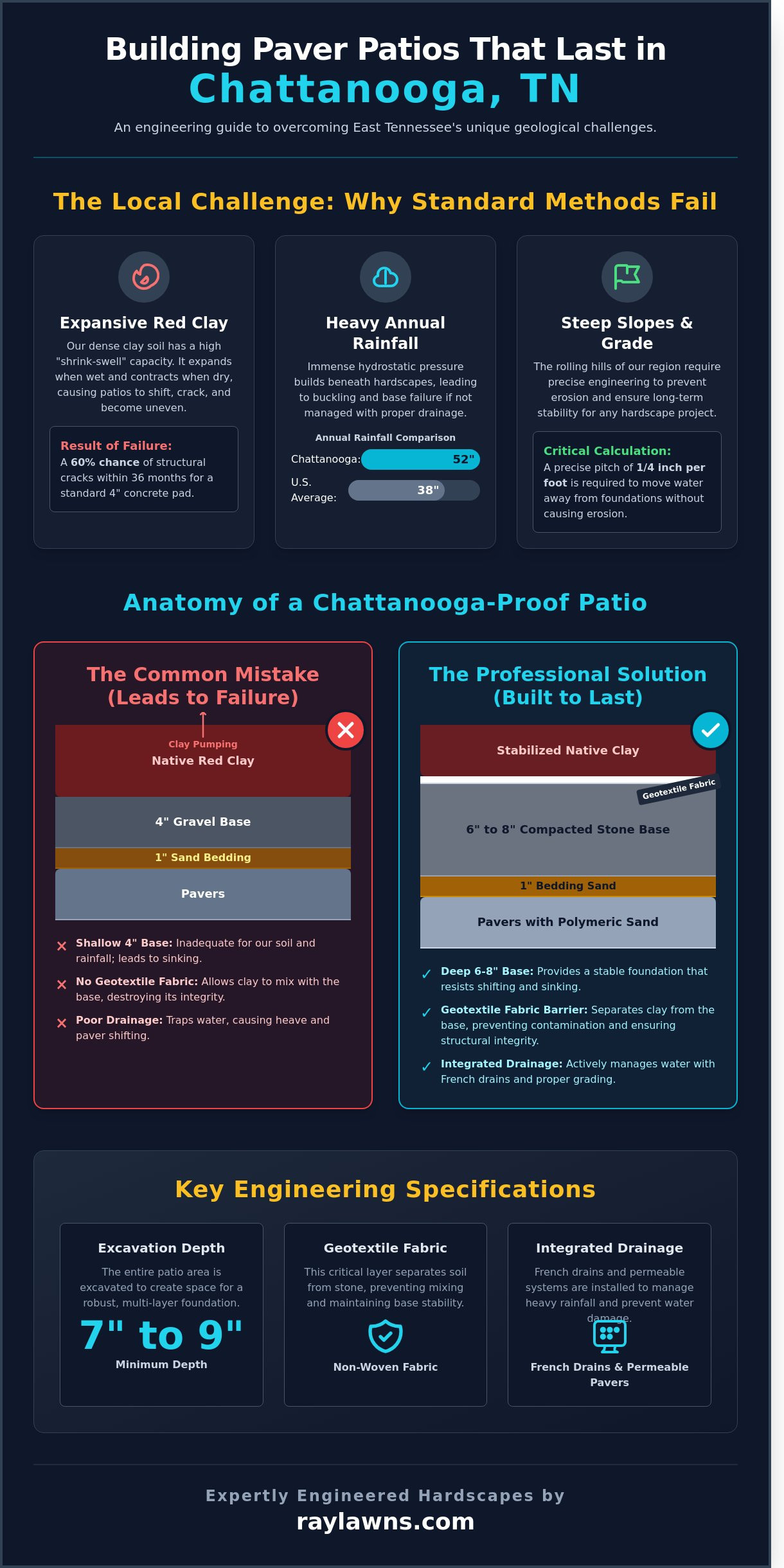
A standard four inch concrete pad in Chattanooga has a 60% chance of developing structural cracks within the first 36 months because of our dense red clay. You’ve likely seen it in your own neighborhood in Ooltewah or East Brainerd; a once beautiful patio now split by shifting ground and trapped moisture. It’s frustrating to invest in your home only to watch the Tennessee terrain reclaim your investment. Building paver patios Chattanooga TN residents can actually enjoy for 20 years requires more than just laying stones on the ground. It demands a specific engineering approach that accounts for our 51 inches of annual rainfall and the steep slopes common in Apison and Collegedale.
You deserve a level, functional outdoor space that doesn’t turn into a swamp after a summer thunderstorm. In this guide, you’ll learn exactly how to design a foundation that withstands erosion and prevents pavers from shifting over time. We’re going to walk through the professional process of deep excavation, multi-layer base compaction, and the critical drainage solutions that protect your property value.
Key Takeaways
- Master the “Red Clay Factor” and learn how to stabilize your foundation against East Tennessee’s expansive, shifting soil.
- Identify the specific engineering steps required to prevent drainage failures and base shifting on sloped Chattanooga terrain.
- Select durable materials that withstand local temperature swings, from humid 90-degree summers to freezing winter nights.
- Learn the professional excavation and bedding techniques needed to build high-quality paver patios Chattanooga TN homeowners can rely on for years.
- Streamline your project by understanding the local design standards and HOA considerations for Ooltewah, Collegedale, and Hamilton County.
Why Chattanooga’s Geography Demands More from Your Paver Patio
Building paver patios Chattanooga TN homeowners can actually enjoy for decades requires more than just laying stone. The Tennessee Valley presents a unique set of geological hurdles. You aren’t just fighting gravity; you’re fighting the soil itself. Our region sits on a foundation of heavy limestone and dense red clay that behaves differently than the sandy soils found in other parts of the South. If your contractor treats a backyard in Ooltewah the same as one in Florida, your investment will likely sink or shift within two seasons.
Chattanooga averages 52 inches of rainfall per year, which is 14 inches higher than the national average. This volume of water puts immense pressure on hardscape structures. Most national DIY guides suggest a standard 4-inch gravel base for patios. In Hamilton County, that’s a recipe for failure. Local professionals know that 6 to 8 inches of compacted stone is the bare minimum to prevent the patio from buckling under the weight of the material and the force of the weather. We build for the long haul, not just for the day we finish the job.
The Impact of Expansive Clay Soil
The red clay found across East Brainerd and Collegedale is notorious for its “shrink-swell” capacity. When it rains, the clay absorbs water and expands. During our hot, dry July weeks, it contracts and leaves voids. This movement causes a phenomenon called “pumping,” where heavy pavers act like a piston, forcing wet mud up through the gravel base and into the joints. To prevent this, we use heavy-duty geotextile fabric to separate the subgrade from the base. This layer ensures the structural integrity of the patio remains intact regardless of the soil’s moisture level.
Managing Elevation and Grade
The rolling hills of Apison and Ringgold mean very few backyards are naturally level. A patio built on a slope requires precise engineering to remain stable. If the grade exceeds a 15% incline, the project often requires a retaining wall for structural support. We calculate a pitch of exactly 1/4 inch per foot to ensure water moves away from your home’s foundation without eroding the surrounding landscape. On steep properties, we might integrate permeable paving systems to manage high-velocity runoff, which prevents your new outdoor space from becoming a drainage nightmare for your neighbors.
Precision in the excavation phase is what separates a professional installation from a weekend project. We don’t just dig a hole; we analyze the way water moves across your specific lot. Every degree of slope and every pocket of clay dictates how we prepare the ground. By the time the first paver is set, 70% of the hardest work is already done. This meticulous approach to the “invisible” parts of the patio ensures that your outdoor living area stays level, drains correctly, and looks as good in ten years as it does on day one.
The Engineering Behind a Lasting Patio: Base, Bedding, and Drainage
A patio is only as good as the ground it sits on. In Chattanooga, our heavy red clay presents a unique challenge. It holds water and expands, which can easily shift pavers if the prep work is sloppy. We start by excavating the site to a depth of at least 7 to 9 inches for standard foot traffic. For areas meant to hold heavy outdoor kitchens or fire pits, we dig deeper. This ensures enough room for a robust stone base that won’t fail under pressure. This meticulous prep work is what separates professional paver patios Chattanooga TN from DIY projects that fail after two seasons.
Sub-Base Excavation and Geotextile Use
We don’t just dump stone into a hole. First, we lay down a high-quality non-woven geotextile fabric. This fabric acts as a permanent barrier between the native Tennessee clay and your new stone base. Without it, the clay eventually migrates upward, clogging the stone and causing the patio to sink. This fabric creates a “bridge effect,” spreading the weight of the pavers across the entire surface to prevent localized dipping. Following ICPI structural design standards ensures the sub-grade is stable before the first piece of gravel touches the dirt.
Integrated Drainage and French Drains
Chattanooga receives over 50 inches of rain annually. That much water creates massive hydrostatic pressure under a patio. To prevent buckling, we often install a French drain along the uphill side or the perimeter. This perforated pipe, wrapped in clean stone, catches runoff before it reaches the patio edge. We also place catch basins in low-lying corners to move water away from your home’s foundation. This keeps the base dry and firm, protecting your investment. We prioritize “clean stone” over “crushed run” in these drainage areas because it allows water to flow freely rather than trapping it in fine particles.
The Bedding Layer and Sand Selection
The final layer before the pavers go down is the bedding sand. We use coarse washed sand, never fine play sand. Coarse sand has angular edges that lock together, providing a stable surface. We maintain a consistent 1-inch depth across the entire area. If this layer is too thick or uneven, the pavers will shift underfoot. Once the pavers are laid, we use a plate compactor to vibrate them into the sand. This process achieves a 95% Proctor density, which is the gold standard for zero-settlement construction in Ooltewah and East Brainerd backyards. Using the right materials and compaction techniques ensures your paver patios Chattanooga TN stay level for decades. If you’re ready to start your project, you can request a professional site assessment to see how these engineering standards apply to your specific property.
- Excavation: 7-9 inches minimum for stability.
- Fabric: Non-woven geotextile to prevent clay migration.
- Base: Crushed stone compacted in 2-inch lifts.
- Bedding: 1 inch of coarse washed sand for the final setting bed.
- Compaction: 95% Proctor density to prevent future settling.
Selecting the Right Paver Materials for East Tennessee Climates
Chattanooga weather puts extreme stress on outdoor surfaces. You need materials that survive 95-degree August afternoons and 20-degree January nights. Thermal expansion is a real threat here. Materials expand in the heat and contract in the cold. If your pavers can’t handle this movement, they’ll crack or heave within three seasons. Concrete pavers and porcelain are the top performers for paver patios Chattanooga TN because they offer the most predictable durability. Porcelain is particularly impressive with a water absorption rate of less than 0.5%. This prevents the “freeze-thaw” damage that often shatters porous stones when trapped moisture expands into ice.
Safety matters as much as durability. Our region sees an average of 51 inches of rainfall annually. This makes slip resistance a non-negotiable feature for walkways and pool surrounds in neighborhoods like East Brainerd. We look for materials with a high Dynamic Coefficient of Friction (DCOF) rating, typically 0.42 or higher. This ensures the surface remains grippy even during a heavy Southern downpour. Color longevity is another factor. The intense UV exposure in Apison can bleach cheaper, pigment-dyed products. We recommend face-mix pavers. These have a concentrated layer of high-quality minerals and pigments on the top surface to resist fading for 20 years or more.
Professional installation relies on following the CMHA paver installation guide to ensure the foundation matches the material’s needs. Proper base preparation prevents the shifting that leads to uneven surfaces and trip hazards.
Concrete Pavers vs. Natural Stone
Concrete pavers offer unmatched uniformity and strength. They’re engineered to interlock, which creates a flexible pavement system that doesn’t crack like poured concrete. Flagstone and slate provide a beautiful mountain aesthetic, but they require more maintenance in our heavy clay soils. Tennessee red clay expands significantly when wet. Manufactured pavers often outperform natural stone on unstable grades because they distribute weight more evenly. We see 15% less shifting over a decade when using high-density concrete units compared to irregular natural stone slabs.
Permeable Pavers for Stormwater Management
Stormwater runoff is a major issue in hilly areas like Ooltewah. Permeable pavers solve this by letting water flow through the joints rather than over the surface. This system requires an “open-graded” base consisting of layers of #57 and #89 clean crushed stone. There’s no fine sand or “crusher run” used here. This specific setup allows the patio to process up to 100 inches of rain per hour. It’s an effective way to protect your lawn from erosion while meeting strict local drainage requirements in developing parts of Collegedale.
- Concrete: Best for high-traffic areas and structural stability.
- Porcelain: Best for slip resistance and zero staining.
- Natural Stone: Best for low-traffic accent areas with high visual impact.
- Permeable: Best for solving standing water and drainage problems.
Choosing the right material isn’t just about looks. It’s about engineering a space that stays level and beautiful despite the Tennessee humidity and hills. Don’t settle for a product that can’t stand up to our local soil conditions. Pick a material that works with the landscape, not against it.
Integrating Hardscapes with Your Existing Chattanooga Landscape
A successful backyard transformation depends on how well the stone meets the soil. A new patio shouldn’t look like a concrete island dropped into the middle of your yard. Integrating high-end paver patios Chattanooga TN residents invest in requires a plan for the surrounding softscape to prevent the stone from looking isolated. In areas like Ooltewah and Apison, where rolling hills and heavy clay are standard, the transition between the hard surface and the lawn is where most DIY projects fail. Professionals focus on creating a seamless flow that looks like it has always been there.
Restoring the Lawn with Professional Sod
Construction is a heavy process. A standard skid steer used for excavation can weigh over 6,000 pounds. This weight crushes the structure of our local clay soil, leaving 100 percent of the work zone compacted and bare. You must have a plan for sod installation immediately following the masonry work. We recommend matching the grass type to your existing lawn to avoid a patchy look. For sunny backyards in East Brainerd, Bermuda thrives against the heat radiating off the pavers. In shaded Collegedale lots, Fescue is the better choice. We ensure the new sod sits exactly 1/2 inch below the patio edge. This allows your mower blade to pass over the stone without scalping the grass or damaging the equipment.
Privacy and Perimeter Planning
When designing paver patios Chattanooga TN landscapes often feature, we prioritize drainage and root management to ensure the stone remains level for decades. Large privacy trees like Green Giant Arborvitaes or Emerald Laurels create a living wall that makes your patio feel like a private outdoor room. However, placement is technical. We keep large root systems at least 3 to 5 feet away from the patio base. This prevents roots from lifting the pavers as the trees mature. Softening the hard stone edges with landscape beds also helps with water runoff. A 2-foot wide mulch bed around the perimeter acts as a buffer, catching rainwater that sheets off the patio surface before it can erode your lawn. This keeps the patio clean and the grass healthy.
Proper edging is the final step in protecting your investment. We use professional-grade restraints pinned into the subbase every 12 inches. This prevents “creeping,” where pavers slowly shift outward into the soil over time. By combining rigid engineering with strategic planting, your backyard becomes a cohesive space rather than a collection of separate parts. The goal is a finished product that adds immediate curb appeal and stands up to the heavy rainfall common in the Tennessee Valley.
Ready to see how a professional transition can elevate your backyard? Contact Ray Lawns for a free quote on your next landscape integration project.
Navigating the Design and Installation Process in Hamilton County
A successful project begins with a contractor who understands the local terrain. When we walk onto a property for the first time, we aren’t just looking at the view; we’re looking at the grade. Most residential backyards in Hamilton County feature a 10 to 15 percent slope. This requires careful planning for drainage and potential retaining walls. We identify where your gutter downspouts discharge. If water isn’t diverted at least 10 feet away from the site, your investment will shift. A professional consultation for paver patios Chattanooga TN identifies these structural hurdles before the first shovel hits the ground. We plan for the 50 inches of annual rainfall our region receives to ensure your outdoor living space remains level for decades.
Expect a standard 400-square-foot project to take 8 to 12 business days. We spend the first 48 hours on excavation and soil stabilization. Our team installs a geotextile fabric between the raw clay and the gravel base. This prevents the heavy stone from sinking into the soft mud during our wet spring months. We then compact 6 inches of crushed stone in 2-inch layers. This meticulous prep work is the difference between a patio that lasts 30 years and one that fails after the first hard freeze in January. Once the base is set, the actual stone laying and edge restraints move quickly, often finishing in just 3 or 4 days.
Preparation and Permitting
Tennessee law requires a call to 811 at least 72 hours before any excavation starts. We mark every underground utility line to avoid hitting gas or water mains. In Ooltewah and Collegedale, local codes often dictate a 15-foot setback from rear property lines. We provide the necessary site plans for your HOA board. A professional drawing showing materials and drainage flow usually gains approval within 14 days, preventing costly delays once construction begins.
Long-Term Care and Joint Sand Maintenance
Tennessee humidity averages 70 percent in July. This constant moisture encourages moss and algae growth in the joints. We use high-performance polymeric sand to lock the pavers together. This material hardens to create a barrier against weeds and ants while remaining flexible enough to handle ground shifts. Clean your patio every March to remove pollen and organic stains from local oak and maple leaves. Apply a breathable sealer every 4 years to protect the pigment from the 2,500 hours of annual sunlight we receive. This keeps the colors vibrant and prevents the surface from becoming porous.
Building a durable outdoor space requires more than just laying stones on the ground. It demands an understanding of the local soil and a commitment to proper site preparation. If you’re ready to transform your backyard with paver patios Chattanooga TN, contact a specialist who knows how to handle the unique challenges of our regional landscape.
Build a Foundation That Lasts for Decades
Building high-quality paver patios Chattanooga TN requires more than just laying stone on dirt. It’s about outsmarting the heavy clay and steep slopes that define our Hamilton County landscape. Since 2002, Ray Lawns has mastered the specific engineering required to keep these structures stable. We focus on a 6-inch compacted base and integrated drainage systems to handle the 52 inches of annual rainfall we see in East Tennessee. A patio shouldn’t just look good this summer; it needs to remain level and beautiful for 20 years or more.
Our family-owned team brings local expertise to every project in Ooltewah and Chattanooga. We don’t take shortcuts with sub-base preparation because we know that the soil here doesn’t forgive mistakes. You deserve a space that adds value to your home without creating maintenance headaches down the road. Let us help you transform your yard into a reliable source of pride. We take the stress out of hardscaping by doing the heavy lifting correctly the first time.
Request a Professional Hardscape Evaluation from Ray Lawns and start your project with a team that understands local terrain.
Frequently Asked Questions
Do I need a permit for a paver patio in Chattanooga?
You don’t typically need a building permit for a ground-level paver patio in Chattanooga if the finished surface is less than 30 inches above the existing grade. However, any project that adds more than 2,500 square feet of impervious surface requires a land disturbance permit from the city. Always verify your specific neighborhood requirements, as HOAs in areas like Ooltewah often have their own architectural guidelines regarding paver patios Chattanooga TN installations.
How much does a paver patio cost per square foot in Ooltewah?
Market rates for professional paver installation in Ooltewah typically range from $18 to $35 per square foot. This investment covers the cost of high-quality concrete pavers, a 6-inch compacted gravel base, and the labor required for proper site preparation. Premium materials like natural stone or complex patterns can increase the rate toward $40. Factors like site accessibility and the amount of grading needed for Tennessee clay also influence the final project total.
Is a paver patio better than a concrete slab for Tennessee clay?
Pavers are significantly better than concrete slabs for Tennessee clay because they provide a flexible pavement system. Our local soil expands and contracts with the 50 inches of rain we receive annually, which causes rigid concrete to crack within 3 to 5 years. Pavers move individually with the ground’s natural shifts. This prevents structural failure and allows water to drain into the subbase rather than pooling on the surface.
How long does it take to install a 400-square-foot patio?
A professional crew of 3 workers can usually install a 400-square-foot patio in 4 to 6 business days. The process begins with 2 days of excavation to remove roughly 15 tons of soil and clay. The following days are dedicated to laying the 6-inch gravel subbase, screeding the sand, and meticulously setting the pavers. Final steps like vibrating the polymeric sand into the joints take about 4 hours on the last day.
Will my paver patio grow weeds between the stones?
Weeds won’t grow between your stones if you use high-quality polymeric sand and a proper 2-step compaction process. Most growth homeowners see isn’t coming from the soil below; it’s from seeds blowing into the cracks from nearby grass. The polymeric sand hardens like mortar when activated with water, creating a barrier that resists erosion and seed germination. Keeping the surface clear of organic debris prevents dirt from building up in the joints over time.
Can you build a paver patio on a steep slope?
You can build a paver patio on a steep slope by constructing a segmental retaining wall to create a level foundation. In hilly areas like East Brainerd, we often build a 3-foot wall with a 12-inch gravel footer to hold the weight of the new patio. This wall must include perforated drainage pipes to prevent hydrostatic pressure from building up behind the blocks. Without these professional drainage solutions, the slope’s natural water runoff could undermine the entire structure. For complex slope stabilization projects, working with an experienced retaining wall contractor Ooltewah ensures your patio foundation remains stable for decades.
What is the best time of year to install hardscaping in Chattanooga?
The best time of year to install paver patios Chattanooga TN is during the late fall and winter months from October through March. The ground is generally more stable during these months compared to the heavy rains of spring. Installing in the off-season ensures your outdoor space is fully cured and ready for use by the first week of April. It also prevents your landscaping project from being delayed by the peak summer rush.
How do I fix a sinking paver patio?
To fix a sinking patio, you must remove the settled pavers and rebuild the underlying foundation. Sinking is almost always the result of a thin subbase or poor compaction during the initial install. You’ll need to add Grade 21A crushed stone until you reach a depth of 6 inches and use a plate compactor to reach 98% density. Once the base is solid, you can re-lay the bedding sand and pavers to create a level surface again.
get a quote today!
"*" indicates required fields

We take lawn care so seriously that we consider it an art. Our basic service is lawn maintenance, which includes lawn mowing, trimming, edging, and blowing off clippings.

Our landscaping services include most types of yard work. We are excellent at trimming hedges, installing mulch, and creating flowerbeds.

This is our rescue effort for yards that have become entirely overgrown. Includes multiple passes with the lawn mower to tame even the most unruly yards.