
Last April, a homeowner in Ooltewah watched 4 inches of topsoil wash onto their driveway after a single Saturday afternoon downpour. It’s a frustrating sight that many neighbors in Hamilton County face because of our steep ridges and 51 inches of average annual rainfall. You’ve likely spent your weekends worrying about that shifting slope or wondering if your current landscape will survive the next storm. Building retaining walls that Ooltewah soil can actually support requires more than just stacking blocks; it demands a deep understanding of our local geology and hydrostatic pressure.
You deserve a yard that stays put regardless of the weather. This guide will teach you how to handle Ooltewah’s dense red clay and unique topography to build a structure that remains level for 30 years or more. We’ll examine the professional engineering standards for drainage, gravel backfill, and base preparation that prevent wall failure and turn unusable hills into beautiful, functional spaces for your family to enjoy. By the time you finish reading, you’ll know exactly what it takes to protect your property and increase its value with a wall that’s built to last.
Key Takeaways
- Understand how Ooltewah’s steep slopes and heavy annual rainfall create unique erosion challenges for your property.
- Discover why managing hydrostatic pressure through proper drainage is the most critical factor in preventing structural wall failure.
- Compare modern SRW blocks and natural stone to find the best materials for building long-lasting retaining walls Ooltewah homeowners can rely on.
- Learn the professional steps for a stable build, including the importance of burying the first course to secure the wall’s foundation.
- Identify early warning signs like bulging or settling to protect your landscape investment after intense Tennessee thunderstorms.
Understanding the Terrain: Why Ooltewah Properties Require Robust Retaining Walls
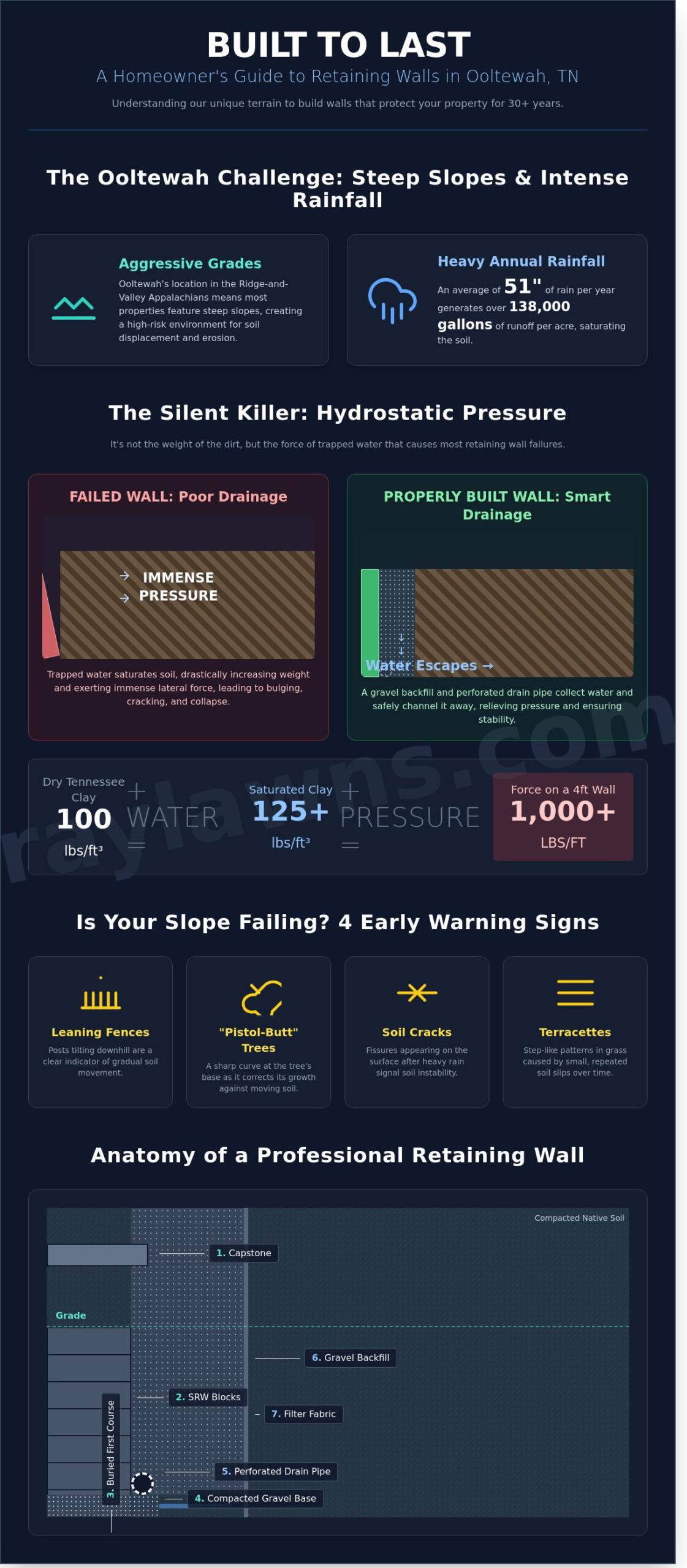
Ooltewah sits directly within the Ridge-and-Valley Appalachians. This geographic placement provides scenic views but creates significant challenges for property owners. Most residential lots in Hamilton County aren’t flat. They feature steep, aggressive grades that naturally move downhill over time. Building retaining walls Ooltewah homeowners can trust requires a deep understanding of this vertical reality. When you combine these slopes with Tennessee’s average annual rainfall of 51 inches, you create a high-risk environment for soil displacement. That volume of water generates roughly 138,000 gallons of runoff per acre every year. Without a structural barrier to hold the earth back, that water eventually carries your yard into your neighbor’s property or the street.
Professional walls do more than just stop dirt. They transform unusable, steep slopes into functional outdoor living spaces. A 30-degree incline that’s impossible to mow can become a series of level terraces for patios or gardens. You should monitor your yard for signs of soil creep and instability. Look for these specific indicators:
- Fences that lean toward the downhill side of the property.
- “Pistol-butt” trees where the trunk curves sharply at the base to compensate for moving soil.
- Cracks in the soil surface that appear after a heavy July thunderstorm.
- Step-like patterns in the grass, often called “terracettes,” caused by gradual soil slips.
These aren’t just cosmetic issues. They are early warnings of slope failure. Addressing these signs early prevents the need for massive excavation later. Investing in retaining walls Ooltewah residents need often saves thousands in foundation repairs down the road.
The Challenge of Tennessee Red Clay
Tennessee red clay is a notoriously difficult building material. It’s dense and holds moisture like a sponge. When it gets wet, it expands. When it dries during an August heatwave, it cracks and shrinks. This constant cycle puts immense lateral pressure on any structure. Wet clay also acts as a lubricant. It allows upper layers of soil to slide over lower, more stable layers. This slippage risk is why professional footings must reach specific depths. We don’t just set blocks on the ground. We dig past the loose topsoil to ensure the wall sits on a compacted, stable base. A wall built without considering clay’s expansion will lean or blow out within 24 months.
Erosion Control and Property Protection
Uncontrolled runoff doesn’t just ruin your grass; it threatens your home’s structural integrity. Constant water flow strips away the soil that supports your concrete footings and porch piers. A well-placed wall stops this cycle by breaking the momentum of downhill water. It keeps your soil on your property rather than letting it wash into local storm drains as silt. To maximize protection, we recommend integrating landscaping Chattanooga experts use to stabilize the grade above the wall. Deep-rooted native plants act as a secondary anchor system. They knit the soil together while the wall provides the heavy-duty structural support. This dual approach ensures your yard remains a source of pride rather than a source of stress.
The Science of Stability: Managing Hydrostatic Pressure and Drainage
Hydrostatic pressure is the silent killer of retaining walls Ooltewah homeowners often overlook. It’s the physical force water exerts when it becomes trapped behind a structure. Most people assume soil weight causes walls to lean or collapse. They’re wrong. Water is the primary culprit. When Ooltewah gets those heavy 3-inch rainfalls in a single afternoon, the ground becomes a heavy, pressurized mess. Without a way to escape, that water pushes against your wall with immense power.
Saturated backfill can easily double the weight pressing against your structure. Dry earth usually weighs about 100 pounds per cubic foot. Once that soil is soaked, the weight jumps to 125 pounds or more. The real danger is the fluid pressure. Without proper outlets, a 4-foot wall can face over 1,000 pounds of lateral force per linear foot. This is why professional builders follow strict guidelines like the San Diego County retaining wall construction standards to ensure structural integrity and safety. These standards highlight why drainage isn’t an optional add-on; it’s the foundation of the wall’s lifespan.
Weep holes are non-negotiable for masonry and concrete walls. These are small openings, typically 2 to 4 inches in diameter, placed at the base of the wall. They act as pressure relief valves. When water builds up behind the blocks, it flows out through these holes instead of pushing the wall over. If your current wall doesn’t have these, or if they’re clogged with dirt, the structure is a ticking time bomb. A wall without drainage is just a dam that wasn’t built to hold a lake.
The Role of Clean Gravel Backfill
Don’t let a contractor put native Ooltewah clay back against your new wall. Clay is a nightmare for drainage. It holds onto moisture like a sponge and expands when wet, putting even more stress on the stone or block. We use #57 stone, which is an angular gravel about 1 inch in size. This stone doesn’t compact into a solid mass. It creates voids that allow water to drop straight down to the drain pipe. We always wrap this stone in a heavy-duty, non-woven filter fabric. This prevents fine silt from clogging your drainage stone over the next 15 years. It keeps the system clean and the water moving.
Integrating Advanced Drainage Solutions
A wall is only as good as its exit strategy. We often partner with a specialized French drain company to install perforated pipes at the base of the footer. This pipe carries water to a safe discharge point before it can cause toe erosion. Toe erosion happens when water pools at the front base of the wall, softening the soil that supports the entire structure. We also pay close attention to downspouts. A single gutter dumping water behind a wall can lead to a collapse during a summer storm. Moving that roof water just 12 feet away via solid PVC piping can save your wall from a catastrophic blowout. If your backyard feels like a marsh after a light drizzle, you should consider a professional site evaluation to protect your investment.
Choosing the Right Material for Your Chattanooga Landscape
Selecting the right material for retaining walls Ooltewah homeowners need isn’t just about curb appeal. It’s an engineering decision. Our local red clay is heavy and dense. It expands significantly when wet and exerts thousands of pounds of pressure against a structure. You need a material that stands up to these specific Tennessee Valley conditions without shifting or cracking over time.
Segmental Block Systems
Segmental Retaining Wall (SRW) blocks are the modern standard for a reason. These are “dry-stack” systems, meaning they don’t require mortar. This design allows the wall to flex slightly as the soil moves, which prevents the structural cracking common in rigid walls. We find that these systems offer the best long-term value for properties in Ooltewah and Collegedale.
- Geogrid reinforcement: For any wall exceeding 3 or 4 feet in height, we install geogrid. This high-strength mesh anchors the blocks back into the soil, creating a reinforced mass that won’t tip.
- Color palettes: Most homeowners choose earth tones like tan, charcoal, or “Appalachian Gray.” These shades complement the natural limestone found throughout Hamilton County.
- Durability: These concrete blocks are rated for 3,000 to 5,000 PSI, ensuring they won’t crumble under the weight of a saturated hillside.
Natural Stone and Boulders
Natural stone provides a timeless, organic look that blends into the local environment. We often use fieldstone for a more rustic, rounded appearance or flagstone for a cleaner, stacked aesthetic. These are typically “gravity walls,” which rely on the sheer weight of the stones to hold back the earth.
Engineering a boulder wall requires precision. We select stones that often weigh over 400 pounds each and ensure the base layer is buried at least 6 to 12 inches below grade for stability. You can soften the hard lines of these massive stones by using tree planting services Chattanooga residents trust to add privacy and root-level soil stabilization. This combination of hardscaping and greenery creates a permanent, living solution for steep slopes.
Poured Concrete vs. CMU Block Walls
Poured concrete walls offer the highest structural strength but require a complex installation process. We must build forms, tie rebar, and wait 28 days for the concrete to reach full strength before backfilling. CMU (cinder block) walls are faster to construct but usually require a stone or brick veneer to look professional. Both options demand 100% perfect drainage systems. Without a dedicated gravel backfill and perforated pipe, hydrostatic pressure will cause these rigid walls to fail within 5 to 10 years.
The Problem with Timber Walls
We generally avoid building timber walls in East Tennessee. Our high-moisture clay environments are brutal on wood products. Even pressure-treated 6×6 timbers rarely last more than 7 or 8 years before rot sets in. The humid summers and heavy spring rains accelerate decay. Replacing a failed wood wall costs 30% more than a new installation because of the labor-intensive demolition required. If you want a wall that lasts for 30 years rather than 7, stick with stone or concrete retaining walls Ooltewah experts recommend.
The Professional Construction Process: From Excavation to Finish
Constructing retaining walls Ooltewah homeowners can depend on requires a disciplined, engineering-first mindset. The process begins with meticulous site preparation. We start by calling 811 to mark all underground utilities, ensuring gas, water, and electric lines remain undisturbed. Once the area is clear, we calculate the “cut and fill” requirements. This technical step involves balancing the amount of soil removed from the high side of the slope with the amount needed for backfilling. Proper calculations at this stage prevent the unnecessary cost of hauling dirt on and off your property.
Excavation is where the wall’s lifespan is truly determined. We dig a trench that accounts for the “toe” of the wall. The toe is the portion of the first course of blocks that stays buried beneath the soil surface. This buried layer acts as an anchor. Without it, the weight of the earth behind the wall would eventually push the base forward, leading to a total structural failure. We ensure the trench is wide enough to accommodate both the block and the necessary drainage aggregate behind it.
Foundation and Base Preparation
A 6-inch base of compacted gravel is the gold standard for Segmental Retaining Walls (SRW). Many homeowners assume a poured concrete footer is better, but concrete is rigid and prone to cracking in the heavy clay soils found throughout Hamilton County. A compacted gravel base is flexible. It allows the wall to shift slightly with the natural expansion and contraction of the ground without losing its structural integrity. We use commercial-grade plate compactors that deliver 4,000 pounds of centrifugal force to reach a 95% compaction rate.
We strictly follow the “one-tenth” rule during the base installation. This rule dictates that for every 10 inches of wall height, at least one inch of the block must be buried. If your wall is 40 inches tall, we ensure 4 inches are underground. We use a laser level to verify the base is perfectly flat. If the first course isn’t level, every subsequent layer will be increasingly crooked, compromising both the aesthetics and the strength of the build.
Reinforcement and Backfilling
Structural stability for retaining walls Ooltewah depends on what happens behind the blocks. For any wall exceeding 36 inches in height, we install high-tensile geogrid every two courses. This synthetic mesh extends back into the soil, pinning the wall to the hillside. We backfill the space directly behind the blocks with 57 stone, which is a clean, angular gravel. This material doesn’t hold water, which reduces the hydrostatic pressure that often causes old walls to bulge or “lean” after heavy Tennessee rainstorms.
We finish the structure by installing coping stones on the top course. We secure these caps using a high-strength, flexible polyurethane adhesive designed for masonry. This prevents the caps from shifting when people walk near the edge. The final step is site restoration. We grade the soil to ensure water flows away from the wall rather than pooling behind it. We finish by replacing any disturbed turf or mulch, leaving your yard looking better than we found it. Precision is mandatory in every step; we don’t take shortcuts because your property’s safety depends on our work.
Ready to secure your landscape? Schedule a professional site evaluation to get an expert assessment of your property.
Long-Term Maintenance and Protecting Your Investment
Installing retaining walls Ooltewah homeowners can rely on is only the first step. To ensure your wall lasts 30 years or more, you have to be proactive about maintenance. Chattanooga averages about 51 inches of rainfall annually, which puts immense pressure on any earth-retention system. You should walk the length of your wall after every storm that drops more than 2 inches of rain in a 24-hour period. Look for signs of “weep hole” activity. If water isn’t draining through these designated outlets, it’s likely building up behind the blocks.
Keep a sharp eye out for physical shifts in the structure. A bulge of even 1 inch can indicate that hydrostatic pressure is overcoming the wall’s reinforcement. Cracks wider than 1/4 inch or visible settling at the base are red flags that require immediate professional attention. These issues often stem from the heavy red clay common in Hamilton County, which expands significantly when wet. Consistent chattanooga lawn care practices help keep the soil moisture levels stable, reducing the stress on your hardscaping features.
Vegetation Management
Plants can be a wall’s best friend or its worst enemy. You must avoid planting large hardwood trees directly behind the structure. Roots from species like Maples or Oaks can exert over 100 pounds per square inch of pressure, easily snapping geogrid or shifting heavy blocks. If you want a screen, utilize chattanooga privacy tree installation at least 8 to 10 feet back from the wall’s edge. Use ground covers like creeping juniper or vinca minor on the “slope of repose” above the wall. These plants have shallow, fibrous root systems that knit the surface soil together without threatening the wall’s structural integrity.
Post-Installation Grading and Sod
The area directly behind and in front of your wall needs a finished grade that directs water away from the structure. We typically aim for a 2% minimum slope to prevent pooling at the base. Standing water will soften the footer and cause the wall to lean over time. Immediate sod installations Chattanooga are vital for this process. Fresh sod acts as a protective skin, preventing the 5 to 10 tons of loose backfill from washing away during the first big thunderstorm. You must also maintain the “swale,” which is the shallow drainage channel created during grading. Never fill this channel with mulch or decorative rocks that could impede the flow of runoff.
A well-built retaining wall is a major investment in your property’s footprint and safety. Don’t let small drainage issues turn into a total wall failure. If you’ve noticed shifting blocks or erosion on your Ooltewah property, it’s time for an expert look. Contact Ray Lawns today for a professional evaluation of your landscape and a clear plan to protect your home’s foundation.
Secure Your Property for the Decades Ahead
Building a wall that stands the test of time requires more than just stacking stones. It’s about outsmarting the heavy Hamilton County clay and the 52 inches of annual rainfall we see in East Tennessee. You now understand that managing hydrostatic pressure with 12 inch deep compacted gravel bases and dedicated drainage pipes is the only way to prevent wall failure. A successful project transforms a failing slope into a functional, flat space that adds immediate value to your home. It’s the difference between a temporary fix and a permanent structural asset.
Since 2002, our family-owned team has mastered the grading techniques necessary for the unique terrain in our area. We’ve spent over 20 years perfecting the installation of retaining walls Ooltewah homeowners rely on for long-term structural safety. We don’t use fluff or shortcuts because we know exactly how local soil behaves under pressure. Your landscape deserves a solution built with precision and local expertise. When choosing a retaining wall contractor Ooltewah homeowners trust, it’s essential to verify their understanding of local soil conditions and proper engineering standards. It’s time to stop the erosion and take pride in your outdoor space again.
Request a Professional Site Evaluation from Ray Lawns to get an expert look at your property’s specific needs. We look forward to helping you protect your yard for years to come.
Frequently Asked Questions
Do I need a permit for a retaining wall in Ooltewah or Hamilton County?
You need a building permit in Hamilton County for any retaining wall that exceeds 4 feet in height from the bottom of the footing to the top of the wall. This regulation ensures the structure handles the lateral pressure of the soil safely. For walls under 4 feet, Ooltewah homeowners typically don’t require a permit unless the wall supports a surcharge like a driveway or a fence. We always check local zoning codes before breaking ground.
How long does a professional retaining wall typically last in Tennessee?
A professionally installed retaining wall in Tennessee lasts between 25 and 50 years. Concrete masonry units and natural stone offer the longest lifespans, often reaching 5 decades with proper drainage. Timber walls usually fail within 12 to 15 years because the humid Tennessee climate accelerates wood rot. Choosing high-quality materials ensures your retaining walls Ooltewah project survives the region’s heavy annual rainfall and temperature swings.
What is the best material for a retaining wall on a steep slope?
Large, interlocking concrete blocks are the best material for steep slopes in the Chattanooga area. These units provide the mass and structural integrity needed to hold back heavy loads on a 30-degree or steeper incline. We use geogrid reinforcement every 2 courses to tie the wall into the hillside. This method prevents the wall from sliding forward under the pressure of saturated soil during heavy spring storms.
How do I know if my existing retaining wall is failing?
You can tell a wall is failing if it leans forward more than 5 degrees or shows horizontal cracks wider than 0.25 inches. Look for “deadman” anchors popping out or soil eroding from behind the structure. If you notice the top of the wall bowing outward, the internal pressure has exceeded the wall’s capacity. These issues often stem from poor drainage or inadequate footing depth in our local clay soil.
Can I build a retaining wall myself or should I hire a pro?
You should hire a professional for any wall taller than 3 feet or any structure supporting a slope. Building retaining walls Ooltewah requires heavy machinery to excavate 12 to 24 inches of soil for a proper gravel base. Homeowners often skip the compaction process, which leads to wall collapse within 2 seasons. Professionals ensure the wall is level and includes the necessary hydrostatic pressure relief to protect your property.
How does a French drain help my retaining wall stay stable?
A French drain keeps your wall stable by redirecting groundwater before it builds up hydrostatic pressure. Saturated clay soil in Ooltewah weighs 120 pounds per cubic foot, which can easily push a wall over. By installing a 4-inch perforated pipe wrapped in filter fabric behind the wall, we give that water a path of least resistance. This prevents the “freeze-thaw” cycle from cracking your masonry during winter months.
What is the maximum height I can build a wall without an engineer?
The maximum height you can build without a structural engineer’s seal is 4 feet in the Chattanooga region. This measurement includes the portion of the wall buried underground, which is usually 6 to 12 inches. If your site requires a taller structure, an engineer must design the reinforcement plan to account for soil weight and slope. Safety codes require this oversight to prevent catastrophic property damage and ensure long-term stability.
How much does the type of soil (like clay) affect the cost of the wall?
Heavy clay soil increases construction costs by 15% to 25% compared to sandy or loamy sites. Clay retains 40% more water, requiring extra gravel backfill and more robust drainage systems to prevent failure. We often have to excavate 2 feet wider behind the wall to replace the native clay with clean #57 stone. This extra labor and material ensure the wall doesn’t shift during Ooltewah’s wettest months.
get a quote today!
"*" indicates required fields

We take lawn care so seriously that we consider it an art. Our basic service is lawn maintenance, which includes lawn mowing, trimming, edging, and blowing off clippings.

Our landscaping services include most types of yard work. We are excellent at trimming hedges, installing mulch, and creating flowerbeds.

This is our rescue effort for yards that have become entirely overgrown. Includes multiple passes with the lawn mower to tame even the most unruly yards.