
Laying the actual grass is the easiest part of the job, but it’s the work you do before the first roll hits the ground that determines if your investment survives the first Chattanooga summer. If you don’t properly prepare for sod installation, you’re essentially laying a green carpet over a brick. Most homeowners in Ooltewah and East Brainerd know the frustration of fighting our stubborn red clay. It’s often compacted so tightly that roots can’t penetrate more than one inch. You want a yard that looks like a golf course, not a swamp that holds standing water for 48 hours after a typical Tennessee downpour.
To get the results you want, you must master the professional steps to prep your Tennessee soil for a lush, permanent lawn that thrives in local conditions. We’ve seen too many $5,000 projects fail because the site wasn’t graded or amended correctly. This guide covers everything from breaking up local clay to perfecting your yard’s pitch. You’ll learn the exact sequence of soil testing, debris removal, and leveling used by experts to ensure healthy root establishment from day one.
Key Takeaways
- Understand why skipping professional site preparation leads to immediate sod failure and how to avoid the common “Green Rug” mistake.
- Learn the professional methods for clearing vegetation and grading your property to prevent drainage issues common in the Tennessee Valley.
- Master the specific steps to prepare for sod installation by tilling and amending Chattanooga’s heavy red clay soil for deep root growth.
- Discover why precise fine grading and setting soil levels below your hardscapes are critical for a seamless, professional finish.
- Identify when to move beyond DIY and utilize professional-grade equipment to handle the region’s most stubborn soil compaction.
Why Preparation is the Most Critical Step for Sod in Ooltewah
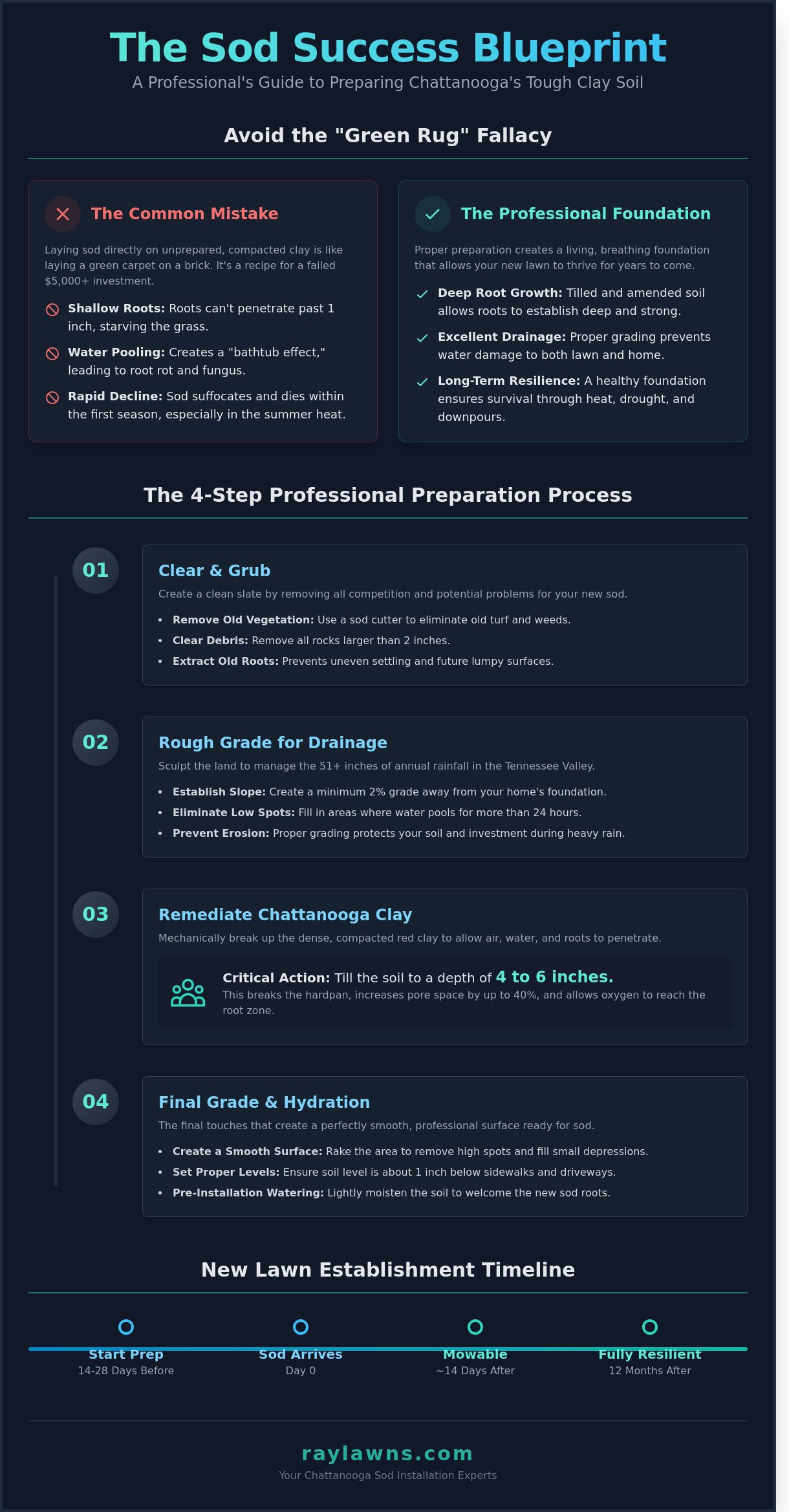
If you want a lawn that survives the first July heatwave in Ooltewah, you have to look past the green blades. Professional preparation isn’t just raking dirt. It is a rigorous, multi-stage discipline involving clearing debris, precision grading, and soil amendment. Many homeowners fall into the ‘Green Rug’ fallacy, believing they can simply roll out grass over hard ground and walk away. This approach is the fastest way to lose a significant investment. To properly prepare for sod installation, you must ensure the site handles moisture without drowning the new roots.
Professional installers treat the ground as a biological foundation rather than just a surface. Before a single piece of turf arrives, the site must be cleared of all existing vegetation and rocks larger than 1 inch. Grading follows, ensuring that water flows away from the home foundation at a 2 percent slope. If you understand what is sod, you realize it is essentially a living transplant. It needs an immediate, physical connection to the native soil to survive. Without a prepared bed, the roots hit a compacted wall and the grass suffocates within days.
The Tennessee Valley presents unique hurdles for new turf. Our region experiences an average of 51 inches of rainfall annually, often delivered in heavy, concentrated bursts. When combined with humidity levels that regularly top 70 percent, the environment becomes a breeding ground for fungus if the soil isn’t prepped. If you fail to prepare for sod installation by addressing these local environmental factors, the grass will likely perish within its first season.
The Reality of Chattanooga’s Red Clay
Chattanooga’s red clay is notorious for its density and high iron content. It often has 40 percent less pore space than the sandy loam found in other regions, meaning oxygen cannot reach the root zone. When it rains in East Brainerd or Apison, water pools on the surface because the clay is too compacted to absorb it. This standing water creates a “bathtub effect” where the sod sits in a saturated slurry until the roots rot from a lack of air. Clay requires mechanical aeration or tilling to a depth of 4 to 6 inches to break surface tension and allow for deep root penetration.
Setting Expectations for Your New Lawn
Preparation is not a weekend project. You should start the process 14 to 28 days before your grass is scheduled for delivery. This window allows enough time to apply non-selective herbicides to kill off invasive Bermuda grass or weeds and let the soil settle after major grading work. You need to distinguish between “mowable” grass and “established” turf. While you might be able to walk on the lawn in 14 days, it takes a full 12 months of deep rooting for a lawn to become truly resilient against the Ooltewah heat. For properties over 5,000 square feet, the physical labor of moving tons of soil and achieving a level grade often requires a professional sod installation service to ensure the job is done right the first time.
Clearing and Grading: Managing Drainage in the Tennessee Valley
A successful lawn transformation begins with a clean slate. You must eliminate all existing vegetation using professional-grade equipment or targeted treatments to ensure old weeds don’t compete with your new grass. Using a sod cutter to remove the top layer of old turf is often the most effective method. After clearing the surface, remove rocks larger than 2 inches and any old root systems. Roots left in the ground eventually decompose and create air pockets. These pockets cause the soil to settle unevenly, often resulting in a lumpy lawn that sinks 3 to 4 inches over time. This initial clearing is the first major step to prepare for sod installation properly.
Next, establish a rough grade. This involves moving dirt to create a slope that directs water away from your home’s foundation. In communities like Apison and East Brainerd, the heavy clay content means water doesn’t soak in quickly. You need to identify low spots where water pools for more than 24 hours. Addressing these issues now prevents your new sod from drowning in the next heavy Tennessee downpour. During this phase, consider soil amendments for sod to improve the structure of our local red clay before the final layers go down. This is a critical phase as you prepare for sod installation because once the grass is down, fixing the grade becomes much more expensive.
The Role of Site Grading
Proper grading prevents erosion during the 50 plus inches of rain Chattanooga receives annually. We use skid steers and Harley rakes to achieve a consistent sub-grade. A Harley rake is essential because it pulverizes the soil and removes small debris that manual raking misses. The industry standard for residential drainage is a 1 to 2 percent slope. This means the ground should drop 1 to 2 inches for every 10 feet of distance from the house. This subtle angle is enough to move water without creating a visible hill or making the yard feel steep. For properties dealing with persistent drainage challenges, professional yard grading Ooltewah TN services can transform a swampy backyard into a usable outdoor space that stays dry even after heavy Tennessee downpours.
When to Consider a French Drain
Surface grading isn’t always enough to handle subsurface water issues. If your yard feels spongy 48 hours after a storm, sod alone won’t fix the problem. Professional french drain companies protect your investment by installing a system that catches water before it reaches the surface. The process involves trenching at least 12 inches deep, laying perforated pipe, and backfilling with clean gravel. This allows water to move through the soil and away from the yard, preventing the soggy feet that kill new grass. If you aren’t sure if your yard needs extra help, you can request a site evaluation to check your drainage levels before the project begins.
Soil Remediation: Amending Chattanooga’s Compacted Earth
Chattanooga’s red clay is notorious for its density and poor drainage. To properly prepare for sod installation, you must address the physical structure of the ground. Most local yards consist of 70 percent clay particles that stick together, leaving no room for oxygen or water to reach the roots. Tilling the top 4 to 6 inches of soil is the most effective way to break this cycle. This process creates a loose, friable environment where new roots can establish themselves in days rather than weeks. Skipping this step often results in sod that looks green for a month but fails during the first dry spell in July.
Incorporating 2 to 3 inches of organic matter or screened topsoil into the existing clay transforms the soil profile. This isn’t just about adding volume; it’s about changing the chemistry of your yard. Screened topsoil provides the essential pore space that raw clay lacks. This mixture allows the ground to hold moisture without becoming a swamp during heavy Tennessee rainstorms. It also prevents the ground from cracking when temperatures climb above 90 degrees in August.
Breaking Up the Hardpan
In new Ooltewah developments, heavy construction equipment like skid steers and excavators frequently traverse the lot. This traffic creates a “hardpan” layer that is often as solid as a concrete sidewalk. While core aeration removes small plugs of soil, it isn’t enough for a fresh install. Rototilling is the professional standard because it turns the entire top layer over. “If the soil doesn’t feel like a freshly tilled garden bed, your new sod roots are hitting a brick wall.” Fluffing the soil ensures that the delicate root systems of Fescue or Bermuda don’t have to fight for every inch of growth.
Soil Testing and Local Amendments
Don’t guess what your dirt needs. The Hamilton County UT Extension office provides soil testing kits that offer a precise roadmap for your yard. Most soil in the Chattanooga area is naturally acidic, often showing a pH level between 5.0 and 5.5. Most turfgrass varieties thrive in a range of 6.2 to 6.7. Adding pelletized lime is the standard fix to neutralize this acidity. We also recommend using gypsum in East Brainerd and Apison yards to help break down the ionic bonds in the clay, which improves overall drainage.
The final step before the pallets arrive is applying a high-quality starter fertilizer. This specific blend focuses on the nitrogen-phosphorus-potassium (NPK) balance, usually with a higher middle number like 10-20-10 to prioritize root development over leaf growth. You must apply this directly to the tilled soil before the sod is laid. This ensures the nutrients are exactly where the roots will first make contact. When you prepare for sod installation with this level of detail, you’re not just planting grass; you’re building a foundation that will last for a decade. Professional results require professional preparation, and there are no shortcuts when it comes to the health of your soil.
The Final Prep: Fine Grading and Pre-Installation Hydration
Once the heavy machinery leaves, the real precision work starts. You’ve handled the heavy lifting; now you must focus on the details to properly prepare for sod installation. This stage turns a construction site into a healthy planting bed. Use a 36-inch aluminum landscape rake to break up small clods and smooth out high spots. You aren’t just moving dirt anymore. You’re sculpting the foundation. This process bridges the gap between a rough yard and a professional landscape. Take your time here. Any dip or hill you leave now will be visible for years to come.
Pay close attention to your edges. Your soil level must sit exactly 1 inch below your driveways, sidewalks, and patios. Fresh sod typically comes with a 0.75-inch to 1-inch thick layer of soil and roots. If your dirt is level with the concrete now, your grass will sit too high once installed. This creates a trip hazard and makes edging nearly impossible. A 1-inch gap ensures a flush, professional finish. It allows the grass blades to sit at the correct height relative to your hardscaping, which is a hallmark of a high-quality job.
Before you lay a single piece of grass, do one last debris check. Remove every pebble larger than a marble. These small stones create air pockets under the sod, which dry out the roots and leave permanent bumps. Even a 0.5-inch rock can prevent the sod from making direct contact with the soil. If there is no contact, the roots won’t knit. Walk the yard in a grid pattern to ensure you haven’t missed any stray roots, wood scraps, or construction debris that might have surfaced during the grading process.
Achieving a Table-Top Smooth Surface
A professional finish requires a lawn roller. Rent a plastic or steel roller and fill it about one-third with water. This weight, usually around 150 to 200 pounds, is enough to collapse air pockets without turning your Chattanooga clay into a brick. Roll the entire area in two directions. After rolling, perform the “walking test.” If your boots sink more than 0.5 inches into the soil, it’s too loose. Firm soil provides the stability needed for long-term lawn care in Ooltewah, TN. A smooth base prevents “scalping” when you start mowing 14 days later.
Moisture Management
Never lay new sod on bone-dry soil. Dry dirt acts like a sponge, pulling vital moisture out of the sod’s delicate root system the moment it touches the ground. This leads to immediate transplant shock. In Ringgold or Chattanooga, summer temperatures often hit 90 degrees by noon. This heat bakes the bare ground. Lightly mist the soil about 60 minutes before the pallets arrive. You want the ground damp to the touch but not muddy. If you leave footprints deeper than 1 inch, you’ve used too much water. This pre-hydration creates a cool, welcoming environment that encourages roots to knit into the native soil within the first 48 hours. This simple step is the best way to prepare for sod installation and ensure the grass survives its first day.
Properly preparing the ground ensures your investment doesn’t wither in the Tennessee sun. If you want a yard that stands out in the neighborhood, request a professional site evaluation today.
Partnering with Local Professionals for a Seamless Installation
When you prepare for sod installation in the Chattanooga area, you’ll quickly realize it’s a grueling, technical process that often exceeds the limits of a DIY weekend. While a homeowner can certainly spread a few bags of topsoil, a full-scale renovation requires moving literal tons of earth. The Tennessee Valley is famous for its dense, unforgiving red clay. This soil type demands heavy-duty equipment like skid steers and power harleys to break up compaction. Ray Lawns brings 22 years of experience to every jobsite in Chattanooga and Ooltewah, ensuring your yard is more than just green on top. We focus on the structural integrity of the ground beneath the grass to prevent future sinking or erosion.
The value of professional equipment cannot be overstated. A standard lawn tractor or hand tool won’t achieve the precision leveling required for high-quality sod. We use specialized graders to eliminate 1/2-inch dips that eventually become muddy puddles. These small imperfections are the primary cause of root rot and uneven mowing heights. When you hire an expert to prepare for sod installation, you’re buying insurance for your investment; a typical residential sod project in areas like East Brainerd or Apison can range from $3,500 to $8,000. Skipping professional prep to save a few hundred dollars often leads to total turf failure within the first 90 days. Professional preparation provides:
- Optimized drainage to prevent fungal growth and standing water.
- Elimination of air pockets that dry out roots and kill new grass.
- Consistent soil permeability through mechanical tilling and amendments.
Replacing a dead lawn is twice as expensive as doing it right the first time because it involves double the labor and disposal fees. We make sure the foundation is solid so your grass thrives for years.
The Ray Lawns Professional Process
Our team has been rooted in the Ooltewah and Chattanooga communities since 2002. We use a site-specific approach that accounts for your property’s unique slope and sun exposure. We handle everything from mechanical debris removal to final soil stabilization with heavy rollers. This meticulous attention to detail ensures 100% root-to-soil contact, which is vital for survival during a hot Tennessee July. We’ve spent over two decades refining this process to work with, not against, our local geography. For homeowners seeking comprehensive guidance on the entire installation process, our professional sod installation Chattanooga guide covers everything from soil preparation through long-term maintenance strategies. Explore our complete landscaping services in Chattanooga to see how we transform local properties into masterpieces.
Beyond the Grass: Complete Curb Appeal
Great yards require a holistic strategy. We often coordinate sod preparation with other vital upgrades like installing privacy trees or resolving drainage issues with French drains. Using a single-contractor approach for grading and turfing prevents communication breakdowns and ensures a cohesive finished product. It’s the most efficient way to boost your home’s value without the stress of managing multiple crews. Our crews show up on time and respect your property throughout the entire transformation. Reach out today for a free, straightforward quote and let’s get your project started.
Build a Foundation for a Lifetime of Curb Appeal
A lush, green lawn doesn’t happen by accident. It’s the result of meticulous grading and strategic soil conditioning. In the Chattanooga area, our dense clay requires more than a surface-level rake. You must address local drainage patterns to prevent standing water from suffocating new roots. Amending the top 4 inches of compacted earth ensures your grass has the nutrients it needs to thrive. Since 2002, Ray Lawns has provided these essential services to homeowners in Ooltewah and the surrounding Tennessee Valley. As a family-owned company, we use professional-grade machinery to handle the heavy lifting that DIY projects often miss. Taking the time to properly prepare for sod installation is the only way to protect your investment and guarantee long-term results. We bring 22 years of experience in managing Tennessee’s unique terrain to every jobsite. Don’t settle for a temporary fix when you can have a permanent transformation.
Get a Free, Dependable Sod Quote from Ray Lawns Today
Your dream yard is within reach, and we’re ready to help you build it from the ground up.
Frequently Asked Questions
Can I lay new sod over my existing grass or weeds?
No, you should never lay new sod over existing grass or weeds. This creates a barrier that prevents the new roots from reaching the soil, which leads to 100% failure of the project. You must remove all old vegetation using a sod cutter or herbicide at least 7 days before you begin to prepare for sod installation. This ensures the new roots make direct contact with the earth immediately.
How deep should I till the soil before installing sod in Tennessee clay?
You should till the soil to a depth of 4 to 6 inches for the heavy clay found in Chattanooga and Ooltewah. Tilling breaks up the compacted red clay that characterizes 85% of local yards. This process improves aeration and drainage significantly. If you skip this step, the sod roots will hit a hard pan and fail to establish during the hot summer months.
Do I need to put down topsoil before laying sod?
Most yards in East Brainerd and Apison require 2 to 4 inches of fresh, screened topsoil before installation. Tennessee clay lacks the organic matter needed for rapid root growth. Adding a high quality loam mix provides a nutrient rich base for the grass. It also allows you to level out minor dips and bumps for a smoother finish once the lawn matures.
What is the best time of year to prepare my yard for sod in Chattanooga?
The best time to prepare for sod installation in the Chattanooga area is from March to May or September to October. Temperatures during these windows typically stay between 60 and 80 degrees. This range is ideal for root development without the stress of 90 degree July heat. Fall is particularly effective for Fescue, while Bermuda thrives when you prepare the ground in the late spring.
How much does it cost to have a professional grade my yard for sod?
Professional grading costs depend on the yard’s square footage and the complexity of the terrain. A standard 5,000 square foot project often involves 4 to 8 hours of equipment operation with a skid steer or tractor. You’ll also need to account for the delivery of 10 to 20 cubic yards of topsoil if the site is uneven. Proper grading is the most critical step to prevent standing water issues later.
Should I install my French drain before or after the sod is laid?
You must install your French drain before the sod is laid. Digging trenches after installation destroys the new root system and wastes the investment you made in the grass. We recommend completing all drainage work and pipe burials 2 to 3 days before the final grade. This allows the soil to settle so you don’t end up with a sunken line in your new lawn.
How soon after preparation should the sod be installed?
You should install your sod within 24 to 48 hours of completing the soil preparation. Freshly tilled soil begins to dry out and compact as soon as it’s exposed to the air. If you wait longer than 3 days, weeds will begin to germinate in the bare dirt. Prompt installation ensures the grass roots hit moist, loose soil immediately after the pallets arrive on your driveway.
What kind of fertilizer should I use during the soil prep phase?
Use a high phosphorus starter fertilizer, often labeled with a ratio like 10-20-10, during the prep phase. Phosphorus is the middle number and it’s essential for rapid root establishment in new lawns. Apply this at a rate of 1 pound per 1,000 square feet. This gives the new sod the energy it needs to knit into the soil before the first frost or heat wave hits.
get a quote today!
"*" indicates required fields

We take lawn care so seriously that we consider it an art. Our basic service is lawn maintenance, which includes lawn mowing, trimming, edging, and blowing off clippings.

Our landscaping services include most types of yard work. We are excellent at trimming hedges, installing mulch, and creating flowerbeds.

This is our rescue effort for yards that have become entirely overgrown. Includes multiple passes with the lawn mower to tame even the most unruly yards.